• Thanks for stopping by. Logging in to a registered account will remove all generic ads. Please reach out with any questions or concerns.

British Military Current Events

Utrinque Paratus...


British paratrooper killed in Ukraine named​


A member of the UK armed forces who died in Ukraine has been named as Lance Corporal George Hooley of the Parachute Regiment.

On Tuesday, the Ministry of Defence (MoD) said the 28-year-old was killed in a "tragic accident" while observing Ukrainian forces test "a new defensive capability, away from the front lines".

Paying tribute to the paratrooper in the Commons on Wednesday, Prime Minister Sir Keir Starmer said: "His life was full of courage and determination.

"He served our country with honour and distinction around the world in the cause of freedom and democracy, including as part of the small number of British personnel in Ukraine."

Sir Keir said he had placed L/Cpl Hooley's name on record in the Commons "to express our gratitude and respect, and to affirm that his service will never be forgotten".

L/Cpl Hooley had an "incredibly bright" future, his Commanding Officer said in a tribute on Wednesday.

"I have no doubt that he would have continued to perform at the very front of his peer group over the coming years," the commanding officer said, adding that "all members of the Parachute Regiment mourn his loss".

 
Let the backstabbing commence...

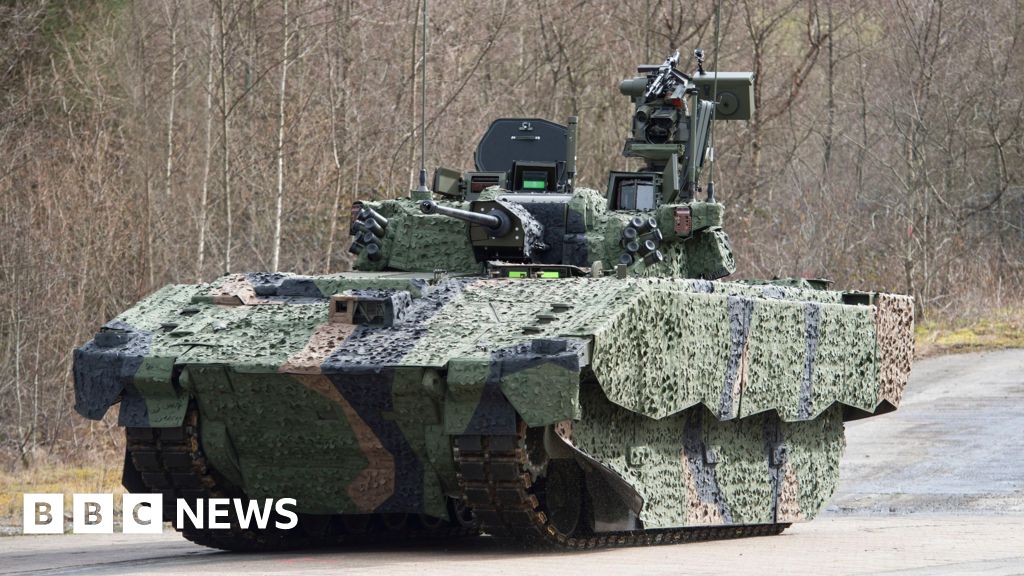
Minister 'disgusted' after soldiers injured in Ajax exercise​


Defence minister Luke Pollard has said he was "disgusted" when he heard that soldiers were injured while using Ajax armoured vehicles, which he had previously been assured were safe.

Last month, the Army paused its use of the vehicles after 30 soldiers became ill from noise and vibration during a military exercise.

The £6.3bn Ajax project had been due to deliver 589 armoured vehicles with the first entering service in 2017 however, the programme has been beset by problems and repeatedly delayed.

Speaking in the House of Commons, Pollard said three investigations were under way and promised to take "whatever decisions are required to end the saga one way or another".
He later added that the Ajax vehicle had completed "42,000 km of testing without such injuries" and that "not all the vehicles on that exercise caused injuries".

Shadow Conservative defence secretary James Cartlidge said the incidents with noise and vibration "sound strikingly similar to the problems that I was assured, as minister for defence procurement, had been resolved".

"I imagine the minister is as furious as I am at having been repeatedly given what now turn out to be false assurances by those responsible for the Ajax programme," he said, adding: "Surely he is left with a binary choice - fix it or fail it."

Cartlidge also raised "a disgraceful incident" where an employee of General Dynamics, the company making Ajax, had "belittled the injured soldiers" in social media posts according to reports.

 
More Ajax fodder from the 'Fill Your Boots UK' site:


Detailed Employee Account: Systemic Issues within the General Dynamics Ajax Programme

As a long-serving General Dynamics employee working directly on the Ajax vehicle programme, I feel compelled to document the profound systemic and cultural failures I have witnessed. My surprise is not that the programme has encountered technical challenges, but that the sheer scale and nature of the issues—many stemming from managerial pressure and a culture of corner-cutting—have not been brought to light earlier in a meaningful way.

The problems extend far beyond design flaws. On the shop floor, we operate under intense pressure from management to meet deadlines, often at the expense of procedure and safety. The prevailing directive from certain managers is to "just make it fit," with instructions to "do what you got to do—grind it, cut it, hammer it in, or boot it." This ethos of force-fitting components directly contradicts engineering standards and creates inherent vulnerabilities in the vehicle's integrity.

I have observed managers and quality personnel witnessing these practices without intervention, effectively endorsing them. Specific, recurring failures include:

· Critical Safety Omissions: Armour bolts left unfitted behind the VIP bin, compromising ballistic protection.

· Persistent Functional Failures: The driver's hatch mechanism continues to fail despite being a known, long-standing issue.

· Chronic Leaks: Fuel and hydraulic leaks are commonplace, indicating persistent sealing or subsystem integration problems.

· Falsified Safety Records: Most alarmingly, I have seen safety notices stamped off as completed. Upon physical verification, the required work had not been done. A grave example is within the Ajax battery compartment, a high-risk area that remains live even after isolation. Signing off on unperformed work here is not just negligent; it is dangerously irresponsible.

The logistical and support side of the programme is equally broken. We face severe parts shortages. To keep the current production line moving, we have been systematically cannibalising vehicles from a storage fleet of approximately 50 trucks in Llanelli. These vehicles haven't been started in years, their batteries are long dead, and we strip them for components because new parts are simply unavailable. This is not sustainable manufacturing; it is a desperate and inefficient salvage operation that underscores a profound failure in supply chain management.

Perhaps most disheartening is the cultural corrosion. A specific example that shocked me was witnessing a former 2ic (second-in-command) at the Merthyr site rapidly abandon his principles upon accepting a managerial position within General Dynamics. This individual, once an advocate for the workforce and procedure, swiftly adopted the very "get it done at any cost" mentality he previously questioned. This rapid shift in morals highlights how the managerial culture actively assimilates and silences potential internal critics, perpetuating the cycle of failure.

In summary, the issues with Ajax are not merely technical or confined to the drawing board. They are the product of a toxic operational culture that prioritises schedule over safety, encourages wilful blindness among management, and penalises adherence to standards. The shop floor is executing under duress, the logistical foundation is non-existent, and the safety of the end-user is being compromised by signed paperwork for work that remains undone. This programme requires more than a redesign; it needs a complete cultural overhaul and a genuine commitment to transparency and accountability from the highest levels down.
 
Sky News report.


Ex-commander of unit tasked with trialling Ajax armoured vehicle lost 20% of hearing - Dec 11, 2025

The former commander of a unit tasked with trialling the British Army's new Ajax armoured fighting vehicle has lost about 20% of his hearing and suspects his time on the £10m platform could be to blame.Rob Page, a former lieutenant colonel spent two years putting the vehicle through its paces from 2019 to 2021. In that time, he said he witnessed soldiers on the Armoured Trials and Delivery Unit suffer harm to their hearing because of excessive noise as they operated the platform and harm to their bodies because it vibrated so much when moving.General Dynamics UK, which manufactured the vehicle, said a huge amount of work was done into ensuring the safety of Ajax, calling it "one of the most tested combat vehicles ever produced".A Ministry of Defence spokesperson said: "We will always put the safety of our personnel first and the current pause shows that we will investigate any issues when they arise…We take any allegations very seriously and will look closely at any evidence provided."
 

UK 'rapidly developing' plans to prepare for war​

Al Carns has warned of a "shadow of war" at Europe's door, as hostile intelligence activity against the UK has jumped by more than 50% over the past year.

In an indication of the threat, Britain revealed on Friday that the level of hostile intelligence activity - such as spying, hacking and physical threats - against its armed forces and the Ministry of Defence has jumped by more than 50% over the pas


UK 'rapidly developing' plans to prepare for war​

Al Carns has warned of a "shadow of war" at Europe's door, as hostile intelligence activity against the UK has jumped by more than 50% over the past year.

In an indication of the threat, Britain revealed on Friday that the level of hostile intelligence activity - such as spying, hacking and physical threats - against its armed forces and the Ministry of Defence has jumped by more than 50% over the pas


It must be comforting to the British people knowing that, before today, they didn't have any such plans ;)
 
Former Royal Marine in the news, not in a good way... sentenced to 21 years:

How 'red mist' led Paul Doyle to plough into Liverpool parade crowd - as violent past revealed​

Tens of thousands of Liverpool fans had been on the streets to celebrate the club's Premier League triumph. Paul Doyle's actions resulted in injuries to 134 people, including two babies and six other children.

In the early 1990s, while serving in the Royal Marines, he was convicted of biting off part of someone's ear during a fight in a pub. He was discharged from the military at that time.

 
I hope he's good at tabbing up Welsh hills versus just flying over them ;)

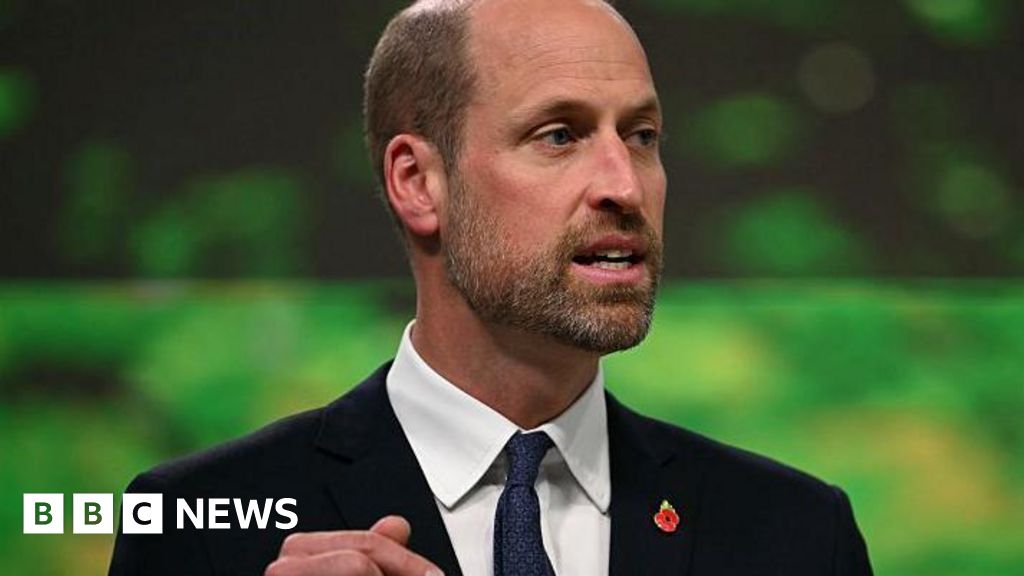
Prince 'honoured to become SAS charity patron'​


The Prince of Wales expressed a "deep sense of honour and respect" as he became patron of the SAS's charity.

Prince William said he was looking forward to taking on the role with the Special Air Service Regimental Association, which looks after serving members and veterans of the elite Army unit.

The association's chair shared "delight" at the announcement, in a newsletter to members.

In the newsletter, the prince said he had first visited Stirling Lines, the headquarters of 22 SAS Regiment in Credenhill, Herefordshire, as a young boy, and later spent time with the SAS as a young army officer.


The 'Old Boys' Network' almost lost them WW2, so the British invented a class system blind, science based Officer selection process that ultimately helped win the war and subsequently informed many other leader selection processes globally: Leaderless tasks and science based assessments in a residential setting ...

Westbury: can confirm it's a thorough and somewhat daunting selection process ...

How British Officer Boards Rejected 40% of Candidates — And Forged the War’s Best Junior Officers​


They shocked the Army by rejecting 40 percent of all candidates — men who would once have become officers by rank, accent, or confidence alone. Britain’s new Officer Selection Boards ignored polish and pedigree, putting candidates through relentless psychological tests, group problems, stress exercises, and leadership trials instead. The result was a generation of junior officers chosen for judgment, resilience, and the ability to think under fire. Units led by these men fought harder, adapted faster, and held together when chaos struck. German intelligence noted the difference with unease, as British platoons continued to function even after leaders fell. This is the story of the ruthless selection process that transformed Britain’s officer corps — and why rejecting thousands created some of the best battlefield leaders of the war.

How British Officer Boards Rejected 40% of Candidates — And Forged the War’s Best Junior Officers
 
1766433628466.png

'The powers that be must do their utmost to avoid the mistakes of the SA80' | Writes Jonathan Ferguson

The British military’s distinctive-looking SA80 service rifle has equipped generations of soldiers since its introduction over 40 years ago, but it is in dire need of replacement and the MoD is expected to announce requirements in the new year.

Fans of the weapon might suggest simply making more of them, but this is not an option. No new rifles have been produced since 1994 and spares to rebuild and keep running the current modernised L85A2 and A3 versions have to be sourced from overseas.

Even its small calibre 5.56 mm ammunition is being brought into question by the wide availability of modern body armour.

Though the SA80 is now a capable weapon, its introduction was as shambolic as the current Ajax vehicle programme appears to be.

The first ‘A1’ versions of the rifle – and its L86 Light Support Weapon counterpart (which provided extra firepower and range) – were so bad, in fact, that late former Liberal Democrat leader Menzies Campbell once said there “should be a sign reading, ‘Remember the SA80’ above the desk of every civil servant and every service man or service woman in the armed forces with responsibility for procurement”.

Despite already being years late, the weapon was effectively unfinished at the point of introduction. Problems were reported from the start but cascaded into an outright scandal during the First Gulf War.

Stories from the soldiers in the field and a scathing official report detailed instances of magazines falling off, parts breaking (including the firing pin) and fragile plastic parts that could be melted by insect repellent.

It was even possible for soldiers to break the weapon simply by making a small mistake on reassembly, requiring the intervention of an armourer to fix. The rifle could essentially not be relied upon to fire when the trigger was pulled.

The official report noted that some “commanders considered that casualties would have occurred due to weapon stoppages if the enemy had put up any resistance in the trench and bunker clearing operation”.

Thankfully the SA80 functioned when Her Majesty Queen Elizabeth II ceremonially pulled the trigger at the grand unveiling, but it clearly was not ready for war – so what went wrong and how was it fixed?

The project had started well enough in 1971 with a clear understanding of what was needed and a design study to meet it. The new weapons would equip the British military for mechanised warfare against the Soviet Union as well as service in Northern Ireland.

Instead of buying “off the shelf” from elsewhere, Britain turned to the state-owned Royal Small Arms Factory at Enfield, legendary for the Lee series of bolt-action rifles.

The project was dubbed “Small Arms for the 1980s” (hence ‘SA80’) and settled upon a configuration known today as a “bullpup”. Like its namesake the bulldog puppy, this type of weapon was compact but powerful. It retained a long barrel capable of shooting out to hundreds of metres, but set this well to the rear, placing the working parts in the butt.

With no need for a conventional stock, the weapon could be lighter. Even more weight would be saved by moving to a reduced size of ammunition, allowing more of it to be carried. The smaller rounds also produced less recoil, disturbing the aim less. Coupled with a telescopic sight for every rifle, every soldier could be an expert marksman.

A rifle like this could in theory combine the long range accuracy and power of the long and unwieldy (but much-loved) SLR rifle, and the close range automatic fire capability of the Sterling submachine gun. A “Light Support Weapon” version could even replace the Bren Light Machine Gun. This new weapon could do it all!

But Enfield hadn’t built anything like this in twenty years, and specific requirements from MoD for this ambitious effort kept changing. The project quickly ran over schedule and over budget, requiring a total redesign to even make manufacture viable.

Design work to fix the problems encountered in trials and on actual issue continued alongside manufacturing. Matters were not helped by the sale and (in 1988) closure of the Enfield factory – and the move to brand-new production facilities in Nottingham did nothing to help fix the design or improve poor quality control.

The weapon was left with systemic issues and, despite having been in development for well over a decade, was still effectively rushed into service. This is what had left soldiers in the Gulf with one of the worst military weapons ever created.

It wasn’t until the late 1990s that German firm Heckler & Koch, then under British ownership, was called upon to create a robust and reliable upgrade.

Introduced in 2001 the SA80 A2 was an almost total redesign of the internal parts, although the outward appearance remained visually unchanged aside from a new cocking handle shaped to stop fired cartridge cases from bouncing back into the action.

The weapon has since earned the trust of many in uniform, but never fully recovered from its poor initial reputation. It still lacks the intuitive controls, superior handling and lighter weight of modern rifles.

The search for a replacement has begun under Project Grayburn. This time, for better or worse, no home-grown British rifle design is available. However, the intent is to select an “industry partner” to rebuild something of the nation’s lost “sovereign” small arms manufacturing capability.

Candidates are headquartered in continental Europe (e.g. Beretta, FN, Heckler & Koch) and the US (e.g. SIG Sauer). The successful partner will need to coordinate not only new weapons but optical sights and ammunition and perhaps even a change in calibre as 5.56mm Nato struggles to deal with modern body armour.

However the powers that be make their decision, they should heed the words of Menzies Campbell and do the absolute utmost to avoid the mistakes of the SA80. Britain deserves better than to send its soldiers to war with inadequate rifles.

Jonathan Ferguson is a firearms historian and the Keeper of Firearms and Artillery at the Royal Armouries Museum

 
Could be easily chucked out on a chute, air landed, or landed across a beach...


Future 105 mm light gun limber part of Team Lionstrike UK LMP offer

A variant of General Motors (GM) Defense's Infantry Squad Vehicle (ISV) adapted to tow a 105 mm light gun is being planned for the Team Lionstrike consortium's offer for the UK Ministry of Defence's (MoD's) Land Mobility Programme (LMP), a representative involved with the consortium told Janes on 13 November 2025.

Consisting of GM Defense, BAE Systems, and NP Aerospace, Team Lionstrike was announced on 3 September 2025 to compete primarily for the future LMP's Light Mobility Vehicle (LMV), Light Protected Mobility (LPM), and General Support Utility Platform (GSUP) segments. The LMV seeks to replace the British Army's Land Rover and Pinzgauer vehicles, which are due to go out of service by 2030.

The Pinzgauer is currently used to tow the British army's 105 mm guns, the representative said, adding that it is now really showing its age and that the ISV will be prepared as a proposed replacement.

GM vehicles​

Team Lionstrike is putting forward largely commercial off-the-shelf (COTS)-based vehicles to make up some of the estimated 7,000–9,000 vehicles needed for the LMV requirement, although the exact makeup of vehicles sought is not yet known. Various ISV configurations exist, the extended ISV-9 carrying nine personnel, with all variants having a 1,450 kg load capacity and 2,265 kg towing capacity. The ISV-U (utility) variant shown in a demonstration on 13 November carries 4–5 personnel with a 2.8 litre diesel engine and a 79 litre fuel tank delivering a 750 km range.


Back
Top