
perhaps they need to reconsider their gun laws if they really want to establish an effective militia. The Swiss and the Israelis are two that I know of that keep military weapons in the front closet and carry them on the bus (Israel). Kinda dumb to confiscate an effective weapon on one hand and then ask the owner to join with defending his country on the other.This is actually the scope of ambition being looked at. It's a genuine, "How would we fight for years?" Question.
And as we go through this there's a realization government wide (not just CAF) of how daunting the task is.
It's all the way from basics (getting the CAL DAL right) to how would we manage strategic comms to mobilize society in the age of AI fakes, to how do we manage the mismatch between weeks to mobilize PRes to months to mobilize Strat/Mob Res to years to mobilize industry. All of this kinda stuff is actually being staff checked with outputs on everything from legislative changes proposed to procurement to changing force design to changing mandates of agencies. CCG moving to DND, for example, is just the first step in looking at underwater infrastructure protection. There's discussions, for example, on what legislative changes might be needed to enable more reserve service as part of creating that mobilization reserve and growing PRes substantially.
But it's like eating an elephant. This is easily a decade long project.

You are using an out of date browser. It may not display this or other websites correctly.
You should upgrade or use an alternative browser.
You should upgrade or use an alternative browser.
Canada moves to 2% GDP end of FY25/26 - PMMC
- Thread starter Maxman1
- Start date

FJAG
Army.ca Myth
- Reaction score
- 21,130
- Points
- 1,160
I'm glad to hear that it may finally be happening. The quote I made above about the "great host" was made in 2005 by the panel doing a ten year review of the progress on the reserve restructure that was put forward in 1995. Ten years of nothing followed by 20 years of nothing. You'll need to excuse me if I'm not excited yet. I started in this game in '65 and have been excited and then disappointed so many times that I've lost count and my cynicism has grown exponentially.There's discussions, for example, on what legislative changes might be needed to enable more reserve service as part of creating that mobilization reserve and growing PRes substantially.
But it's like eating an elephant. This is easily a decade long project.
I tend to agree it will take DND a decade to sort things through. And that's the problem. Do you know how you speed up eating an elephant? Rather than one bite at a time, you have thousands of people all eating at the same time. Gunners have several buzz words/phrases - one is "concurrent activity." But that needs a firm vision and a great plan with a massive Gantt chart with a clearly defined critical path and a robust public information program to make sure the nation knows that you are moving the yardsticks. I honestly don't think we have a decade of committee meetings.
Honestly, those mandate question examples you gave above should have all been asked and answered and put into the "plan" Belzile said the forces didn't have in 2005 At the very latest they should have started to plan seriously in 2014 and again exactly four years ago on February 24, 2022 when the Russians crossed the start line.
Incidentally, the legislative changes needed to make an effective reserve force are easy and few. The regulatory, directive and policy changes, however, are significant. More important, the RegF will to change the reserves into an effective "reserve" force rather than an "augmenting RegF office overload" is critical. That will has been noticeably absent for over a half a century (and lets stop blaming honourary colonels for that)

I'm glad to hear that it may finally be happening. The quote I made above about the "great host" was made in 2005 by the panel doing a ten year review of the progress on the reserve restructure that was put forward in 1995. Ten years of nothing followed by 20 years of nothing. You'll need to excuse me if I'm not excited yet. I started in this game in '65 and have been excited and then disappointed so many times that I've lost count and my cynicism has grown exponentially.
Fully understand. And honestly, I'm a little skeptical at the numbers I hear thrown around. I can't imagine what pay and benefits have to be to hit the numbers being talked about. But I do think it's a worthy goal and if we'll even get to 50% that will be an exponential improvement in what we have today.
I tend to agree it will take DND a decade to sort things through. And that's the problem. Do you know how you speed up eating an elephant? Rather than one bite at a time, you have thousands of people all eating at the same time. Gunners have several buzz words/phrases - one is "concurrent activity." But that needs a firm vision and a great plan with a massive Gantt chart with a clearly defined critical path and a robust public information program to make sure the nation knows that you are moving the yardsticks. I honestly don't think we have a decade of committee meetings.
I personally don't think we can do it all. I think at some point, the government will have to prioritize what it wants done.
Incidentally, the legislative changes needed to make an effective reserve force are easy and few. The regulatory, directive and policy changes, however, are significant. More important, the RegF will to change the reserves into an effective "reserve" force rather than an "augmenting RegF office overload" is critical. That will has been noticeably absent for over a half a century (and lets stop blaming honourary colonels for that)
The one thing that the reserves have going for them this time is jobs. Construction, maintenance and support contracts all over the country. And the more the Reserves grow the more generous those contracts. And of course, those reservists are basically local stimulus.
My one question at work always is, "when are we getting a new defence policy?"
ONSAF was written before Carney and this ambition. And now we're basically operating off script. Reading ONSAF it seems quaint now. 1.76% in 29/30.
If we're really going to 5% including resiliency, we're looking at a whole different world with very different options. Even a world where we hit 3% is different. This is a world where we could envision carriers or amphibs, where we build substantial defence infrastructure in the Arctic. Maybe a third navy MOB. Or even some real offensive space capabilities (my favourite). So I really want to know what the government wants to do.
A world where we hit 5% and aren't paying for a nuke deterrent is a world where we basically have like 70% of conventional UK capabilities given that maintenance of their deterrent costs them 1% of GDP per year.
I'd really like some small wins from Uncle Mark. Like can we just grow existing orders? Exercise the options for the two P-8s. And maybe buy a few more. Make the truck order for the CA bigger. Order a third or even a fourth AOR for the RCN. New tools. New vehicles to every maintenance shop. Make CAF IT 2026 relevant. Etc. All things we can do while sorting out the big stuff.
ONSAF was written before Carney and this ambition. And now we're basically operating off script. Reading ONSAF it seems quaint now. 1.76% in 29/30.
If we're really going to 5% including resiliency, we're looking at a whole different world with very different options. Even a world where we hit 3% is different. This is a world where we could envision carriers or amphibs, where we build substantial defence infrastructure in the Arctic. Maybe a third navy MOB. Or even some real offensive space capabilities (my favourite). So I really want to know what the government wants to do.
A world where we hit 5% and aren't paying for a nuke deterrent is a world where we basically have like 70% of conventional UK capabilities given that maintenance of their deterrent costs them 1% of GDP per year.
I'd really like some small wins from Uncle Mark. Like can we just grow existing orders? Exercise the options for the two P-8s. And maybe buy a few more. Make the truck order for the CA bigger. Order a third or even a fourth AOR for the RCN. New tools. New vehicles to every maintenance shop. Make CAF IT 2026 relevant. Etc. All things we can do while sorting out the big stuff.
Last edited:

- Reaction score
- 13,990
- Points
- 1,160
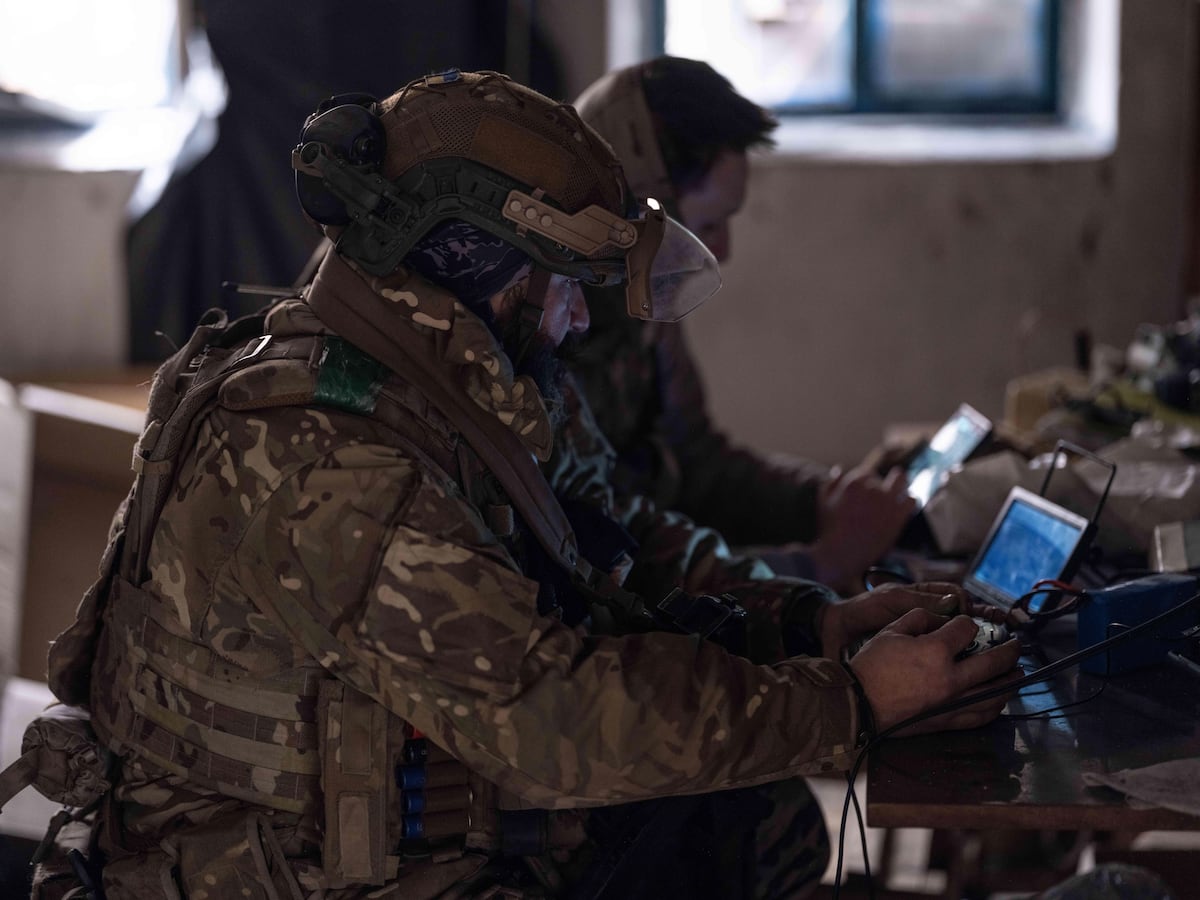
‘We don’t have infantry’: Ukraine’s war machine evolves into machine war
Outmanned by a nuclear power in the largest land war in Europe since 1945, Ukraine’s front line is increasingly held by machines.
 www.defensenews.com
"Commanders describe brigades hollowed out to half strength or worse. Frontline units often operate at 50% to 60% of authorized manning, some as low as 30%.
"In some sectors, a maximum of 12 fighters hold 5 to 10 kilometers of front, far below what Cold War-era NATO planning assumed for high-intensity defense."
Can that be leveraged?
Can a brigade be built around a defensive battalion, after the fashion of the older Anti-Tank Regiments, but upgraded to handle the tools the Ukrainians are currently managing? Then leave the infantry and armoured units to focus on manoeuvre?
- Reaction score
- 13,990
- Points
- 1,160

'California jammin': Wargames show Army’s electronic weakness — and a human fix - Breaking Defense
“We are definitely seeing, many times over, an over-reliance on technology,” Capt. Jake Thomas told Breaking Defense.
 breakingdefense.com
"Army brigades are struggling to overcome electronic warfare and AI-generated disinformation in wargames at the National Training Center, a Rhode Island-sized swathe of the Mojave Desert where a full-time Opposing Force, the 11th Armored Cavalry Regiment, puts visiting units through the wringer with simulated bullets and real radio jamming.
"Visiting units often lack the technical versatility and, even more important, the mental adaptability to keep fighting effectively with backup systems once their high-tech networks go down, current and former OPFOR officers told Breaking Defense in a series of interviews."
- Reaction score
- 13,990
- Points
- 1,160
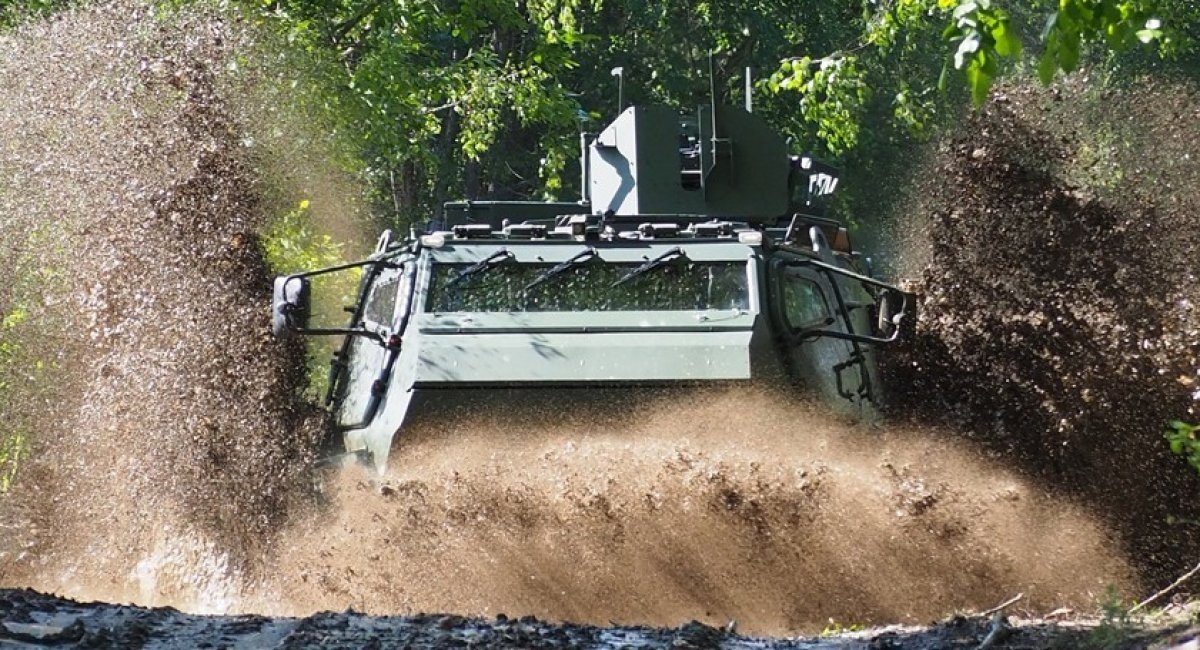
Speed....
 en.defence-ua.com
Germany Receives First Patria 6×6 APCs Just Two Months After Signing the Contract | Defense Express
Finnish Patria 6×6 armored personnel carriers have high production and delivery rates, which allowed Germany to receive the first pre-production models just two months after signing the contract
en.defence-ua.com
- Reaction score
- 13,990
- Points
- 1,160
'California jammin': Wargames show Army’s electronic weakness — and a human fix - Breaking Defense
“We are definitely seeing, many times over, an over-reliance on technology,” Capt. Jake Thomas told Breaking Defense.
"Army brigades are struggling to overcome electronic warfare and AI-generated disinformation in wargames at the National Training Center, a Rhode Island-sized swathe of the Mojave Desert where a full-time Opposing Force, the 11th Armored Cavalry Regiment, puts visiting units through the wringer with simulated bullets and real radio jamming.
"Visiting units often lack the technical versatility and, even more important, the mental adaptability to keep fighting effectively with backup systems once their high-tech networks go down, current and former OPFOR officers told Breaking Defense in a series of interviews."
We do a version of this. And boy is it fun to see how mad people get.
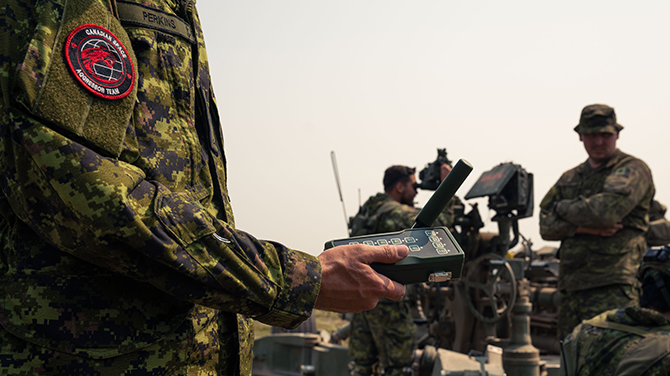
Pump up the jam!
For the first time, the Canadian Space Aggressor Team from 7 Space Operations Squadron conducted Global Positioning System jamming during Exercises REFLEXE RAPIDE and MAPLE RESOLVE, the Canadian’s Army’s largest training exercise.

- Reaction score
- 301
- Points
- 810
I was there, I don't think many people were mad, because they didn't notice, because it wasn't very effective.
We should definitely doing more of this. By not training defence/immediate actions on jamming and other electronic attacks we are setting our forces up for failure. Wishing away all our comms problems on exercise (especially validation exercises) is negligence almost to the degree of being criminal.
Having said that, what was done at MR23 had zero training value for the PTA (I hope the space force guys used it to gather data on how to better integrate into future collective training events). To be clear, nothing against the guys who showed up. That teams was very small, with what appeared to be not great equipment, on the ground for a very limited time. They worked hard with what they had, hats off to them but they weren't able to do much to prepare the PTA to deal with this stuff in the future.
To be effective we need to be training these scenarios along the entire road-to-high-readiness, not just try to bolt it on during level 6/7. I really wish this capability was organic to CMTC, like it is with NTC. Let units know EW and Space Folks are in Wainwright, waiting for you to show up, in order to fuck with your shit, so be prepared for that before you arrive.
Additionally, we need to work with the government to allow jamming in the RTA. Adjust legislation, regulations, and the political will to allow us to do so. Tell the farmers around Wainwright "The GPS on your farm equipment may be wonky from this date to this date, here is some money for your trouble" and expand the no fly zone way past the training area boundaries so planes aren't falling out of the sky.
To sum up: I am jealous of all the things the yanks can do on their exercises. To properly train our soldiers we need to do the same things. However, we need to do it right (read: big) for it to be effective. Not the usual last minute, as an after thought, small scale that all training of support and enablers ends up being.
We should definitely doing more of this. By not training defence/immediate actions on jamming and other electronic attacks we are setting our forces up for failure. Wishing away all our comms problems on exercise (especially validation exercises) is negligence almost to the degree of being criminal.
Having said that, what was done at MR23 had zero training value for the PTA (I hope the space force guys used it to gather data on how to better integrate into future collective training events). To be clear, nothing against the guys who showed up. That teams was very small, with what appeared to be not great equipment, on the ground for a very limited time. They worked hard with what they had, hats off to them but they weren't able to do much to prepare the PTA to deal with this stuff in the future.
To be effective we need to be training these scenarios along the entire road-to-high-readiness, not just try to bolt it on during level 6/7. I really wish this capability was organic to CMTC, like it is with NTC. Let units know EW and Space Folks are in Wainwright, waiting for you to show up, in order to fuck with your shit, so be prepared for that before you arrive.
Additionally, we need to work with the government to allow jamming in the RTA. Adjust legislation, regulations, and the political will to allow us to do so. Tell the farmers around Wainwright "The GPS on your farm equipment may be wonky from this date to this date, here is some money for your trouble" and expand the no fly zone way past the training area boundaries so planes aren't falling out of the sky.
To sum up: I am jealous of all the things the yanks can do on their exercises. To properly train our soldiers we need to do the same things. However, we need to do it right (read: big) for it to be effective. Not the usual last minute, as an after thought, small scale that all training of support and enablers ends up being.
I was there, I don't think many people were mad, because they didn't notice, because it wasn't very effective.
We should definitely doing more of this.
To sum up: I am jealous of all the things the yanks can do on their exercises. To properly train our soldiers we need to do the same things. However, we need to do it right (read: big) for it to be effective. Not the usual last minute, as an after thought, small scale that all training of support and enablers ends up being.
Fully agree. And to be fair, it was a nascent Wing initiative back then. It's slowly growing as a capability. And unfortunately they get tasked to support more than CA training. Hoping things like this all get rolled up in the Future Warfighting Concept to address those gaps.

- Reaction score
- 19,200
- Points
- 1,160
I want to see a NSS type program for vehicles in the CAF. Buy X amount of various types every year and when we max out on that type, stick the oldest in reserve for a 5 years and then dispose of them, just keep repeating so things like LAV's are no older than 15 years, something like the Roshel, 10. Milcots 5 years. Also reverse the 1 for 2 vehicles we have been doing since the 1970's and start issuing 2 for 1 to start bringing numbers up. By keeping the fleet young, we reduce maintenance and repair issues. We will also start treating vehicles as disposables and not capital assets.My one question at work always is, "when are we getting a new defence policy?"
ONSAF was written before Carney and this ambition. And now we're basically operating off script. Reading ONSAF it seems quaint now. 1.76% in 29/30.
If we're really going to 5% including resiliency, we're looking at a whole different world with very different options. Even a world where we hit 3% is different. This is a world where we could envision carriers or amphibs, where we build substantial defence infrastructure in the Arctic. Maybe a third navy MOB. Or even some real offensive space capabilities (my favourite). So I really want to know what the government wants to do.
A world where we hit 5% and aren't paying for a nuke deterrent is a world where we basically have like 70% of conventional UK capabilities given that maintenance of their deterrent costs them 1% of GDP per year.
I'd really like some small wins from Uncle Mark. Like can we just grow existing orders? Exercise the options for the two P-8s. And maybe buy a few more. Make the truck order for the CA bigger. Order a third or even a fourth AOR for the RCN. New tools. New vehicles to every maintenance shop. Make CAF IT 2026 relevant. Etc. All things we can do while sorting out the big stuff.

- Reaction score
- 12,287
- Points
- 1,040
Sounds very terrain-dependent.Can that be leveraged?
- Reaction score
- 13,990
- Points
- 1,160
Sounds very terrain-dependent.
How so?
TTPs or METT-TC will vary but the fundamental concept of using available technologies to maximum benefit over the largest area with the fewest resources applies.
The fewer people you have to expend holding an area the more people you can keep off the line and available for hasty and planned assaults.
- Reaction score
- 12,287
- Points
- 1,040
My guess is that a low troop density as a tripwire/OP line only works when the few troops can observe over long distances. At the bottom end, 12 guys in a forest won't do jack over 5 km.How so?
TTPs or METT-TC will vary but the fundamental concept of using available technologies to maximum benefit over the largest area with the fewest resources applies.
The fewer people you have to expend holding an area the more people you can keep off the line and available for hasty and planned assaults.
- Reaction score
- 301
- Points
- 810
We talk a big game about crawl, walk, run but then expect everything to be perfect and make a big splash the first time we do it. Was it super effective for the PTA during MR 23? No, but it was the first time, so that's fine. Just getting Army guys and Space guys on the same exercise and talking to each other is where the value came from. Building the relationships so we can design better training and outcomes for both sides was extremely valuable. Unfortunately, the MR hiatus debacle set us back, but still, we should use what we learned on MR 23 to build MAPLE SWORD into an exercise that prepares the Army for space threats. Are we going to be great at in 27? No, but we know it is a problem and can build towards a solution.Fully agree. And to be fair, it was a nascent Wing initiative back then. It's slowly growing as a capability. And unfortunately they get tasked to support more than CA training. Hoping things like this all get rolled up in the Future Warfighting Concept to address those gaps.
It isn't just Space, EW and Cyber are capabilities we don't employ well at the tactical level. Partly because we never have those enablers and the fighting force practice together. It's like never having your infanteers see a tank in Canada and expecting combined arms operations to function overseas.
It isn't just Space, EW and Cyber are capabilities we don't employ well at the tactical level.
Cyber is a much bigger discussion. But EW is only just starting down to the road to getting unf'd after decades of being ignored. Wonder how capable 21 EWR is. Or if it's just like what JSR is to comms. The RCAF is very much in a panicked urgency about EW.
I want to see a NSS type program for vehicles in the CAF.
I think the DIS is basically incentivizing something like this if you read between the lines.
- Reaction score
- 13,990
- Points
- 1,160
I think the DIS is basically incentivizing something like this if you read between the lines.
We are good at reading between the lines. It seems to be difficult to read what is on the lines.

- Reaction score
- 31,524
- Points
- 1,260
When I first went to Gagetown and then later Wx and Suffield (RV) I was amazed (coming from Pet) how big the training areas where -- then you come down here - and it is crazy - heck there are larger impact areas at NTTR outside of Vegas than anywhere in Canada.To be effective we need to be training these scenarios along the entire road-to-high-readiness, not just try to bolt it on during level 6/7. I really wish this capability was organic to CMTC, like it is with NTC. Let units know EW and Space Folks are in Wainwright, waiting for you to show up, in order to fuck with your shit, so be prepared for that before you arrive.
Additionally, we need to work with the government to allow jamming in the RTA. Adjust legislation, regulations, and the political will to allow us to do so. Tell the farmers around Wainwright "The GPS on your farm equipment may be wonky from this date to this date, here is some money for your trouble" and expand the no fly zone way past the training area boundaries so planes aren't falling out of the sky.
To sum up: I am jealous of all the things the yanks can do on their exercises. To properly train our soldiers we need to do the same things. However, we need to do it right (read: big) for it to be effective. Not the usual last minute, as an after thought, small scale that all training of support and enablers ends up being.
Given the Area of Canada, and the population density - there is no reason that the CAF cannot have giant ass training bases in several provinces .
None of the CAF bases - outside of Cold Lake - have the expanse to conduct most of the missions that are faced now with the equipment that is needed/coming on line.
Similar threads

- Replies
- 3
- Views
- 333


- Replies
- 4
- Views
- 1K
- Replies
- 11
- Views
- 3K
