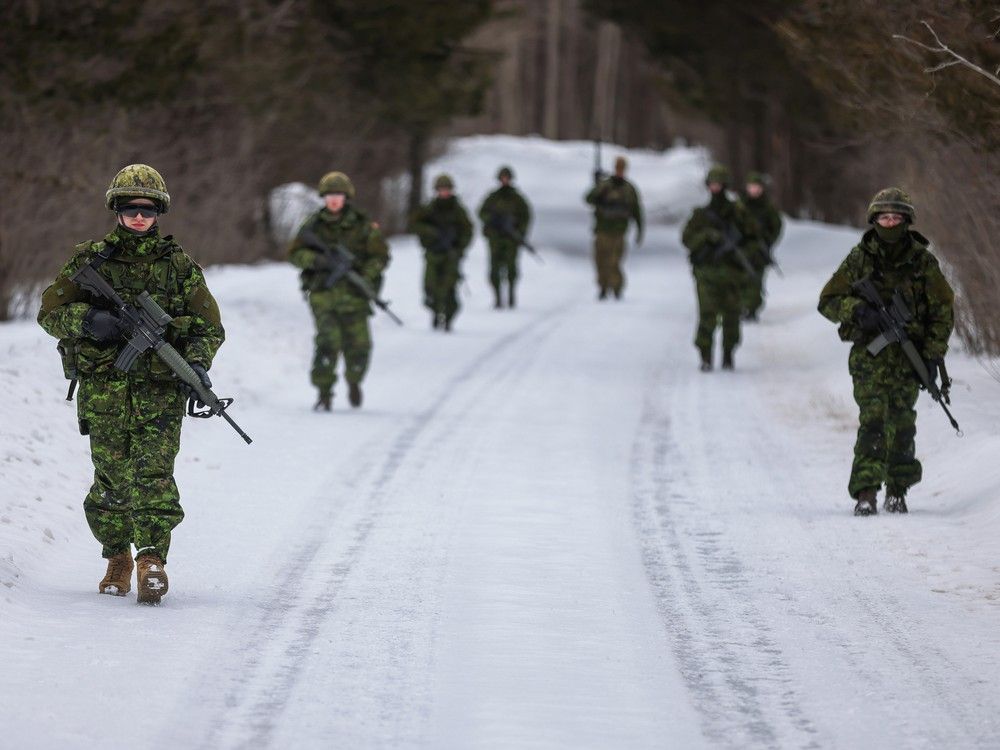
I agree with your points. And I have overstated the aggressor for requirements. As you say, and the IRA and others have consistently demonstrated, a small cell of half a dozen or so can generate the core elements for a Batoche/Oka type of force. Beyond the people supporting the cause there are estimated to be 70,000 individuals in Canada involved in organized gangs. Apparently Hell's Angels alone have about a thousand in 30 or 40 chapters.
....
AI helps me out - 500 Irishmen following Martin McGuinness and Gerry Adams
Estimates for the number of core, active members of the Provisional Irish Republican Army (IRA) during the Troubles (roughly 1969–1998) vary, but generally suggest a relatively small hard-core group of volunteers within a larger, fluctuating organization.
- Peak Active Strength: At the height of the conflict in the early 1970s, estimates of the "active" or core membership range from 1,500 (according to CAIN/Martin Melaugh) to several thousand, with some estimates citing up to 1,200 in Belfast alone in 1971.
- Later Years (Cell Structure): After reorganizing into smaller, more secure "cell" structures in the late 1970s, the number of active, full-time volunteers is believed to have reduced to a core group of approximately 500 to 800.
- Total Volunteers: While the core, active, and armed members were relatively few, some estimates suggest that as many as 8,000 to 10,000 individuals may have passed through the ranks of the Provisional IRA over the course of the 30-year conflict, including active volunteers, support staff, and those in prison
Tying down up to 300,000 Brits over 30 years and disrupting the lives and economy of 2,000,000 people locally and 55,000,000 back on the Mainland.
During the Troubles (1969–2007), over 300,000 British military personnel served in Northern Ireland as part of Operation Banner, with troop levels peaking at approximately 21,000 to 27,000 in the 1970s. They worked alongside the Royal Ulster Constabulary (RUC), which had over 10,000 officers during the conflict's height.
Wikipedia +3
Key Facts on Security Forces:
- Operation Banner: The longest continuous deployment in British military history, starting in 1969 and ending in July 2007.
- Peak Strength: In 1972, the height of the Troubles, there were 21,000 British troops stationed there. Other estimates place the total military personnel (including local regiments) as high as 27,000.
- Total Serving: More than 300,000 soldiers served in Northern Ireland during the 38-year campaign.
- Police (RUC): The Royal Ulster Constabulary maintained a force of around 10,000+ officers.
- Casualties: 1,441 military personnel died during the operation (722 in paramilitary attacks).
- UDR: The locally recruited Ulster Defence Regiment (UDR) was also part of the security effort.
Reddit +6
At the height of the conflict, the combined strength of the British Army, UDR, and RUC meant a very heavy security presence on the streets to manage riots, checkpoints, and counter-insurgency operations
....
But I am glad to be assured that this can never happen in Canada.