• Thanks for stopping by. Logging in to a registered account will remove all generic ads. Please reach out with any questions or concerns.

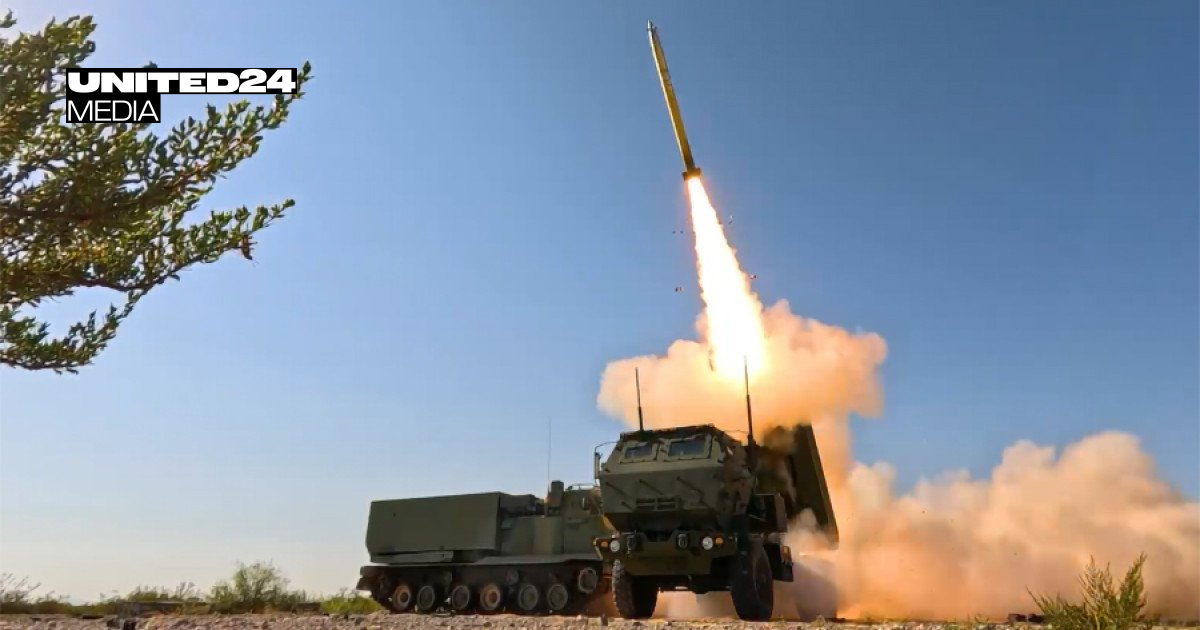
Canada seeks to buy Long Range Precision Rockets (probably US MLRS or HIMARS)


1:50, they contain the fire control electronics. They're integral to the launcher not the pod.
It seems like a product of the GWOT (which it is), so that makes sense. Back in the GWOT, we weren't deleting grid squares with rockets, we wanted precision fires on demand.

In the current context, I see why they are pivoting to more firepower in the same footprint.
 

1:50, they contain the fire control electronics. They're integral to the launcher not the pod.
That still looks like wasted space. That said I'm not sure if one could up the load on the truck and still have functional crane/loader/launcher frame that could handle two pods and fit in a C-130 . . . or if its even worth the squeeze for doubling the load considering its manner of tactical employment.

🍻
 
It seems like a product of the GWOT (which it is), so that makes sense. Back in the GWOT, we weren't deleting grid squares with rockets, we wanted precision fires on demand.

In the current context, I see why they are pivoting to more firepower in the same footprint.
The trucks and launchers are relatively cheap compared to the ammo. I think if I had the choice of a HIMARS with double the pod capacity or two launchers with one pod each, I think I'd opt for creating regiments with more launchers or more regiments. I like redundancy.

:unsure:
 
It seems like a product of the GWOT (which it is), so that makes sense. Back in the GWOT, we weren't deleting grid squares with rockets, we wanted precision fires on demand.

In the current context, I see why they are pivoting to more firepower in the same footprint.

Not really - its development is a direct result of Gulf War 1 where M270s were to slow to be in the first wave of troops deployed. The prototypes were out in 1996, ATACMs in 1998, delivery was in 2005 but in no way was it built for the GWOT.

That still looks like wasted space. That said I'm not sure if one could up the load on the truck and still have functional crane/loader/launcher frame that could handle two pods and fit in a C-130 . . . or if its even worth the squeeze for doubling the load considering its manner of tactical employment.

🍻

Its going to need fire control systems somewhere, either in the cab, or on the outside. Needs to be reasonablly accessible for repair as well.
 
Not really - its development is a direct result of Gulf War 1 where M270s were to slow to be in the first wave of troops deployed. The prototypes were out in 1996, ATACMs in 1998, delivery was in 2005 but in no way was it built for the GWOT.
Fair... not GWOT, but the same mentality. Precision over volume.

There is no world in which the pod needed sponsons for FCS, in which the FCS couldn't have been mounted in the cab. The single pod was entirely a function of the 90s-20s obsession with precision over volume.
 
Fair... not GWOT, but the same mentality. Precision over volume.

There is no world in which the pod needed sponsons for FCS, in which the FCS couldn't have been mounted in the cab. The single pod was entirely a function of the 90s-20s obsession with precision over volume.

As I explained the pod doesnt have sponsons. Its the rack that does. The defining factor isnt precision vs volume its about getting it to the wae zone. Tbats its whole design philosophy. Korean kit doesnt have that issue.
 
As I explained the pod doesnt have sponsons. Its the rack that does. The defining factor isnt precision vs volume its about getting it to the wae zone. Tbats its whole design philosophy. Korean kit doesnt have that issue.
And apparently the new LM kit doesn't either... So either technology has shifted massively in the last couple of years, or LM has realized massed fire matters now.

I'm sure you're more of an expert on FCS and all things artillery than I am, but it seems pretty odd that LM is now magically making a solution that puts more rockets on a truck, after the world has seen massed fires be a thing again... But I'm sure that's totally unrelated to the war in Ukraine, and is just a new technological advancement in rocket launchers...

Perhaps its because their potential customers dont place as high an emphasis on expeditionary operations, as stated that was the entire reason they build HIMARS. And yes, shockingly technology has changed from 1998 to 2026. So FCS gets smaller, more rockets available. However suggesting Ukraine is proving mass fires are more relevant than the conflict that defined the building of HIMARs, the gulf war, would be erroneous. If anything Ukraine has more examples of single gun engagements of targets with direct to crew video feed for correction - so quite the opposite.
 
Perhaps its because their potential customers dont place as high an emphasis on expeditionary operations, as stated that was the entire reason they build HIMARS
Did you not see the video? They can literally put two pods on the same truck, and still fit it in a C-130.

In 2006 they could have made the same two pods fit on the same truck. They didn't, because the customer was obsessed with precision fire, not volume fire.

I'm not saying you're a bad person for liking HIMARS, I'm simply pointing out that the space considerations haven't changed, but magically LM can double the firepower.

By magically you of course mean after 20 odd years of militarization and redesign of an FCS from the 1990s. Simply put consider the size and processing power of a desk top computer in 1998 - now compare that to a smart phone. Now thay we can do more in a smaller space theres no need for a large FCS.

The precision argument is flawed for a bunch of reasons. One is that GMLRS rockets have always been an area of effect weapon - the original contained 400 odd DPICM sub munitions or the equivalent of 6 artillery shells, so it was always designed to engaged a large area. Secondly you point to Ukraine as an example of an emphasis on "volume fire" which is frankly incorrect and exactly not how fires are being used there. Infact we see quite the opposite. So essentially we have no real emphasis on "precision vs volume" in its development and no real driver from Ukraine. If anytbing would have driven "volume fire" it would have been the Gulf War experiance that drove the creation of HIMARs to begin with.
 
I just went down this rabbit hole, as I find somewhat obscure and fortgotten units histories interesting.

I had no idea Gananoque raised so much Artillery.
They weren't alone. Some of these units were in Kingston and Napanee as well. If you go back to the founding dates of the lower numbered batteries you'll find them being formed throughout the mid to late 1800s and strung out primarily at the population centres that ran along the border with the US which was still our predominant domestic foe at the time. Even 13 Bty in Winnipeg (now in Portage La Prairie) was formed in 1871 when Manitoba joined. (Of note is that 13th Fd Bty is exactly seven days older than A and B Batteries which were the start of the regular force and which are now part of 1 RCHA :giggle:)

The thing to note about artillery organizations are that batteries were the cornerstone of the corps organization. For over a century batteries were independent and frequently regrouped or reassigned as individual entities. Brigading them and re-brigading them into "brigades" and later "regiments" didn't change their individual identities or lineage. It's not like the A, B, C, D company and squadron identifiers that the infantry and armoured corps have. That's why 7th Toronto (e.g.) has three batteries called 9 Fd Bty, 15 Fd Bty and 130 Fd bty. which over the years had been assigned to different regiments (2 Brigade; 7 Brigade (kind of); 7 (Toronto) Regt; 11 Army Fd Regt (kind of); 29 Fd Regt; 7 (Toronto) Regt (again)) There were occasions were a battery would be formed in one place and serve for years or decades there and then be closed out only to be reformed elsewhere with the same title but years or decades later without a link in lineage. One can trace much of it cleanly but not all of it.

🍻
 
More miracles of modern technology.

Updating target co-ordinates to the GMRLS missiles 'on-the-fly' so as to hit relocating targets.


Everything is getting smaller, faster and more capable.


2020-2024


“The Long-Range Precision Fire Cross Functional Team asked what the possibility of driving and firing a High Mobility Artillery Rocket System launcher from a remote location. HIMARS is 100% manual. It is driven manually. The gunner’s display unit has switches and buttons that you push, and a manual keyboard. While the mission comes in digitally, what you do to fire it is all done manually.”

"...they transformed that concept demonstrator into a fully unmanned, cab-less, autonomous launcher. In doing so, lethality of the launcher was doubled while the original mobility and transportability of its former HIMARS self was maintained."


2026

“That battery commander could be performing a protect mission one day, and then the next day, if that maneuver commander wanted to conduct offensive operations, that same battery could fire offensive missiles and munitions.”"


“We focused on a design parameter that looks at being able to launch five different missiles or munitions,” Lozano said.

"Imagine if a battery of soldiers had a battle operations center with a virtualized Integrated Battle Command System or Next-Generation Command and Control capability or Aegis weapons platform, he said. And then imagine a common fires radar that could perform both an air defense mission but also counter-fire target acquisition.

"“And then you had a set of launchers that could fire both offensive and defensive missiles,” Lozano said. “That battery commander could be performing a protect mission one day, and then the next day, if that maneuver commander wanted to conduct offensive operations, that same battery could fire offensive missiles and munitions.”"

....

 
Last edited:
Back
Top