• Thanks for stopping by. Logging in to a registered account will remove all generic ads. Please reach out with any questions or concerns.

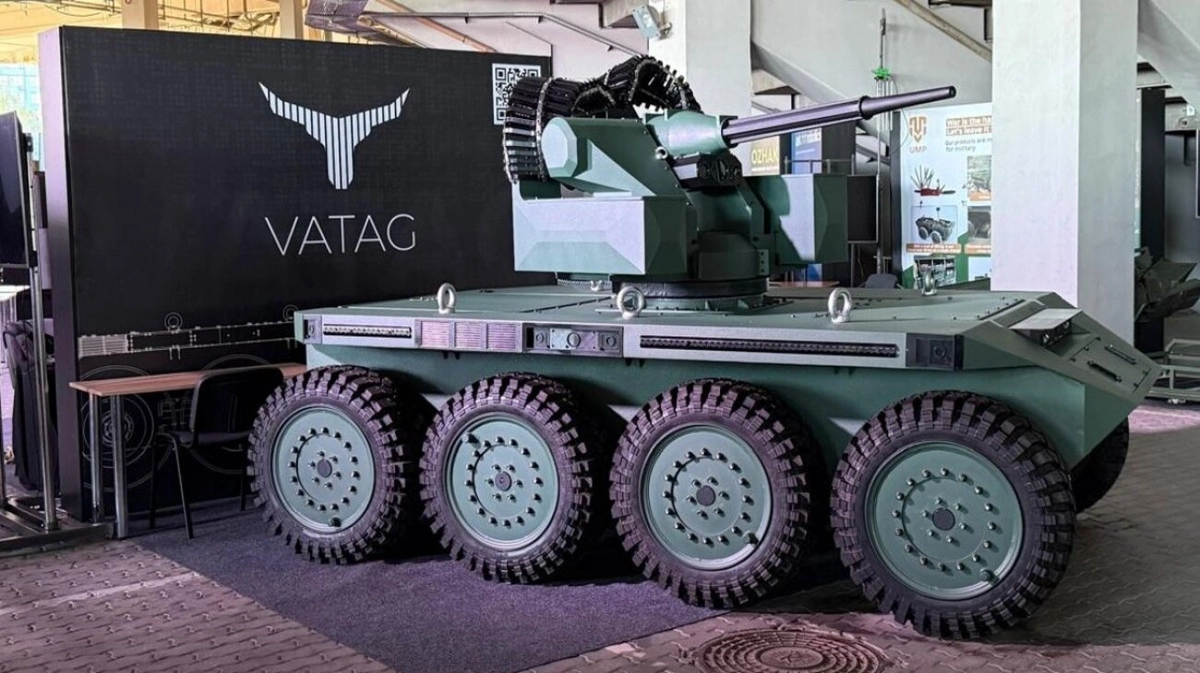
Future Armour

I believe in building one machine that can do many things for logistical purposes.
I agree entirely on one chassis - I may have been too critical of Boxer. They advertised the interchangeability of the mission module which I've always thought is more fad than useful. BUT. . . the idea of a common chassis right up to the drivers station ought to be de rigour for the fighting vehicle fleet. I'm ambivalent whether the mission module is welded on or interchangeable although I'm leaning just a touch more to Boxer-style than I used to. When it comes to dual use weapon modules, however, I tend to think of them as more technically complex (and thus more expensive) than they need to be and one has to be very careful about crew training and simultaneous, but mutually exclusive use during contact.
all the CUAS turrets could be under the supervision of one person in the troop
It's not there yet at the small scale we consider needed for a platoon or company, but I agree the time will come when these things are networked and functioning cooperatively - and quite possibly by a system outside of the company or even battalion itself. That is not the same as the system being completely autonomous. My guess is that there are quite a few more years where each system will need a crew,
I further believe that even though radars are better and cheaper they are still emitters
Very true and there are a whole lot of folks much smarter than me in this field working on solutions for the CUAV/AD field. We're at an infancy stage right now and all the glossy brochures aren't delivering a solid solution.
4 vehicles with audio, passive RF and EO/IR sensors, and one with a radar, I would think would make an acceptable force basis. At leat for the Recce part of your Strike-Recce complex.
I simply call it "cavalry" now and leave "tank" as a separate organization.
But you are also a fan of using your tanks for both striking the schwerpunkt and for conducting reconnaissance.
Definitely yeas for the former. Not necessarily for the latter. I leave "recce" as the very light sneak and peak recce of the infantry battalion recce platoon. I'm not using "recce" anymore as a noun or adjective above battalion. I accept recce as a verb for a part of what "cavalry" does.
A lot of which concerns me because we’ve seen that all of the digital displays don’t seem to make up for situational awareness of actually been up in the turret and being able to look through an optical device either weapon site or vision periscope blocks.
Bought a Subaru Forester this year. They must think that I'm ready for a new model because they keep sending me ads for the 2026. It comes with the "360-degree Surround-view monitor" feature. This uses multiple cameras that you can use to see all around the vehicle and which stitches together images from them to give you an all around overhead view that looks something like an image from a drone flying overhead. It comes with specific vehicles - Subaru doesn't sell options - just vehicle classes so its impossible to price but I'd guess as less that $1,000 of components. Properly designed layouts for cameras and redundancy for damage an obscuration will, IMHO, provide better situational awareness - especially if networked with other battlefield sensors from connected vehicles.


🍻
 
I agree entirely on one chassis - I may have been too critical of Boxer. They advertised the interchangeability of the mission module which I've always thought is more fad than useful. BUT. . . the idea of a common chassis right up to the drivers station ought to be de rigour for the fighting vehicle fleet. I'm ambivalent whether the mission module is welded on or interchangeable although I'm leaning just a touch more to Boxer-style than I used to. When it comes to dual use weapon modules, however, I tend to think of them as more technically complex (and thus more expensive) than they need to be and one has to be very careful about crew training and simultaneous, but mutually exclusive use during contact.

It's not there yet at the small scale we consider needed for a platoon or company, but I agree the time will come when these things are networked and functioning cooperatively - and quite possibly by a system outside of the company or even battalion itself. That is not the same as the system being completely autonomous. My guess is that there are quite a few more years where each system will need a crew,

Very true and there are a whole lot of folks much smarter than me in this field working on solutions for the CUAV/AD field. We're at an infancy stage right now and all the glossy brochures aren't delivering a solid solution.

I simply call it "cavalry" now and leave "tank" as a separate organization.

Definitely yeas for the former. Not necessarily for the latter. I leave "recce" as the very light sneak and peak recce of the infantry battalion recce platoon. I'm not using "recce" anymore as a noun or adjective above battalion. I accept recce as a verb for a part of what "cavalry" does.

Bought a Subaru Forester this year. They must think that I'm ready for a new model because they keep sending me ads for the 2026. It comes with the "360-degree Surround-view monitor" feature. This uses multiple cameras that you can use to see all around the vehicle and which stitches together images from them to give you an all around overhead view that looks something like an image from a drone flying overhead. It comes with specific vehicles - Subaru doesn't sell options - just vehicle classes so its impossible to price but I'd guess as less that $1,000 of components. Properly designed layouts for cameras and redundancy for damage an obscuration will, IMHO, provide better situational awareness - especially if networked with other battlefield sensors from connected vehicles.

🍻

Higher levels of the Bronco and Baby Bronco have that as well. Looks great for off-roading!
 
And note that I'm not generally against turrets - just in circumstances where there is a dual role to also carry dismounts or troops in general where interior space is needed. It's interesting that many new tank designs take the crew out of the turret to enhance crew survivability at the cost of mechanical complexity.
With the caveat that not all "lessons" from Ukraine are actually lessons that should be followed, but with the increased so called "transparency" of the battlefield and the vastly increased number of non-LOS weapons present is it still the right approach to maximize the internal space of IFVs to be able to maximize the number of dismounts they can carry, or is it better to disperse them among different vehicles to reduce risk?
 
With the caveat that not all "lessons" from Ukraine are actually lessons that should be followed, but with the increased so called "transparency" of the battlefield and the vastly increased number of non-LOS weapons present is it still the right approach to maximize the internal space of IFVs to be able to maximize the number of dismounts they can carry, or is it better to disperse them among different vehicles to reduce risk?
Its a good point but one has to weigh that against the friction that comes from having to manage and maintain more vehicles in a given sized unit or formation. It's kind of like having to make a choice somewhere between:

a Spartan APC - 4 dismounts

a843bf_948aa97d4c584c3d8e7bdbea075c2227~mv2.jpg


and a US Marines AAVP-7 - 21 dismounts

170606-N-PF515-398_%2834973155842%29.jpg


🍻
 
Its a good point but one has to weigh that against the friction that comes from having to manage and maintain more vehicles in a given sized unit or formation. It's kind of like having to make a choice somewhere between:

a Spartan APC - 4 dismounts

a843bf_948aa97d4c584c3d8e7bdbea075c2227~mv2.jpg


and a US Marines AAVP-7 - 21 dismounts

170606-N-PF515-398_%2834973155842%29.jpg


🍻
That's the problem. I don't think anyone has figured out yet what the real implications of the Ukraine war are on modern mechanized warfare. We're stuck in a bind where the extreme choices are go lighter/faster with active protection systems, numbers and greater difficulty to detect taking the place of armour or going heavier with active and passive protection to defeat the current crop of small UAVs. So do we split the difference? A bit of each? Of course there's no one single right answer as every war will be different.
 
While RWS do keep folks from being exposed, any of the ones that are non penetrating require reloading the RWS weapons and conducting any sort of immediate action drills for someone to hop out and be exposed.

So I put them in a good for Convoy Escort, Rear Area Security, and similar tasks — not for a primary combat vehicle.

Unless you design it - and that's how they should be designed - so that reloads can be done from under cover.

And note that I'm not generally against turrets - just in circumstances where there is a dual role to also carry dismounts or troops in general where interior space is needed. It's interesting that many new tank designs take the crew out of the turret to enhance crew survivability at the cost of mechanical complexity.

🍻

One the design front ....

The M901 design appealed to me and I think it showed up on at least one of the early Rafael RWS offerings with a medium cannon in the 30 to 35mm range.

1772562214242.jpeg

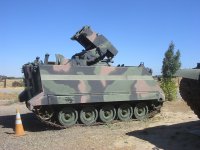
The salient bit is the twin hinges. The upper one allows the weapon, in this case the TOW tubes, to elevate. The lower one adjusts the height of the upper one. It permits the entire unit to collapse.

I would think that with a littlel bit of craft the entire upper mechanism could be folded into the crew compartment while the hatches were open, permitting loading and servicing the weapon under cover.

It would also have the beneficial effect of reducing the height for transport. Height seems to be a limiting factor for airlift.


Along the lines of the Rafael Samson RWS 30. (See as the 2:20 mark)
 
That's the problem. I don't think anyone has figured out yet what the real implications of the Ukraine war are on modern mechanized warfare. We're stuck in a bind where the extreme choices are go lighter/faster with active protection systems, numbers and greater difficulty to detect taking the place of armour or going heavier with active and passive protection to defeat the current crop of small UAVs. So do we split the difference? A bit of each? Of course there's no one single right answer as every war will be different.


What was the impact of the Jaegers and Rifles on the battlefield?

Initially a small proportion of the Line Infantry in firing platoons was sacrificed for a skirmishing line of light troops. Over time the proportion of skirmishers increased. When the machine gun showed up the firing platoons were replaced by the machine guns and every infanteer became a skirmisher engaging the enemy individually at long range.

I think the same thing is happening only with vehicles. More smaller dispersed skirmishing vehicles, with vanishingly small crews. The machine guns (and the 75s) are being replaced by long range range precision and loitering munitions.
 
@Kirkhill - it sounds like you're describing an updated version of the VAB Mephisto turret

 
What was the impact of the Jaegers and Rifles on the battlefield?

Initially a small proportion of the Line Infantry in firing platoons was sacrificed for a skirmishing line of light troops. Over time the proportion of skirmishers increased. When the machine gun showed up the firing platoons were replaced by the machine guns and every infanteer became a skirmisher engaging the enemy individually at long range.

I think the same thing is happening only with vehicles. More smaller dispersed skirmishing vehicles, with vanishingly small crews. The machine guns (and the 75s) are being replaced by long range range precision and loitering munitions.
I'm not sure that I agree with the conclussion.

It's very clear that loitering munitions create a threat that must be defended against. You need some form of effective CUAS. But do you need it on every vehicle and if so what is the cost of that? Does the cost allow for more vehicles being equipped or mitigate against it? Will flooding the field with more vehicle with smaller troop contents truly minimize troop loss? Or is the effectiveness of the CUAS that matters?

Long before UAS came along the argument was: do we have IFVs that deliver troops onto the objective in the face of direct fire weapons or do we battlefield taxi them short of that and let them dismount before they become "whole vehicle" casualties?

The issue of what is the right size of armoured carrier has been with us for a long time without a definitive answer. The only sure thing that I see is that one needs to answer how much CUAS is enough to protect a platoon? a company? a battalion?

🍻
 
Last edited:
I agree entirely on one chassis - I may have been too critical of Boxer. They advertised the interchangeability of the mission module which I've always thought is more fad than useful. BUT. . . the idea of a common chassis right up to the drivers station ought to be de rigour for the fighting vehicle fleet. I'm ambivalent whether the mission module is welded on or interchangeable although I'm leaning just a touch more to Boxer-style than I used to. When it comes to dual use weapon modules, however, I tend to think of them as more technically complex (and thus more expensive) than they need to be and one has to be very careful about crew training and simultaneous, but mutually exclusive use during contact.
I do not think that one chassis options are viable. You need a Heavy, a Medium, and a Light for Tracked, and at least a Light and Medium for wheeled.

I think the Boxer is a lot of lies for the price of one.
I'm not sure that I agree with the conclusion.

It's very clear that loitering munitions create a threat that must be defended against. You need some form of effective CUAS. But do you need it on every vehicle and if so what is the cost of that? Does the cost allow for more vehicles being equipped or mitigate against it? Will flooding the field with more vehicle with smaller troop contents truly minimize troop loss? Or is the effectiveness of the CUAS that matters?
I think that loitering munitions are just one of the many threats that is needed to be dealt with by APS's.
Long before UAS came along the argument was do we have IFVs that deliver troops onto the objective in the face of direct fire weapons or do we battlefield taxi them short of that and let them dismount before they become "whole vehicle" casualties?
Or do you do a mix of both?
The issue of what is the right size of armoured carrier has been with us for a long time without a definitive answer. The only sure thing that I see is that one needs to answer how much CUAS is enough to protect a platoon? a company? a battalion?

🍻

The Counter to the Counter to the Counter...
I see C-UAS, in the same vein as LLAD, and C-RAM. It is somewhat threat dependent, but the demands are going to increase across the board.
 
@Kirkhill - it sounds like you're describing an updated version of the VAB Mephisto turret


Kind ofish. But I want to keep the reload/crew compartment clear.

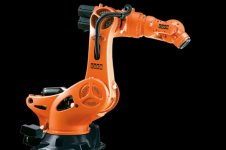
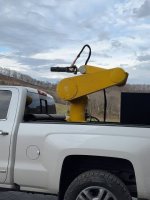
How about replacing the RWS with one of these? Weld it to the top deck and attach the weapon to it.
You now have an Arnold Schwarzenegger articulated robot arm that can reach into the crew compartment, around the truck and present the weapon in all aspects. It could even help load the vehicle.

 
I do not think that one chassis options are viable. You need a Heavy, a Medium, and a Light for Tracked, and at least a Light and Medium for wheeled.
Not to speak for @FJAG but I'm guessing that by a single chassis he's more referring to the various specialty variants of a vehicle class sharing the same chassis....CV90 IFV, CV90 CP, CV90 AD, CV90 AT, CV90 Ambulance, CV90 Mortar, etc. for the sake of streamlined logistics. Not one chassis for Light, Medium and Heavy roles.

Heavy units would ideally have all variants of a heavy vehicle while Light units would have variants of a single light vehicle....and I think I know where you stand on Medium (LAV...cough, cough) units so I'll leave that out.
 
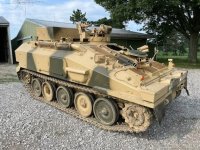
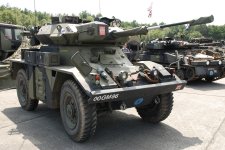
CVR(T) - Spartan


1772572774379.jpeg

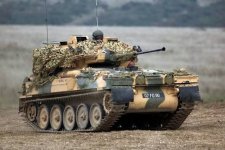
CVR(T) - Scimitar

1772572890012.jpeg

CVR(W) - Fox

1772572843850.jpeg

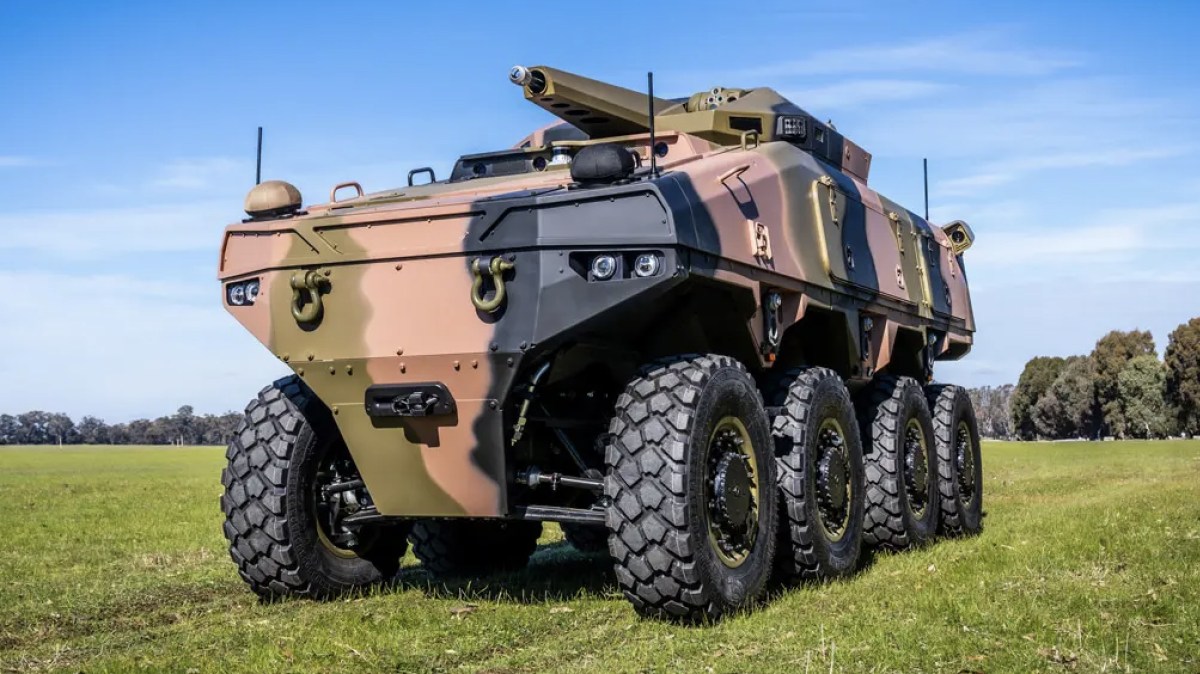
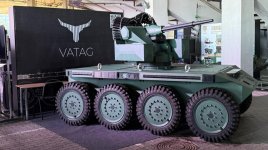
CVR(W) Atlas - UGV

1772572735304.jpeg


1772573092557.jpeg


1772573302062.jpeg

That is the evolution of the recce/light DFS support complex.

And your truck loaded with Brimstone and JAGMs is on line with you. Because your drone can detect the troop threatening you 15 km away and the Brimstone has a range in the 10 to 15 km range.

1772573549066.jpeg
 
Not to speak for @FJAG but I'm guessing that by a single chassis he's more referring to the various specialty variants of a vehicle class sharing the same chassis....CV90 IFV, CV90 CP, CV90 AD, CV90 AT, CV90 Ambulance, CV90 Mortar, etc. for the sake of streamlined logistics. Not one chassis for Light, Medium and Heavy roles.

Heavy units would ideally have all variants of a heavy vehicle while Light units would have variants of a single light vehicle....and I think I know where you stand on Medium (LAV...cough, cough) units so I'll leave that out.

The LAV 6.0 is not really a Medium, at 32 tons Combat Weight, I can't for the life of me see how anyone believes that is a Light, let alone Medium vehicle. The LAV 6.0 MkII ISC (otherwise know as the LAV 700, but name changed to try be an unnoticeable ECP) with the 35mm cannon etc is running close to 38 tons when combat loaded -- my criteria for Medium means it fits (size and weight) into a Herc.
 
Back
Top