
• Thanks for stopping by. Logging in to a registered account will remove all generic ads. Please reach out with any questions or concerns.

GBAD - The return of 'FOBS'


Home Defence is everyone's problem.
 
This one really sounds interesting - Something closer to an all-aspect Trophy system than a SkyRange LAA turret.


"Edda is an AI-powered point defense turret built for the engagements legacy C-sUAS can't handle — fast-moving 7-inch drones at 10–100 m, in cluttered urban and base-perimeter environments."

.....

"Edda, a roughly 50-pound (23 kg) counter-drone turret developed by Austin, Texas-based 9 Mothers.

"Edda detects the sound of small drone rotors, uses cameras to track targets and fires a shotgun. It is designed to engage drones approximately 7 inches (18 cm) across at distances between 33 and 328 feet (10–100 meters).

"In August, the U.S. Army tested the same turret on a self-driving Ford F-250 equipped with Forterra technology during a live-fire exercise at Fort Bragg, North Carolina."


.....

A class of system suitable for mounting on any vehicle for C-UAS (C-RAM?) or on any civilian base?
 
The experimentation continues


"VIENNA — Estonia’s new defense minister said his country should consider buying light jet aircraft to shoot down Russia’s faster, jet-powered attack drones.

"Martin Herem, a retired general who took office Sept. 16, floated the idea in interviews after meeting Ukrainian President Volodymyr Zelenskyy in Kyiv. He told The Baltic Sentinel and the daily Postimees that Estonia should study the option, saying air-to-air weapons are the most effective counter to the drones."

....

Helicopters and turboprops were fast enough to deal with batteries and props. Do we need something like the Hawk, or, God forbid, the Gripen, to knock down jets and rockets?

Keeping in mind that the slower, cheaper threat is unlikely to go away.
 
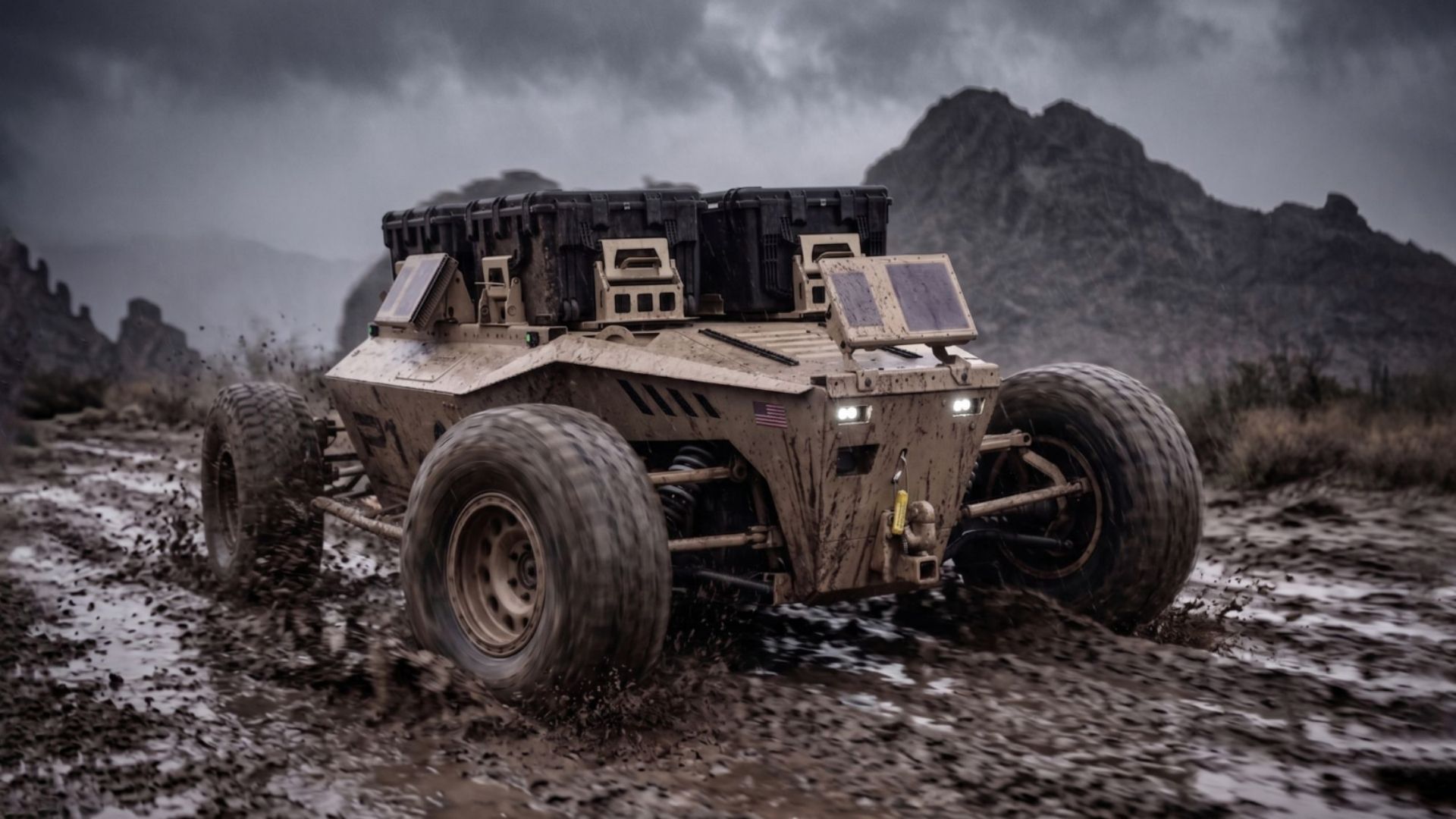
C-UAS laser mounted on a UGV:


Archimedes is a lightweight turret that combines a high-power laser with machine vision and radar, and Aurelius says it can find, track and burn down a drone on its own without an operator initiating each engagement. The system is aimed at Group 1 and Group 2 drones, the small and medium-size types that include commercial quadcopters and many of the one-way attack drones used in Ukraine, and the company says it can defeat them at more than a kilometer.
The two firms announced their partnership in July. According to Tectonic, Archimedes is being integrated first on the Ox, the unmanned ground vehicle American Rheinmetall has entered in the U.S. Army’s Ground Optionally Autonomous Transport competition for a vehicle that hauls supplies and equipment over rough terrain. With a laser on board, a cargo-carrying vehicle can defend itself against drones during resupply runs, a role Rheinmetall has described as protection for autonomous logistics missions.
During the Pentagon’s T-REX 26-2 experimentation event, the laser downed more than 20 quadcopters and more than five drones supplied by the U.S. Army, Tectonic reported, and at the U.S. Army’s Operation Jailbreak exercise at Fort Carson, Colorado, Aurelius linked Archimedes with Anduril’s Lattice software and the Army’s Forward Area Air Defense command and control system, which ties sensors and shooters together.

Lasers appeal to militaries because each shot costs only the electricity needed to fire it, compared with tens of thousands of dollars or more for a missile interceptor, and Aurelius says it builds Archimedes largely from commercially available parts to keep the system’s own price down.
You could potentially push a small fleet of these forward from your positions to temporarily clear the immediate front of enemy FPV drones which could allow your ground troops to rapidly advance in the time gap it takes to launch replacement drones.
 
Back
Top