• Thanks for stopping by. Logging in to a registered account will remove all generic ads. Please reach out with any questions or concerns.

GBAD - The return of 'FOBS'


Home Defence is everyone's problem.
 
This one really sounds interesting - Something closer to an all-aspect Trophy system than a SkyRange LAA turret.


"Edda is an AI-powered point defense turret built for the engagements legacy C-sUAS can't handle — fast-moving 7-inch drones at 10–100 m, in cluttered urban and base-perimeter environments."

.....

"Edda, a roughly 50-pound (23 kg) counter-drone turret developed by Austin, Texas-based 9 Mothers.

"Edda detects the sound of small drone rotors, uses cameras to track targets and fires a shotgun. It is designed to engage drones approximately 7 inches (18 cm) across at distances between 33 and 328 feet (10–100 meters).

"In August, the U.S. Army tested the same turret on a self-driving Ford F-250 equipped with Forterra technology during a live-fire exercise at Fort Bragg, North Carolina."


.....

A class of system suitable for mounting on any vehicle for C-UAS (C-RAM?) or on any civilian base?
 
The experimentation continues


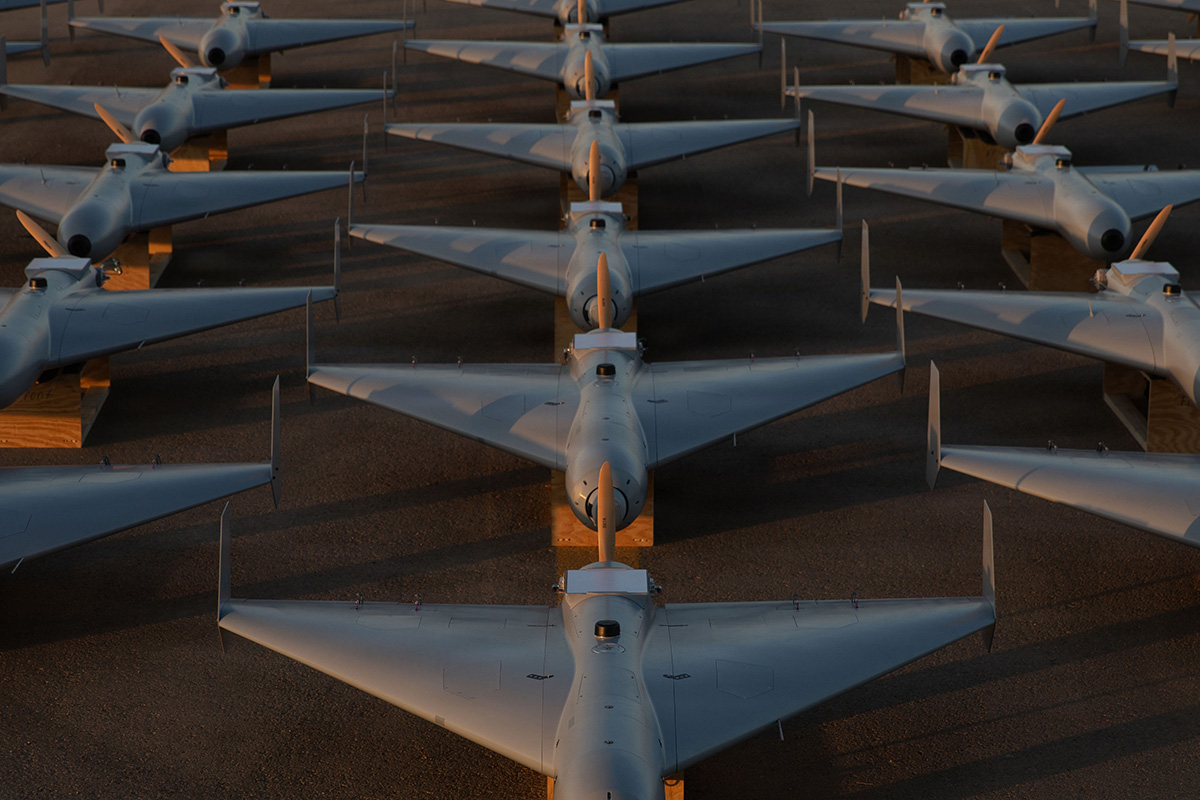
"VIENNA — Estonia’s new defense minister said his country should consider buying light jet aircraft to shoot down Russia’s faster, jet-powered attack drones.

"Martin Herem, a retired general who took office Sept. 16, floated the idea in interviews after meeting Ukrainian President Volodymyr Zelenskyy in Kyiv. He told The Baltic Sentinel and the daily Postimees that Estonia should study the option, saying air-to-air weapons are the most effective counter to the drones."

....

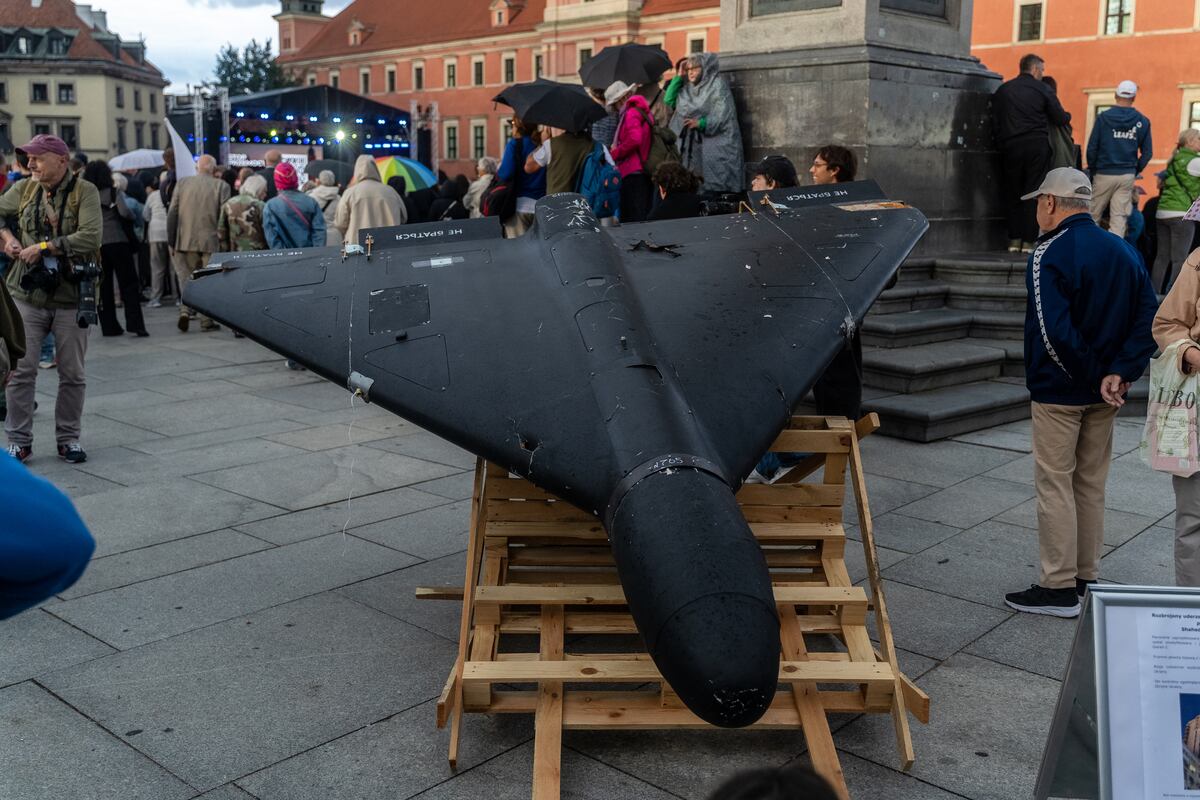
Helicopters and turboprops were fast enough to deal with batteries and props. Do we need something like the Hawk, or, God forbid, the Gripen, to knock down jets and rockets?

Keeping in mind that the slower, cheaper threat is unlikely to go away.
 
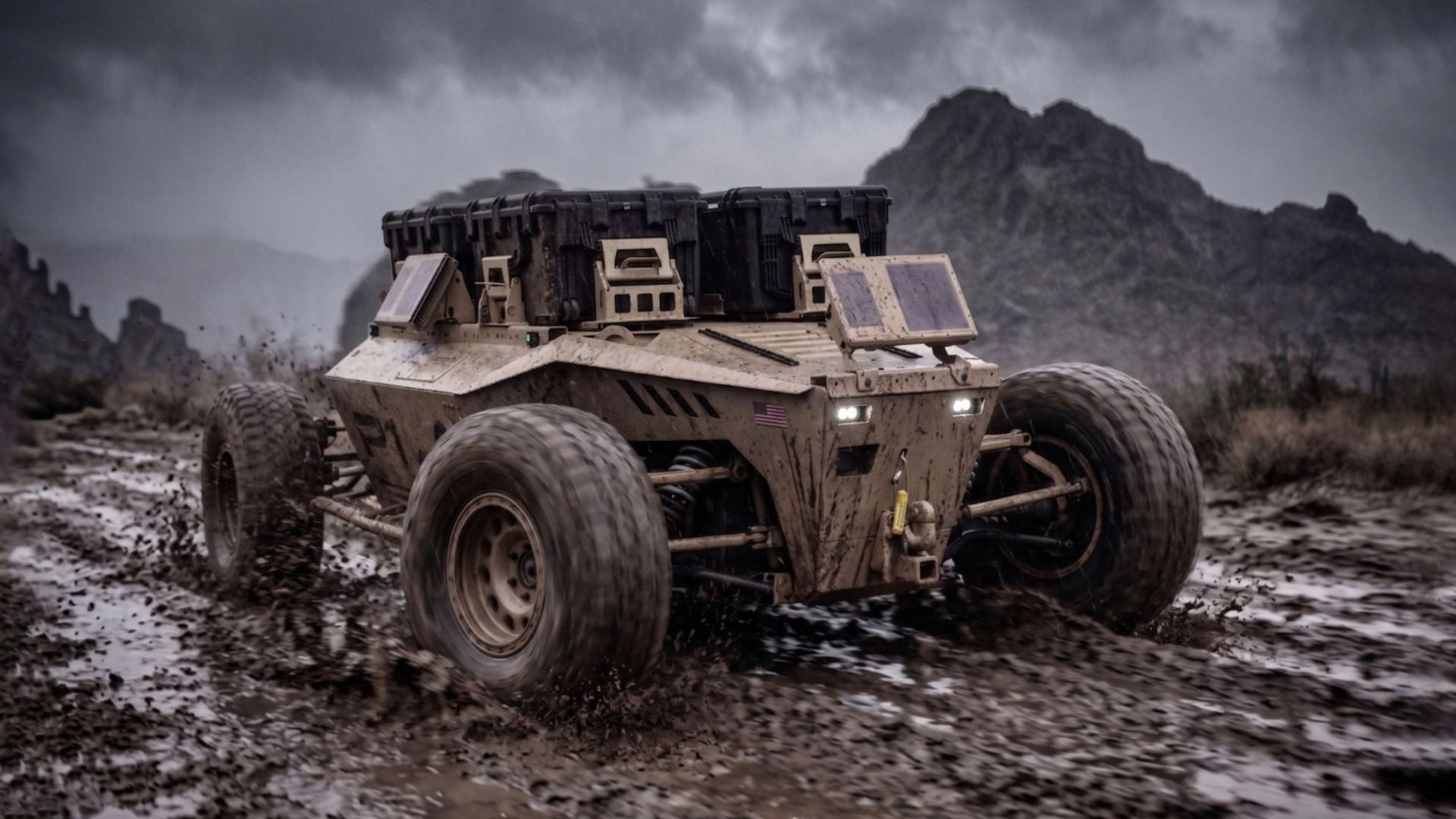
C-UAS laser mounted on a UGV:


Archimedes is a lightweight turret that combines a high-power laser with machine vision and radar, and Aurelius says it can find, track and burn down a drone on its own without an operator initiating each engagement. The system is aimed at Group 1 and Group 2 drones, the small and medium-size types that include commercial quadcopters and many of the one-way attack drones used in Ukraine, and the company says it can defeat them at more than a kilometer.
The two firms announced their partnership in July. According to Tectonic, Archimedes is being integrated first on the Ox, the unmanned ground vehicle American Rheinmetall has entered in the U.S. Army’s Ground Optionally Autonomous Transport competition for a vehicle that hauls supplies and equipment over rough terrain. With a laser on board, a cargo-carrying vehicle can defend itself against drones during resupply runs, a role Rheinmetall has described as protection for autonomous logistics missions.
During the Pentagon’s T-REX 26-2 experimentation event, the laser downed more than 20 quadcopters and more than five drones supplied by the U.S. Army, Tectonic reported, and at the U.S. Army’s Operation Jailbreak exercise at Fort Carson, Colorado, Aurelius linked Archimedes with Anduril’s Lattice software and the Army’s Forward Area Air Defense command and control system, which ties sensors and shooters together.

Lasers appeal to militaries because each shot costs only the electricity needed to fire it, compared with tens of thousands of dollars or more for a missile interceptor, and Aurelius says it builds Archimedes largely from commercially available parts to keep the system’s own price down.
You could potentially push a small fleet of these forward from your positions to temporarily clear the immediate front of enemy FPV drones which could allow your ground troops to rapidly advance in the time gap it takes to launch replacement drones.
 
The Aussies building a national GBAD system


"The Australian Army’s National Advanced Surface-to-Air Missile System (NASAMS) has achieved final operational capability, strengthening the country’s integrated air and missile defense architecture.

"The milestone confirms that NASAMS has met its operational requirements and is ready for Australian Defence Force (ADF) missions.

"Delivered under the Short Range Ground Based Air Defence (SRGBAD) project, NASAMS forms the inner layer of the broader Joint Integrated Air and Missile Defence capability."

...

A 30 BAUD integrated system encompassing the existing Short Range GBAD system based on the Norwegian-American NASAMS system, a Joint Air Battle Management System by Lockheed Martin Australia (Air Project 6500) and the Medium Range GBAD system (Land Project 6504) prototyped with SM-2 missiles.

....

"PERTH, Australia — To protect a whole continent, Australia has only a regiment’s worth of NASAMS short-range air defense systems. Recognizing this is not nearly enough, Canberra has launched a formal tender for a medium-range, ground-based air defense solution for the Australian Army."

"The National Defence Strategy 2026 prioritized missile defense, calling for “accelerated introduction of medium-range, ground-based, active missile defense through investment in missile launchers and munitions and integrating them with the Australian Defence Force’s command-and-control systems.”

"This envisioned off-the-shelf system is expected to be a “proven capability,” contributing to a national, integrated system, the solicitation reads."
 
“The great thing about it is that there wasn’t a formal requirement set out for this. This was sort of organic. People started figuring it out without it being a big program of record,” Allvin added. “Good thing they did.”


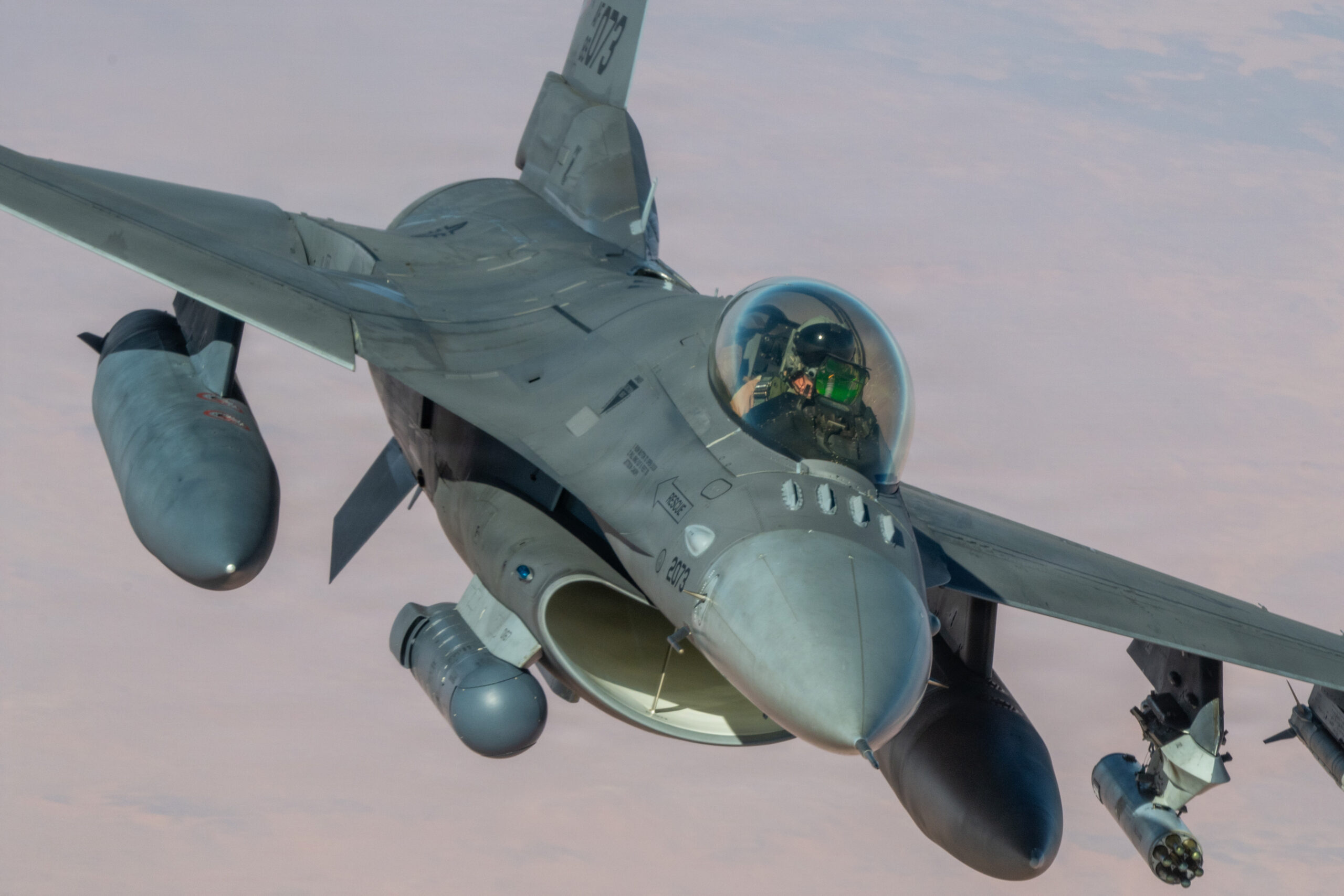
F16s and APKWS II may have a continuing role in local CUAS?


“A new capacity fighter” may refer to the possible acquisition of new-production F-16 Vipers, which Lt. Gen. Tabor said at the roundtable could be an option in the future, according to an earlier story from Air & Space Forces Magazine. He also said making any such decision was not an “urgent” priority. This is just one possibility here.


...

Observation

"APKWS has become the preferred method for U.S. warplanes to down drones fired by Iran and Iranian-backed militias in the Middle East over the past few years. But it is not just an air-to-air weapon. APKWS munitions can also be fitted to various platforms for air-to-surface, surface-to-surface, and surface-to-air use."

"APKWS is an attractive capability for the Pentagon because of its low cost—roughly $35,000, according to officials. That gives the Air Force a way to shoot down drones without expending costly air-to-air missiles."

“We were on the wrong side of the cost curve in our munitions employment,” former Air Force Chief of Staff Gen. David Allvin said in an interview with Air & Space Forces Magazine.

“The great thing about it is that there wasn’t a formal requirement set out for this. This was sort of organic. People started figuring it out without it being a big program of record,” Allvin added. “Good thing they did.”
 
Privatization of GBAD

Based on European developments I asked for companies currently providing CUAS services to infrastructure commercially..

AI response.

Several private security and aerospace defense companies provide Counter-Unmanned Aircraft Systems (C-UAS) services, ranging from turn-key airspace monitoring to contractor-operated threat mitigation: [1, 2]
    • Volatus Aerospace: Offers Contractor-Owned, Contractor-Operated (COCO) Intelligence, Surveillance & Reconnaissance (ISR) and layered C-UAS services to detect, identify, track, and mitigate unauthorized drones over critical infrastructure and operational zones. [1]
    • Constellis: Delivers turnkey UAS and C-UAS services, including platform deployment, multi-sensor integration, radar, RF detection, and jamming for surveillance, patrol, and threat detection. [1]
    • Parsons: Provides modular, vendor-agnostic C-UAS architectures featuring AI-enabled command and control through DroneArmor, multi-band RF, radar, EO/IR, and acoustic detection. [1]
    • Plurilock: Delivers cybersecurity-native C-UAS specialist consulting and integrated defensive platforms that unify fragmented detection sensors and response tools for residential communities and commercial properties. [1]
    • WhiteFox Defense Technologies: Provides airspace security and counter-drone systems like DroneFox and Stratus to detect RF drone signals, track operators in real time, and deploy surgical mitigation. [1]
    • Dedrone: Supplies smart airspace security and C-UAS technology utilized across high-profile public safety deployments, infrastructure sites, and enterprise facilities. [1]


With the proliferation of less-than-lethal CUAS solutions (DE, RF, EW, Decoys), low cost kinetic (non-explosive) interceptor drones, and autonomous turrets armed with short range effectors (shotguns, small calibre LMGs), is the defence of infrastructure likely to become an insurance nuisance managed by commercial entities? An extension of bird clearance activities?
 

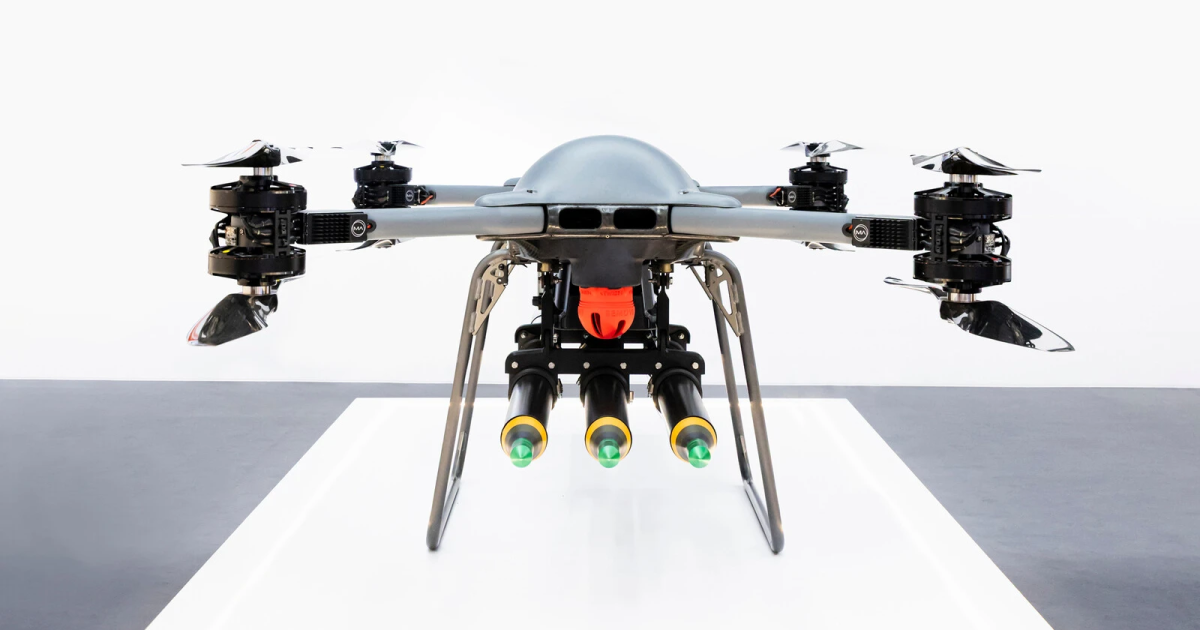
And quadcopter UAS launched APKWS II missiles as a GBAD adjunct. The Malloy T150.

1792864097312.png


Coming soon to a Light Infantry Battalion near you? Quadcopters instead of Bren Carriers for the Support Platoons and the CQMS?
 
No, but certainly to the divisional air defence regiment.

;)

Perhaps there too but 70mm APKWS II is a multi-purpose round that can be used in the Air to Air, Air to Ground, Ground to Air and Ground to Ground roles. It can function against personnel in the open, bunkers, trucks, armoured vehicles, boats, UAVs and helicopters. It can emulate mortar rounds, ATGMs and SAMs.

The 70mm round is a capable battalion level weapon.

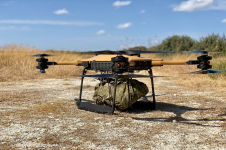
The Malloy T150
1792865292245.png

The T-150 has a payload of 68 kg, a range of 13 to 37 km and a speed of 108 kmh with an endurance of about half an hour.

It is a last mile asset, a pop-up capability.

In a force fielding 1000 km PrSMs from Divisional HIMARs the Divisional Air Defence Regiment is going to need something with much greater reach.

......


The Malloy T-150 uncrewed air system (UAS) serves as a core heavy-lift tactical logistics asset for British frontline units, primarily operated by the Royal Marines and the Royal Navy. Following rigorous global evaluations, it was formally declared ready for front-line operational deployment under a "Release to Service" status. [1]
Within British tactical and battalion-level infrastructure, the T-150 has fundamentally reshaped the "last-mile" logistical footprint across multiple branches.


1. Royal Marines & Commando Service
The T-150 is heavily integrated into the Commando Logistic Regiment (CLR) and operated by dedicated specialist units like the Malloy Flight, Delta Squadron. [1, 2, 3]
    • The Tactical Role: Its primary function at the battalion and commando level is high-risk tactical resupply, shifting dangerous "last-mile" cargo transport away from all-terrain vehicles, personnel on foot, or skis. [1]
    • Frontline Agility: Operating in small, two-person teams (one pilot, one systems monitor), marine commandos deploy the T-150 rapidly from rugged transit cases in under five minutes. [1, 2, 3]
    • Extreme Environments: The T-150 is actively deployed by Royal Marines during NATO winter exercises in northern Norway. In temperatures dipping to -28°C, the drones autonomously transport vital battlefield equipment—including 81mm mortars, heavy machine guns, ammunition, rations, blood supplies, and explosive ordnance disposal (EOD) robots—across unforgiving, snow-covered terrain. [1]

2. Royal Navy & Amphibious Support
The T-150 is utilized by the 700X Naval Air Squadron to bridge naval task groups with ground forces (ship-to-shore) and handle inter-vessel transport (ship-to-ship). [1, 2, 3]
    • Warship Operations: The drone is deployed natively from moving flight decks without specialized launch infrastructure. It has notably taken over routine, lightweight cargo duties from manned helicopters aboard the UK Carrier Strike Group and vessels like HMS Prince of Wales. [1, 2, 3]
    • Disaster Relief: In broader maritime service, the drone is deployed via vessels like HMS Trent during Caribbean hurricane seasons to ferry critical emergency aid to coastal communities severed from traditional supply routes. [1]

3. British Infantry & Wider Armed Forces
While the Royal Marines have pioneered the primary tactical adoption of the T-150 within the UK amphibious framework, the system represents the British Army's broader pivot toward automated logistics.
    • The U.S. Variant (TRV-150): The exact same aircraft architecture is shared with the US Army and US Marine Corps, where it operates under the TRV-150 (Tactical Resupply Vehicle) designation to satisfy traditional infantry organic logistics. [1, 2]
    • Operational Proof of Concept: Beyond British testing, the UK Ministry of Defence has supplied hundreds of T-150 units to Ukraine. Ukrainian forces and marine units successfully mirrored the British deployment style, utilizing the all-weather octocopters to ferry ammunition and medical blood directly to contested banks along the Dnieper River, and even configuring the aircraft to deposit heavy explosives onto strategic infrastructure. [1, 2, 3, 4]

 
You are once again trying to find a purpose for kit. I don't have anything against the T-150 as a load carrying tool. I have nothing against the APWKS. It has many uses but it doesn't replicate a 120mm mortar rounds effects nor those of various other specialized weapons.

What I'm saying is that you don't load air defence on the CQMS - he has a job to do and AD isn't one of those - but I do agree that he should have both a UAS and UGV logistics capability to deliver supplies and ammo to his company.

And yes, you can build a new AD platoon in a battalion's CS company but if you are adding the PYs anyway then you might as well put them into a proper networked AD regiment where it forms part of the overall AD layer and where the AD knowledge needed by the system operators is part of their career and training program and not some secondary duty foisted on a rifleman.

And yes again, I do believe in a more multipurpose function in the CS company such that a mortar platoon operates both mortars and loitering munitions. Or where the recce platoon becomes more of a strike platoon being able to operate both UAVs and UGVs and being able to call in and control precision rounds fired by others. AD is a separate specialty that is hard to become good at. And having too many weapons to have to handle at the coy level creates a logistics burden both for the company and the logistics system. The further back that you can launch your effectors, the easier it is to keep them in larger bulk, resupply them and keep them in action.

Let battalions do what they are good at - CQB - and don't complicate their lives by having them do things that can be done as well or better by others who can provide the effects the coy needs where and when needed.

🍻
 
You are once again trying to find a purpose for kit. I don't have anything against the T-150 as a load carrying tool. I have nothing against the APWKS. It has many uses but it doesn't replicate a 120mm mortar rounds effects nor those of various other specialized weapons.

In a sense you are right. I am trying to find a purpose for a piece of kit. Much as you continue to defend the role for the guns.

I look at the problem this way: If I was in the field and I only had ATGMs with me would I use them to blow up grape huts and sangars or would I let doctrine constrain me and keep them in storage even though the enemy had no tanks?

I sense that most people would use whst they have to hand even if it was expensive and not particularly efficient, so long as it was effective.

The kit in this case opens up opportunities. And those opportunities are being exploited.

What I'm saying is that you don't load air defence on the CQMS - he has a job to do and AD isn't one of those - but I do agree that he should have both a UAS and UGV logistics capability to deliver supplies and ammo to his company.

And I agree. What you might do though is relieve the transport platoon of some of its trucks, and hand them to an MG Platoon lieutenant and create gun trucks.

And yes, you can build a new AD platoon in a battalion's CS company but if you are adding the PYs anyway then you might as well put them into a proper networked AD regiment where it forms part of the overall AD layer and where the AD knowledge needed by the system operators is part of their career and training program and not some secondary duty foisted on a rifleman.

Why am I looking for new PYs when I can mount MGs and 70mms on UGVs and UAVs and repurpose the DFS and Mortar Platoons?

Rifles are expected to shoot at any target. Why are the support weapons expected to restrict their responses to designated target sets?


And yes again, I do believe in a more multipurpose function in the CS company such that a mortar platoon operates both mortars and loitering munitions. Or where the recce platoon becomes more of a strike platoon being able to operate both UAVs and UGVs and being able to call in and control precision rounds fired by others.

We agree then.

AD is a separate specialty that is hard to become good at. And having too many weapons to have to handle at the coy level creates a logistics burden both for the company and the logistics system. The further back that you can launch your effectors, the easier it is to keep them in larger bulk, resupply them and keep them in action.

AD is not a specialty if I am being personally attacked. The insignia on the wings will not prevent me from raising my pistol towards it and engaging it, regardless of my chances of success.

Area AD is a specialty. Local AD is a personal responsibility.

Ack Ack formation is a longstanding confirmation of that.

Let battalions do what they are good at - CQB - and don't complicate their lives by having them do things that can be done as well or better by others who can provide the effects the coy needs where and when needed.

🍻

And here we totally agree.

There is merit in the pre-WW1 battalion composed solely of rifle companies. The WW1 problem was two-fold, lack of supporting technologies and abysmal communications. In 1914 the only tool in the toolbox was the infantry hammer so every problem had to be treated like a nail.

By 1916 a bunch of new technologies had been brought to the fight. They were easily integrated by turning battalions into groups of combined arms platoons with brigade support.

The same effect can be reproduced by permanent/long-term grouping of all-arms Combat Teams, Battle Groups and Brigade Groups that include CQB companies from dedicated CQB Battalions and Regiments.
 
Back
Top