• Thanks for stopping by. Logging in to a registered account will remove all generic ads. Please reach out with any questions or concerns.

Indirect Fires Modernization Project - C3/M777 Replacement

You should note several issues about 25 Div which is an active army unit based in Hawaii.

First it only has two brigades but both of these are converting to the lighter, leaner MBCT format. There's been a lot of movement as between Hawaii, Washington state and Alaska as to the units there and their role vis-a-vis Korea. I'm not sure if any particular active or ARNG BCT is currently tasked to round out 25 ID.

Note the establishment below which shows what an MBCT based US army infantry division now looks like (albeit most will have three BCTs and three arty battalions and their light brigade support battalions are in fact organic to the divisional sustainment brigade)

Note that it is 2-11 FAR that is the HIMARS battalion.

25th_US_Infantry_Division_-_Organization_2026.png


I think that this is, in particular even more important than rerolling a battalion to HIMARs.

Note the inclusion of the 125th Intelligence & Electronic Warfare (I&EW) battalion to the DivArty establishment. This is a relatively new battalion (perhaps more like reactivated as divisional intelligence assets were downsized in 2005) There is a recent article about I&EW here:
Note that not all divisions include the I&EW battalion with div arty - see the converted 101 Airborne Div establishment here.

101st_US_Airborne_Division_-_Organization_2026.png


IMHO, the I&EW battalion is a critical component in any division structure. I've included something like them in my own Napkin forces and called the Pan-domain regiments which I describe as follows:


I'm of the view that the I&EW (or pan-domain) battalion ought to be centred in the arty brigade and in fact become the fires hub.

🍻

The 25th is one of the experimental Divs.

For me one of the critical points about it and its sister div, the 11th, is that both divs have a full array of div support assets but they only support 6 inf battalions and no cavalry units. In addition some of the references I have seen suggest that two of the six infantry units are re-roled cavalry units that were/are ISTAR focused.

The MBCTs are reduced in strength to 1900 effectives from 4500.


Continuing an American tradition of sending a bullet instead of a man.

The Area of influence of those few, and small, battalions is massive.
 
The MBCTs are reduced in strength to 1900 effectives from 4500.
The numbers are a bit misleading. Remember that the IBCT is losing its artillery, its engineers and its brigade support battalion but these are not disappearing, they are merely moving to the div structure.

They aren't actually losing all of their cavalry either as there is a new Multi-functional recce company. It's a downsized structure more in keeping with the brigade's size and reach.

I'm generally a fan of leaner brigades. The issue, IMHO, is that smaller divisions should translate into more smaller divisions (or more corps general support enablers with the same aggregate manpower) and not the same number of smaller divisions (with less aggregate manpower).

🍻
 
The numbers are a bit misleading. Remember that the IBCT is losing its artillery, its engineers and its brigade support battalion but these are not disappearing, they are merely moving to the div structure.

They aren't actually losing all of their cavalry either as there is a new Multi-functional recce company. It's a downsized structure more in keeping with the brigade's size and reach.

I'm generally a fan of leaner brigades. The issue, IMHO, is that smaller divisions should translate into more smaller divisions (or more corps general support enablers with the same aggregate manpower) and not the same number of smaller divisions (with less aggregate manpower).

🍻

Point taken but the fact remains that boots on the ground are a lesser priority than effects delivered at range, novel effects and situational awareness.

A case tha number of us have been arguing a whiles now.

Or Expeditionary Forces would be better contributors with the things the locals don't have enough of. And they have lots of close combat forces. They are short of combat and service support. Just like the rest of us.
 
Or Expeditionary Forces would be better contributors with the things the locals don't have enough of. And they have lots of close combat forces. They are short of combat and service support. Just like the rest of us.
I guess one can take a bit of a Trumparian view of this in that it's their country and they should bear the primary burden of defending it including providing the stocks of expensive consumables.

Integrating a combat support and combat service support structure in a multinational organization is far from easy. Some parts are just dependant on training but too many are complicated by incompatible resources.

Most often its best to have national units of action (like a brigade or division) that are self sustaining.

🍻
 
I guess one can take a bit of a Trumparian view of this in that it's their country and they should bear the primary burden of defending it including providing the stocks of expensive consumables.

Integrating a combat support and combat service support structure in a multinational organization is far from easy. Some parts are just dependant on training but too many are complicated by incompatible resources.

Most often its best to have national units of action (like a brigade or division) that are self sustaining.

🍻

The Trumparian view would be to not deploy at all. And there are a fair few Canadians that would agree with that stance.

Strangely enough they are often the most stringent objectors to Trumparian isolationism and his America First tendency.

If we want to do the other thing, make friends, go out into the world, be co-operative, then we should exploit our material resources and the wealth we could generate from them, and minimize our human contributions from our small, aging and shrinking population.

In fact the word I am looking for is "productive". In both the military and commercial realms the key is making the most of the people we have, not adding more people we don't have.

😀
 
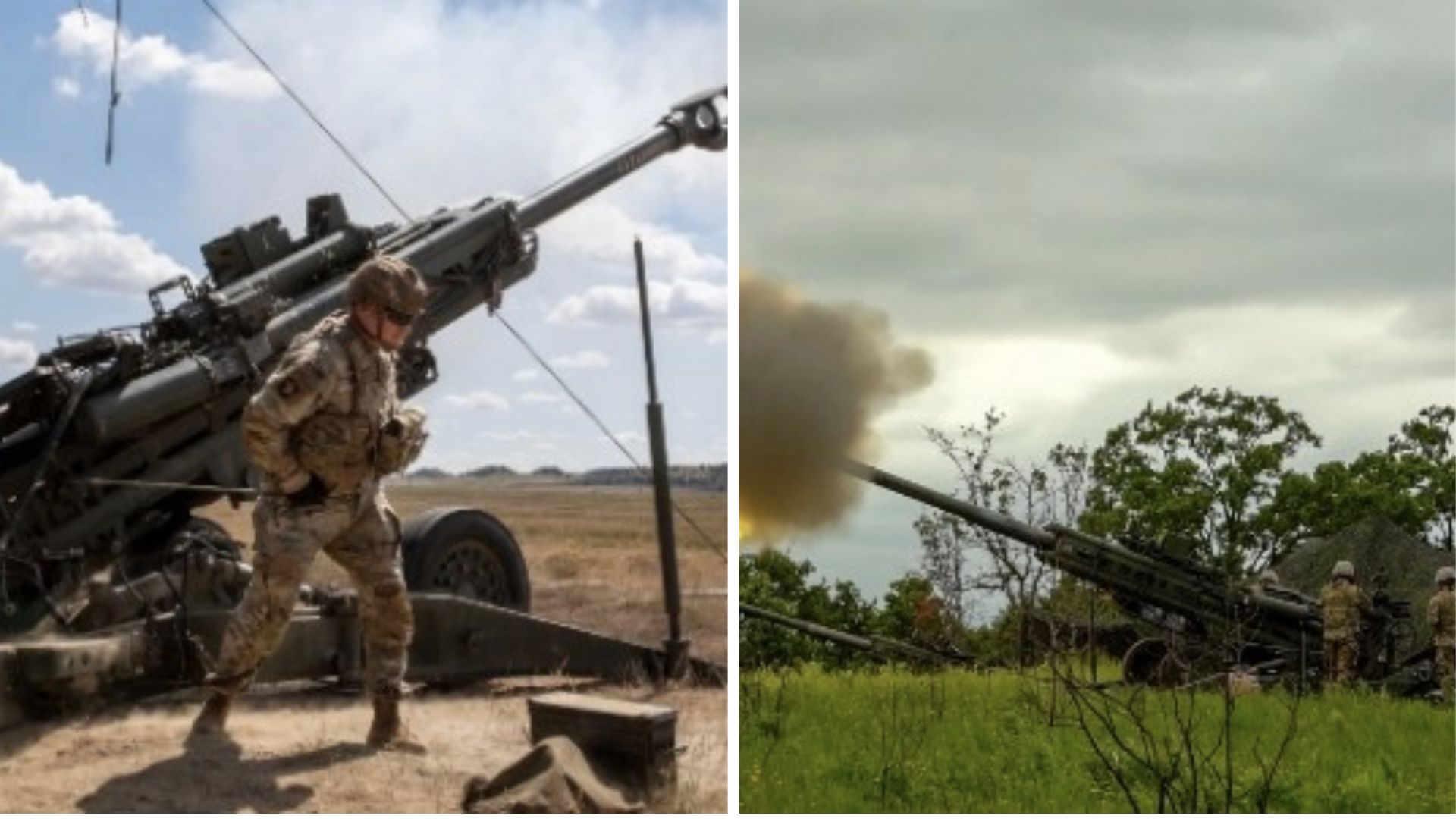
The replacement for the M777.

The M777.


Maybe we shouldn't get rid of them just yet.
I firmly believe we should keep them all. When sufficient SPs finally come on line then the M777s should go into ARes service. Gibbs' rule 5 - "you don't waste good."

🍻
 
I guess one can take a bit of a Trumparian view of this in that it's their country and they should bear the primary burden of defending it including providing the stocks of expensive consumables.

Integrating a combat support and combat service support structure in a multinational organization is far from easy. Some parts are just dependant on training but too many are complicated by incompatible resources.

Most often its best to have national units of action (like a brigade or division) that are self sustaining.

🍻
I guess my position would be somewhere between the two of yours. I 100% agree that boots on the ground fighting side-by-side with your allies is the ultimate expression of shared sacrifice. That's why I totally support the Canadian Brigade in Latvia. It puts our "flag on the map" as you say which is as important politically as it is militarily.

That being said, Canada's defence priorities are not the same as those of Europe. Naval and Air forces are the primary requirement for defending our homeland and those should be prioritized over plans to expand the size of our commitment to Europe. Have the capability to sustain our current commitment for sure, but I don't see the need to expand our current Army commitment.

Ukraine's urgent requests haven't been around sending our soldiers to fight beside them, it's been for the munitions that allow them to continue fighting. European NATO is in a much better situation in regard to raw manpower than Ukraine in a fight with Russia, but like Ukraine they will need vasts amounts of munitions for their forces.

I'd take @Kirkhill's suggestion of sending forces equipped with ranged weapons instead of more frontline troops a step further. Instead of sending our own fires units to try and integrate with our Allies units I'd focus on just sending them the munitions needed by their own units. Have a Navy large and powerful enough to escort shipments of fuel, munitions, food and weapons to our Allies and an Air Force large and powerful enough to ensure that an expanded strategic lift fleet can also safely and quickly deliver urgent war materiel.
 
I guess my position would be somewhere between the two of yours. I 100% agree that boots on the ground fighting side-by-side with your allies is the ultimate expression of shared sacrifice. That's why I totally support the Canadian Brigade in Latvia. It puts our "flag on the map" as you say which is as important politically as it is militarily.

That being said, Canada's defence priorities are not the same as those of Europe. Naval and Air forces are the primary requirement for defending our homeland and those should be prioritized over plans to expand the size of our commitment to Europe. Have the capability to sustain our current commitment for sure, but I don't see the need to expand our current Army commitment.

Ukraine's urgent requests haven't been around sending our soldiers to fight beside them, it's been for the munitions that allow them to continue fighting. European NATO is in a much better situation in regard to raw manpower than Ukraine in a fight with Russia, but like Ukraine they will need vasts amounts of munitions for their forces.

I'd take @Kirkhill's suggestion of sending forces equipped with ranged weapons instead of more frontline troops a step further. Instead of sending our own fires units to try and integrate with our Allies units I'd focus on just sending them the munitions needed by their own units. Have a Navy large and powerful enough to escort shipments of fuel, munitions, food and weapons to our Allies and an Air Force large and powerful enough to ensure that an expanded strategic lift fleet can also safely and quickly deliver urgent war materiel.

Or we could just send support by air mail directly from our shores. Either stage the support forwards in containers or launch them for delivery within hours using UxVs.

And yes, I do agree with the value of boots on the ground as a demonstration of shared commitment. I just wouldn't send many.

A US-style MBCT of 1900 within a Canadian Division sounds about right. The other 3 or 4 brigades should be supplied by the locals.

1st Canadian Army.

Second World War 1939–1945


2 of 4 Corps were Canadian
5 of 15(16) Divisions were Canadian
2 of 7 independent Armoured Brigades were Canadian

100% of the Command and Support, Service and Combat, were Canadian.

I suggest that that is a fair division of labour that can be scaled and adjusted to match modern technologies.
Instead of an Army we would only be looking at a Division similarly apportioned
 
Back
Top