• Thanks for stopping by. Logging in to a registered account will remove all generic ads. Please reach out with any questions or concerns.

Liberal (Minority/Majority) Government 2025 - ???

  • Thread starter Thread starter Deleted member 37876
  • Start date Start date
sure we can, but should we? We can afford to borrow money too. That is why our credit rating is so good. Debt makes you the slave of the person who holds the paper. How much of our paper is held in Beijing? It is quite conceivable that many of Carney's actions re: China are the result of string pulling. It is certain that that is the motive behind Trump.

I have seen pictures of that. Leningrad post war, council housing in London. No one packed into that kind of development is going to give a s**t about looking after the place so in 5 years the place will look 30.

As long as there is no grass or trees to clutter the place up. Your world is depressing.

How be we stop paying for the Brazilian rain forest instead

Most of the seniors I know have fought like hell to stay out of that type of living. For them that move is one step closer to death
First off as to why should we? It is because we could make life so much better for our citizens. The less housing costs the better our economy will be as we can spend money elsewhere and enjoy life.

We spend tons of money on programs which do nothing for us. This program pays for itself in the long term. Imagine just getting rid of OAS from the budget, thats hundreds of billions saved over decades. There is likely a lot of other programs that could be removed as well as we wouldn’t need to subsidize people for them to afford the bare necessities.

As to seniors not wanting to live in that type of housing, I suspect what you are saying is true. That being said if they don’t want to live like that, why should the taxpayer subsidize them to live a way they can’t afford on their own then?

Your jumping to conclusions without doing any research on what Vienna public housing looks like, here is a example from Vienna of one of these structures.

‘Perhaps the best-known example of a well-functioning public housing complex in Vienna, the Wohnpark Alt-Erlaa includes 3180 apartments, each with a balcony or loggia. The multifunctional complex also comprises two health centres, two kindergartens, three schools, a day-care centre, a public library, a gym, six solariums, a mall, a church, bars, restaurants, playgrounds, an administration building and several leisure facilities and hobby rooms for more than 20 leisure clubs. There is a swimming pool on every rooftop and an indoor pool and sauna in every basement. Built on a vast area of 240 000 square metres the almost self-sufficient micro-town called Wohnpark Alt-Erlaa is home to about 11 000 residents. It may be considered a city within the city.’
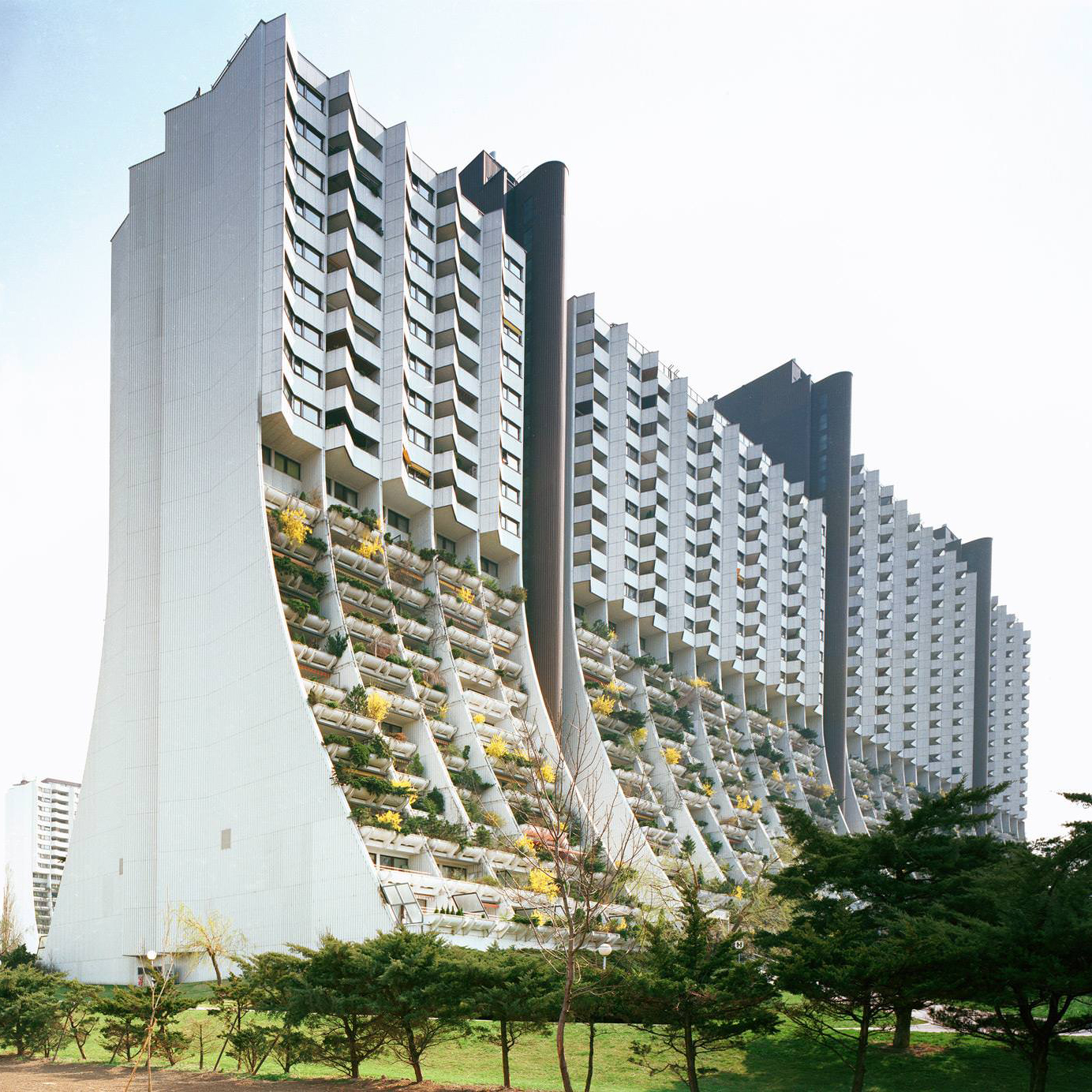

They don’t just build the cheapest buildings and they don’t just pack it full of low income families. They award points for architecture, each building has some sort of feature that makes it unique (say a pub, gym, library, etc.) in it, and they build a decent quality home.

This model works, and it works very well. It is self sustaining and it provides real competition in the housing market forcing the private housing market to be competitive.
The fact that models exist doesn't mean they'll be applied here.

If government could do all these things that people keep claiming government can do well, why do things never work out that way?
Because two things:

1) This works against our politicians fiscal interests as they basically are all homeowners/multiproperty owners. They haven’t addressed the housing crisis because they will lose out on it.
2) It is a long term project which is something democracies tend to suck at. It isn’t a throw money at it solution, you actually have to do something.

To counter your argument that the government always screws things up, the private sector really isn’t shining here. Seeing as basically all the housing in Canada has been privately built since the 90s and the housing crisis has come into existence since then with the private sector doing everything it can to keep prices up it isn’t exactly a good look for a pure capitalistic model.

Those shoebox condos are a great example of pure greed in action and wasted years of construction on useless housing.

If you take the need to make profit out of it, the housing prices go down very quickly.
 
If you make more money than me, why are you asking me for a load ?
Because they have a BB credit rating and a somewhat shaky economy, so it is difficult for them to get a loan at a decent rate. The Fund has 9 contributing nations: Brazil, Norway, Indonesia, France, Germany, the UK, the Netherlands, Portugal, Luxembourg, the UAE, and Canada. That explains why they asked.

The Canadian contribution is part of Canada’s goal, announced in the 2026 Spring Economic Update, to deliver over $13 billion in climate-related support to developing countries by 2031.

I question the value of that policy.
 
First off as to why should we? It is because we could make life so much better for our citizens. The less housing costs the better our economy will be as we can spend money elsewhere and enjoy life.

We spend tons of money on programs which do nothing for us. This program pays for itself in the long term. Imagine just getting rid of OAS from the budget, thats hundreds of billions saved over decades. There is likely a lot of other programs that could be removed as well as we wouldn’t need to subsidize people for them to afford the bare necessities.

As to seniors not wanting to live in that type of housing, I suspect what you are saying is true. That being said if they don’t want to live like that, why should the taxpayer subsidize them to live a way they can’t afford on their own then?

Your jumping to conclusions without doing any research on what Vienna public housing looks like, here is a example from Vienna of one of these structures.

‘Perhaps the best-known example of a well-functioning public housing complex in Vienna, the Wohnpark Alt-Erlaa includes 3180 apartments, each with a balcony or loggia. The multifunctional complex also comprises two health centres, two kindergartens, three schools, a day-care centre, a public library, a gym, six solariums, a mall, a church, bars, restaurants, playgrounds, an administration building and several leisure facilities and hobby rooms for more than 20 leisure clubs. There is a swimming pool on every rooftop and an indoor pool and sauna in every basement. Built on a vast area of 240 000 square metres the almost self-sufficient micro-town called Wohnpark Alt-Erlaa is home to about 11 000 residents. It may be considered a city within the city.’


They don’t just build the cheapest buildings and they don’t just pack it full of low income families. They award points for architecture, each building has some sort of feature that makes it unique (say a pub, gym, library, etc.) in it, and they build a decent quality home.

This model works, and it works very well. It is self sustaining and it provides real competition in the housing market forcing the private housing market to be competitive.

Because two things:

1) This works against our politicians fiscal interests as they basically are all homeowners/multiproperty owners. They haven’t addressed the housing crisis because they will lose out on it.
2) It is a long term project which is something democracies tend to suck at. It isn’t a throw money at it solution, you actually have to do something.

To counter your argument that the government always screws things up, the private sector really isn’t shining here. Seeing as basically all the housing in Canada has been privately built since the 90s and the housing crisis has come into existence since then with the private sector doing everything it can to keep prices up it isn’t exactly a good look for a pure capitalistic model.

Those shoebox condos are a great example of pure greed in action and wasted years of construction on useless housing.

If you take the need to make profit out of it, the housing prices go down very quickly.

Meanwhile, Canadas' 'boom and bust' tradition continues to play out in the housing markets, and we're definitely in the 'bust' phase. . It will likely take years to realize a turnaround of some kind...

Canada’s housing market stalls in October​

Canada’s housing market showed little momentum in October, with resales virtually unchanged (+0.3% m/m seasonally adjusted) following a soft September.

 
Last edited:
Meanwhile, Canadas' 'boom and bust' tradition continues to play out in the housing markets, and we're definitely in the 'bust' phase. . It will likely take years to realize a turnaround of some kind...

Canada’s housing market stalls in October​

Canada’s housing market showed little momentum in October, with resales virtually unchanged (+0.3% m/m seasonally adjusted) following a soft September.


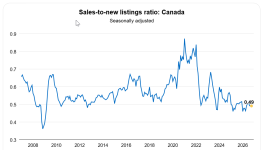
This is the important chart to read/understand.

It's merely returning to the 20+yrs trend.

From June 2010 to Jan 2019 it bounced around at this same level - when 'affordability' was not an issue.

1795182755962.png
 
To counter your argument that the government always screws things up, the private sector really isn’t shining here. Seeing as basically all the housing in Canada has been privately built since the 90s and the housing crisis has come into existence since then with the private sector doing everything it can to keep prices up it isn’t exactly a good look for a pure capitalistic model.
You're not countering my argument. You're pointing at two things happening at the same time and asserting that one is the cause of the other. I believe the causes are elsewhere, and that many of the causes originate with government policies.
If you take the need to make profit out of it, the housing prices go down very quickly.

If you take profit out of anything, it pretty much goes away unless government forces the issue. And I don't consider "non-profit" to actually be without profit; it just means there are limits on where profits can go (workers, customers, owners, reinvestment, etc). "Non-profits" aren't forbidden from finding ways of transferring money to workers and clients.
 
If you make more money than me, why are you asking me for a load ?
At least Brookfield owned companies stopped buying land in Brazil, clear cutting the trees, then selling the new soy bean farms as profit.

Mark Carney, who was in leadership positions during some of that time, probably felt terrible and this is his way to make up for it.
 
At least Brookfield owned companies stopped buying land in Brazil, clear cutting the trees, then selling the new soy bean farms as profit.

Mark Carney, who was in leadership positions during some of that time, probably felt terrible and this is his way to make up for it.
Am I responsible for leadership decisions made by the very senior leaders I advised or reported to during my career? Or just the decisions I made?
 
Am I responsible for leadership decisions made by the very senior leaders I advised or reported to during my career? Or just the decisions I made?

I would say senior leadership positions come with accountability for the organizations they help lead.

I'm not claiming Carney personally ordered the deforestation. Did he say whoa team, we shouldn't be clear cutting rainforest? Who knows. The contradiction with his current environmental talk is ironic IMO.

It seems like this comes down to Canada paying countries half a billion dollars not to cut down their own trees. It will be interesting in 10 years to find out which Canadian owned companies benefit.
 
Interesting timing with Roshel buying the Stellantis plant. The F series is built in Oakville, and the F550 (and the Ram 5500) being what the Senator is built on.


Archive
 
I would say senior leadership positions come with accountability for the organizations they help lead.
So you seem to be saying that I am responsible for the decisions that those above me make, as well as those I make and those that my subordinates make. That doesn't sound right.

While I was a senior officer, was I responsible for the decisions made by my peers as well in the pursuit of their own objectives and those of their boss? Is Base Edm responsible for the traffic shitshow in Petawawa? Is the Comd of the RCAF on the hook for decisions made by the Army Commander about funding the Army Reserves? Was Comd 1 CMBG accountable for the readiness levels of the other two Brigades?

I think you are applying a standard to Mr Carney in another chapter of his life that no one else in the corporate world has ever been held to...and that I would question if it was applied to me in my military career, or my current career as a C Suite Officer in two different companies.

Finally, accountable and responsible are two very different concepts, even on civvie street:

Responsible (The Doer)
    • Definition: The person or team who actually performs and executes the task.
    • Nature: Can be shared or delegated to multiple people.
    • Focus: The input, activity, and completion of the work.
    • Example: A copywriter who writes a blog post. [1, 2, 3, 4, 5]

Accountable (The Owner)
    • Definition: The single person who has final decision-making authority and answers for the end result.
    • Nature: Cannot be shared or delegated; strictly one person per task.
    • Focus: The final outcome, success, or failure of the goal.
    • Example: The marketing manager who approves the blog post and owns whether it hits its performance targets. [1, 2, 3, 4]
 
Am I responsible for leadership decisions made by the very senior leaders I advised or reported to during my career? Or just the decisions I made?
DEPENDS ON THE ADVISE YOU GAVE AND WHETHER IT WAS AN ISSUE WHERE YOU SHOULDN'T HAVE LIVED/WORKED WITH THE RESULT and regretted it afterwards. Did it make the job less meaningful? Were you just going to work afterwards with little to look forward to? After 1966 several senior officers in all services resigned as a result of unification; even some who received promotions as a result. If it sounds like I am wandering, I am because the only right answer to your question lies within you and whether you were true to your convictions or not.
 
Ok then. You seem pretty liberal in your assumptions of who I am in my professional life and what motivates me. I will not so rude as to return the favour.

As I understand your point, you are saying that officers at all levels must be ready to retire on principle anytime something that they worked on failed? All staff that worked on Phoenix should be fired? Or should have quit once it went bad? Where is the line to be drawn?
 
Am I responsible for leadership decisions made by the very senior leaders I advised or reported to during my career? Or just the decisions I made?
If Carney had any sense of transparency at all (this is one of achilles heels) he would get out front and head this off, make an excuse or create a narrative, before the other side creates the narrative for him.

Its stuff like this that comes back to bite a politician in the ass when the days are rainy, and as is the case of Canadian public, he doesn't even have to be directly responsible for it, just someone implying he is guilty of it.
 
Ok then. You seem pretty liberal in your assumptions of who I am in my professional life and what motivates me. I will not so rude as to return the favour.

As I understand your point, you are saying that officers at all levels must be ready to retire on principle anytime something that they worked on failed? All staff that worked on Phoenix should be fired? Or should have quit once it went bad? Where is the line to be drawn?
no I didn't say that at all. I asked if you could live with the outcome or does it leave regrets in your mind. Most choices are not ethical in nature; simply business decisions. The few that don't fit that description are the ones I am talking about. The generals quit because they couldn't live and support what they envisioned what was happening to their vision of the direction in which the military should have been going. I witnessed numerous changes in aviation that I didn't agree with; some of which in retrospect I was in error. In others history has proven me right. But none of them made me question whether I should continue working. Your selection of Phoenix is interesting. There was no life or death choice and no ethical breech that I am aware of. But there was also no acceptance of responsibility. Did anyone ever say "I f***ed up? Most errors don't require resignation and incidentally I include political errors in that group but accountability is something different entirely and that is where we fail
 
Ok then. You seem pretty liberal in your assumptions of who I am in my professional life and what motivates me. I will not so rude as to return the favour.

As I understand your point, you are saying that officers at all levels must be ready to retire on principle anytime something that they worked on failed? All staff that worked on Phoenix should be fired? Or should have quit once it went bad? Where is the line to be drawn?
I wasn't assuming anything about personal motivations either or even what position you hold in your profession. You asked the question. Are you responsible for your seniors choices. NO. You are responsible for your choices only. The other refers to whether you can accept and work with the choices that your seniors made. That is a totally different issue.
 
Back
Top