• Thanks for stopping by. Logging in to a registered account will remove all generic ads. Please reach out with any questions or concerns.

Multi Domain Task Force - Canada


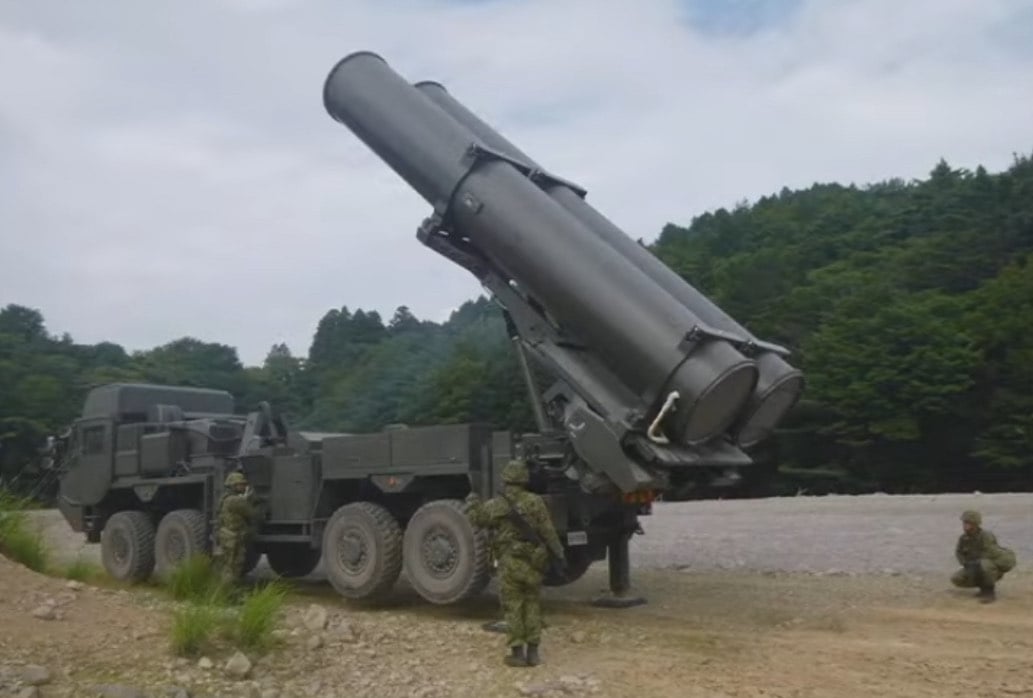
Long Range Precision Fires.
 
Parking this here. Kind of MDTF. Kind of Pan-Domain Ops. Kind of 6 CCSB.


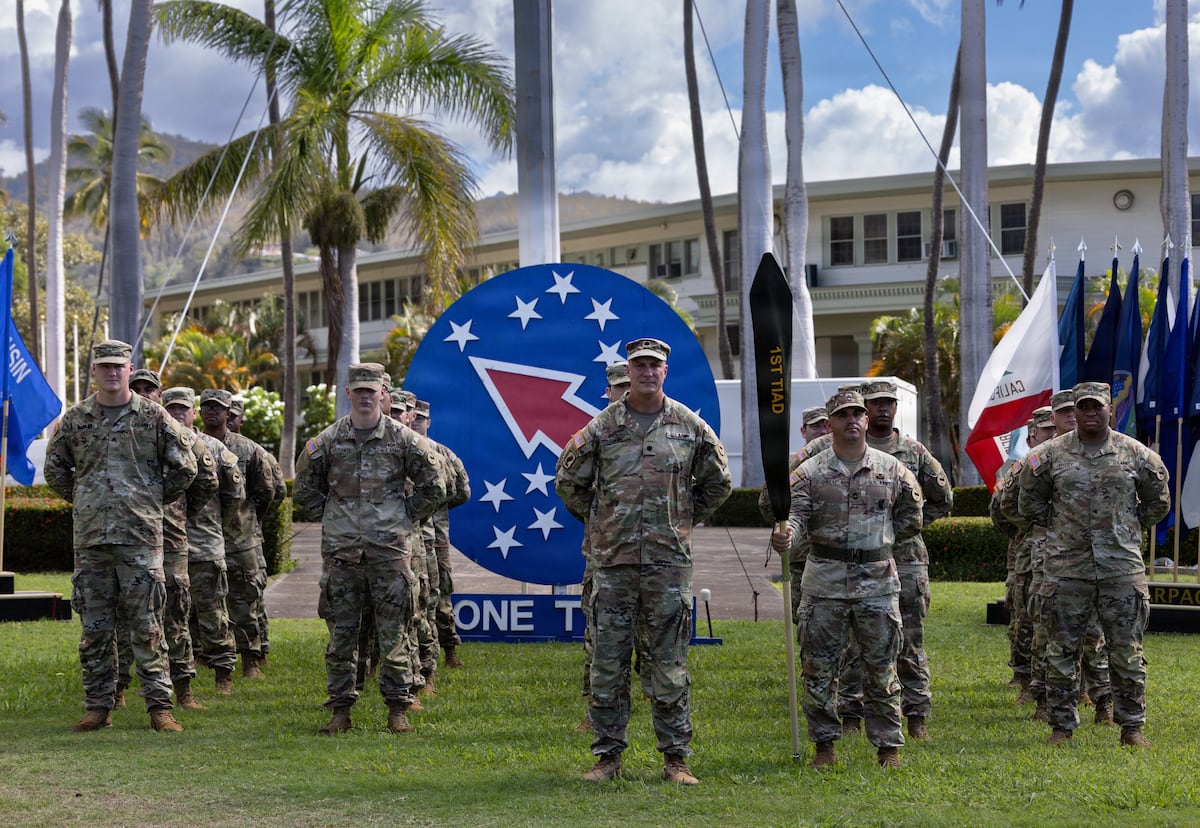
The unusual 65-soldier formation combines military intelligence, psychological operations, electronic warfare, public affairs, civil affairs, information operations and cyber operations into a set of dedicated teams.

The unit’s purpose is to “gain and maintain a strategic advantage through information dominance in the Indo-Pacific region by disrupting malign influence, increasing cooperation with key partners, and promoting regional stability through a shared commitment for a free and open Indo-Pacific,” according to an Army fact sheet. It will be responsible for a region spanning 36 countries across northeast, southeast, south Asia and Oceania.

The Hawaii unit is the first of three Theater Information Advantage Detachments to activate, Capt. Avery Smith II, a member of the 1st detachment’s engagement team, said in a statement. Second TIAD is projected to activate at Fort Gordon, Georgia, in the spring of 2026 and 3rd TIAD will follow at Wiesbaden, Germany, in the fall.
 
I’m going to say that 6 CCSB is not related to the comments by Comd CJOC in any way.

The multi domain integration being discussed is between the various L1/2s; RCN, CA, RCAF, CAFCYBERCOM, and 3rd Cdn Space Division.

I suspect the actual integration point will be JTF-N and CJOC itself.

Correct. The MDTF thing is basically the US army trying to provide enough capabilities to support a Corps so they need less help from other services. Only the US is that big.

For everybody else, those functions can be disaggregated and pushed to division level support units. Mostly we need to bolster existing units (JSR, 21 EWR, 7 Wg) to deliver a lot of the same functionality.

The only gaps I see are some kind of intelligence regiment that provide a deployable fusion cell to speed up targeting. And maybe an information regiment that can do civil affairs, psyops, information warfare.

Other capabilities like the long range sensing and long range fires are coming.
 
“We need to be able to intercept, defeat 600 to 1,200 ballistic missiles, cruise missiles, and long-range one-way attack drones every 24-hour period,” said Brig. Gen. Steven Carpenter, the commanding general of Multidomain Command Europe. Those numbers, he said, reflect the scale of attacks seen in Ukraine.

“At the same time, we need to be able to develop, maintain custody, and pass a minimum of 1,500 targets during that same 24-hour period,” he said. That number, according to Carpenter, is intended to assert dominance instead of simply meeting the capabilities of enemy forces.


Sitting under our sector of the Golden Dome, how many targets will we need to manage?
 
“We need to be able to intercept, defeat 600 to 1,200 ballistic missiles, cruise missiles, and long-range one-way attack drones every 24-hour period,” said Brig. Gen. Steven Carpenter, the commanding general of Multidomain Command Europe. Those numbers, he said, reflect the scale of attacks seen in Ukraine.

“At the same time, we need to be able to develop, maintain custody, and pass a minimum of 1,500 targets during that same 24-hour period,” he said. That number, according to Carpenter, is intended to assert dominance instead of simply meeting the capabilities of enemy forces.


Sitting under our sector of the Golden Dome, how many targets will we need to manage?
I'm a bit of two minds about this.

Golden Dome, unlike Iron Dome, is essentially a space-based system and still in its formative stages. Trump put out it would be up in three years and funding has been going on, but I seriously doubt it will make the timeline. Plus it starts a whole new arms race with folks deploying cheap suicide satellites in orbit to take out American sensors and effectors at trike time.
 
  • Like
Reactions: ytz
Golden Dome (as envisioned) is never getting built. Maybe the sensor portion.
The only way that America can afford the concept of Golden Dome is if it seriously reduces funding for the other three branches of the Armed Forces.

There are two indicators that it might. First, the great retrenchment to concerning itself with the Western Hemisphere (and the American Homeland) makes a large army, navy and air force less necessary for them. Second, the threat of ballistic missile attacks on the Homeland is becoming secondary to large quantities of highly accurate hypersonic conventional and nuclear cruise missiles.

There is no real ground-based counter to such systems without having hundreds of anti-air battalions ringing the coast and borders to the US. That's neither plausible nor 100% effective. The primary defense, like always, remains MAD. But space-based effectors should be technically feasible even if cost prohibitive. The problem with technically feasible is it will create a new type of arms race because the country that first becomes capable of fielding such a defence will no longer be reined in by MAD.

🍻
 
But space-based effectors should be technically feasible even if cost prohibitive.

Technical feasibility is questionable. And "cost prohibitive" is an undestatement. This is like Elon Musk's "datacentres in space" idea. A submarine or disguised container popping up off the coast and firing a hypersonic is going to be hard to defend against. Especially if that target is on the coast itself. Extremely doubtful that a space based effector can counter that on time. The density required in orbit to do this would be insane. On par with building defences on the coast itself.

The part the Pentagon is actually interested in, to be honest, is MTI. Both AMTI and GMTI. Persistent and difficult to jam MTI would be a massive advantage.
 
Golden Dome (as envisioned) is never getting built. Maybe the sensor portion.

The only way that America can afford the concept of Golden Dome is if it seriously reduces funding for the other three branches of the Armed Forces.

There are two indicators that it might. First, the great retrenchment to concerning itself with the Western Hemisphere (and the American Homeland) makes a large army, navy and air force less necessary for them. Second, the threat of ballistic missile attacks on the Homeland is becoming secondary to large quantities of highly accurate hypersonic conventional and nuclear cruise missiles.

There is no real ground-based counter to such systems without having hundreds of anti-air battalions ringing the coast and borders to the US. That's neither plausible nor 100% effective. The primary defense, like always, remains MAD. But space-based effectors should be technically feasible even if cost prohibitive. The problem with technically feasible is it will create a new type of arms race because the country that first becomes capable of fielding such a defence will no longer be reined in by MAD.

🍻


I agree with you both.

You are both wrong.

The Golden Dome as described will never be built and it cannot be completed in the timeline envisaged.

But.

Come back in 25 years and compare the result to the objective.

The intent of the Golden Dome speaks to a lot of Americans across generations. It is an extension of George Washington's view of foreign entanglements. It is an extension of Jackson and Monroe. It is an extension of NORAD.

The Golden Dome objective will influence spending priorities for decades.

And Infantry will lose out to technical solutions.

On the other hand, there will always be a need for security and that is best handled person to person.
 
MTI I've heard of AMTI and GMTI are new terms to me and not very Google responsive.

Ground or Air MTI? And if so what are the effectors brought into play?

:unsure:
 
Technical feasibility is questionable. And "cost prohibitive" is an undestatement. This is like Elon Musk's "datacentres in space" idea. A submarine or disguised container popping up off the coast and firing a hypersonic is going to be hard to defend against. Especially if that target is on the coast itself. Extremely doubtful that a space based effector can counter that on time. The density required in orbit to do this would be insane. On par with building defences on the coast itself.

The part the Pentagon is actually interested in, to be honest, is MTI. Both AMTI and GMTI. Persistent and difficult to jam MTI would be a massive advantage.
I've asked this question a number of weeks/months ago. What happens if Russia/Chinese subs head south and launch off the west coast of Ecuador or Peru? What does the Golden Dome do then? Is the US planning on reaching out south well in Mexico without any support from the Mexicans? Why is the US not clamoring about the need for Mexico to be a part of the Golden Dome?
 
MTI I've heard of AMTI and GMTI are new terms to me and not very Google responsive.

Ground or Air MTI? And if so what are the effectors brought into play?

:unsure:

Correct. Moving Target Indication. It's what the JSTARS, Wedgetail, etc do. Use Doppler to detect moving vehicles and then other radar information to characterize and identify the target.


The whole rub is what you do to have effectors in play. Trump got this idea from Israel with the Iron Dome. Strategies that work for postage stamp sized countries don't scale though. They can deploy more unmanned air defence batteries and network them to provide some level of defence. But space based effectors is a whole different challenge. And I am honestly questioning whether this is more grift for Musk and Co or an actual plan.
 

“But now, I’m a cool guy,” Parker added. “We are a very, very much demanded resource globally because of the challenges within the operating environment that we face.”

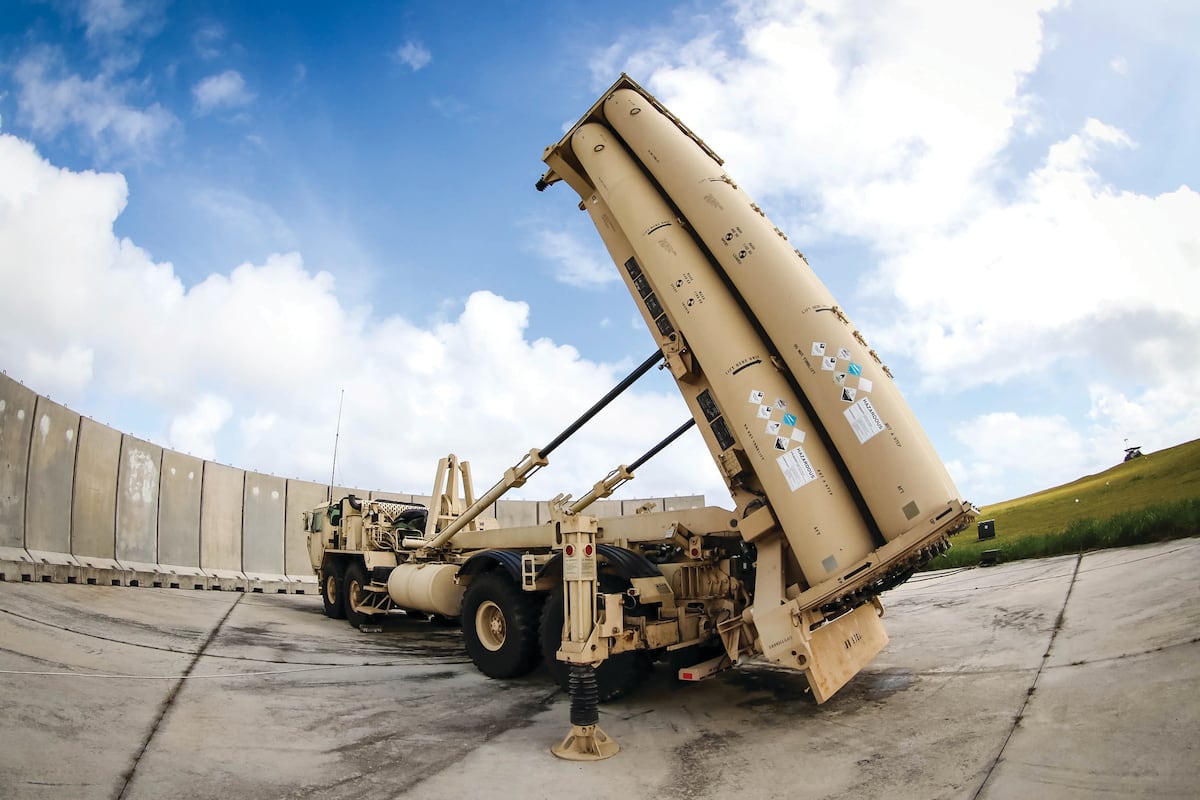
The 94th AAMDC’s mission includes protecting critical assets and formations within the expansive Indo-Pacific theater from enemy missile, air and drone attacks. The command was reactivated in 2005, roughly seven years after it shuttered.

.....

Among those new critical developments is the incorporation of the Integrated Air and Missile Defense Battle Command System, or IBCS, a network of command-and-control systems, sensors and interceptors that offers commanders — from any branch or partner nation — a tailored approach to thwart threats ranging from cruise missiles to drones.

“The IBC’s capability really brings us to the concept of any sensor,” Parker said. “They are the most effective shooter ... that allows us to break the paradigm of having to rely solely on Patriot Radar Systems.”
 
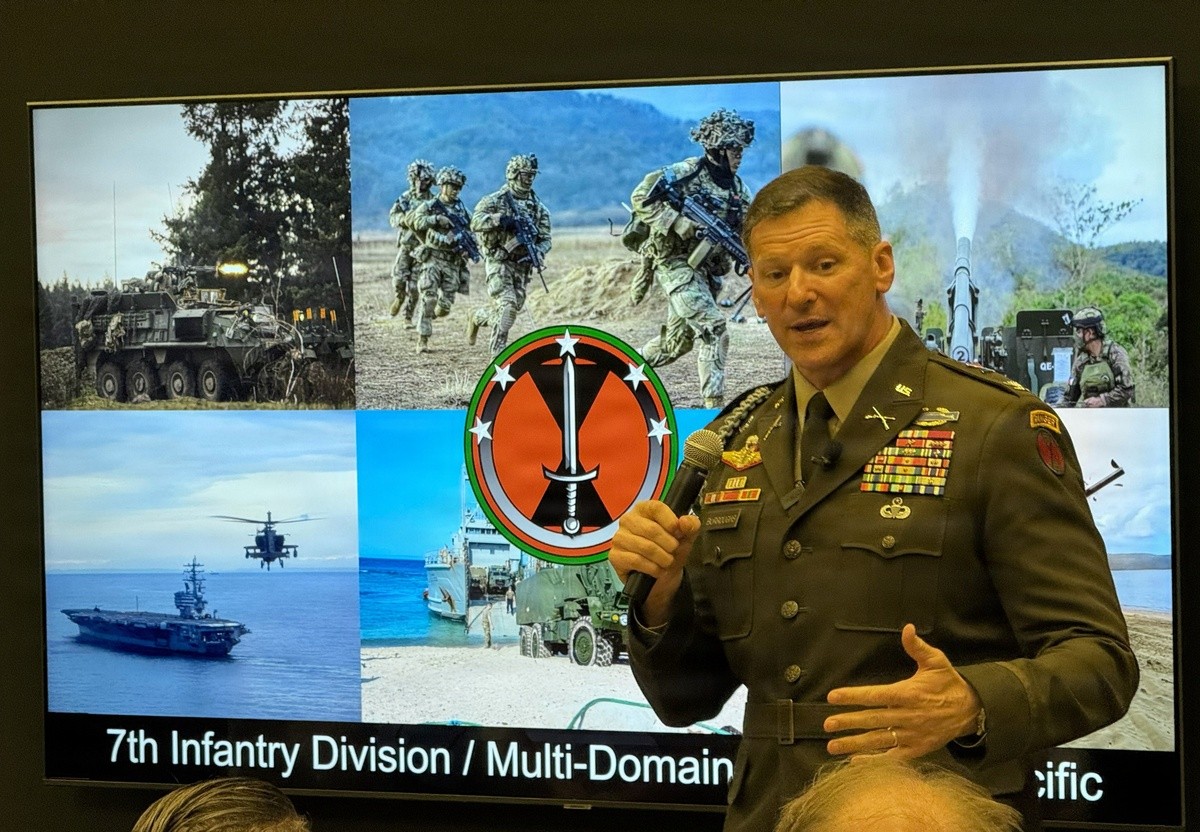
"The new command merges the 7th Infantry Division’s two Stryker infantry brigades with the multidomain fires, cyber, space, electronic warfare and intelligence capabilities developed by the 1st MDTF."


“We see Multi-Domain Command-Pacific as a covering force for the joint force,” Burroughs said. “They are self-contained and operating independently from the main body, developing the situation, preventing enemy observation and preventing the enemy from directing indirect fires.”

At the center of the command’s operational approach is the Cross-Domain Contact Layer (CDCL). Burroughs explained the concept as a network of distributed multidomain teams capable of sensing, identifying and rapidly converging kinetic and non-kinetic effects from multiple locations and domains simultaneously.

“Once they get good target-quality data, they’re executing non-kinetic and kinetic effects from multiple formations in order to create maximum effect,” Burroughs said. “The operational framework we use to do that is the Cross-Domain Contact Layer.”

....

“The biggest challenge right now is ingesting the data and publishing it back out in a usable format so everybody can use what the MDC can bring.”


....


"If you want to visualize Ukraine’s Delta digital battle management system, there’s a very basic parallel in the British air operations rooms of the Battle of Britain in World War II. Here, it was that information from radar, human observers, gun batteries, and other sources was worked together to provide a unified visual image to commanders trying to understand combat across a huge battle area.

"The British developed and improved the system while under fire as they fought a battle of survival against Nazi Germany. Ukraine now does the same in its existential war against Putin’s Russia, and the results of its technological advances are equally significant. Unlike the analog systems of old, though, the Ukrainian model is fully digitized and accommodates AI to speed conclusions and spread awareness. Like its predecessors, Delta shows enemy and friendly forces in something close to real time."
 
Back
Top