• Thanks for stopping by. Logging in to a registered account will remove all generic ads. Please reach out with any questions or concerns.

New Canadian Shipbuilding Strategy

  • Thread starter Thread starter GAP
  • Start date Start date
Yes they have economic issues. Inflation peaked in 2024 at 75%!!!!
And the bank interest rate was close to 60%!!!

They have some sort of plan to wind their inflation down to single digits, looking at how President Milei has done thy for Argentina. But I doubt they’ll drop their military build up.
I don't think that the Argentina rate of 33.50 in August 2026 is anything to brag about.

Inflation Rate in Argentina decreased to 33.50 percent in August from 33.80 percent in July of 2026. Inflation Rate in Argentina averaged 187.30 percent from 1944 until 2026, reaching an all time high of 20262.80 percent in March of 1990 and a record low of -7.00 percent in February of 1954.​

 
Its nothing to be jealous of - they cant afford this. Their economy is in absolute shambles. Theyre running a 31% inflation rate for example.

Sure thing champ.

Come On Please GIF by NBA
 
I don't think that the Argentina rate of 33.50 in August 2026 is anything to brag about.

Inflation Rate in Argentina decreased to 33.50 percent in August from 33.80 percent in July of 2026. Inflation Rate in Argentina averaged 187.30 percent from 1944 until 2026, reaching an all time high of 20262.80 percent in March of 1990 and a record low of -7.00 percent in February of 1954.​

33% from 187% is good news, not fantastic, but trending in the right direction. We have friends there that lost everything when their saving were devalued.
 

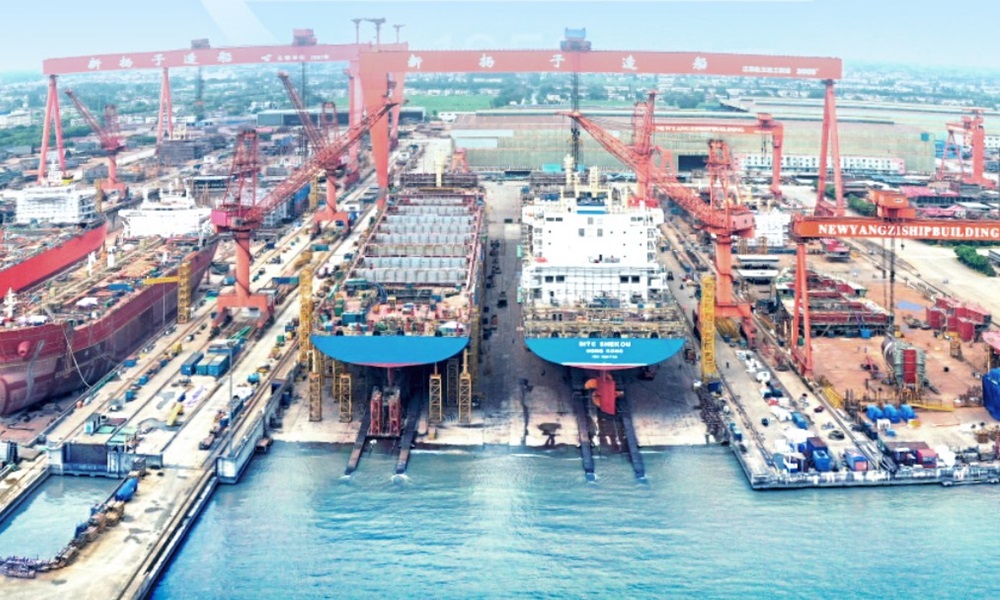
Seaspan building freighters in China.
 
At work today and looking at steel and modules destined for the Polar Class 2, you can really see the thickness and judging by the welds, likley a high tensile and nickel content steel. Sadly I can't take pictures but it is impressive to see firsthand and know I am see history being made.
 
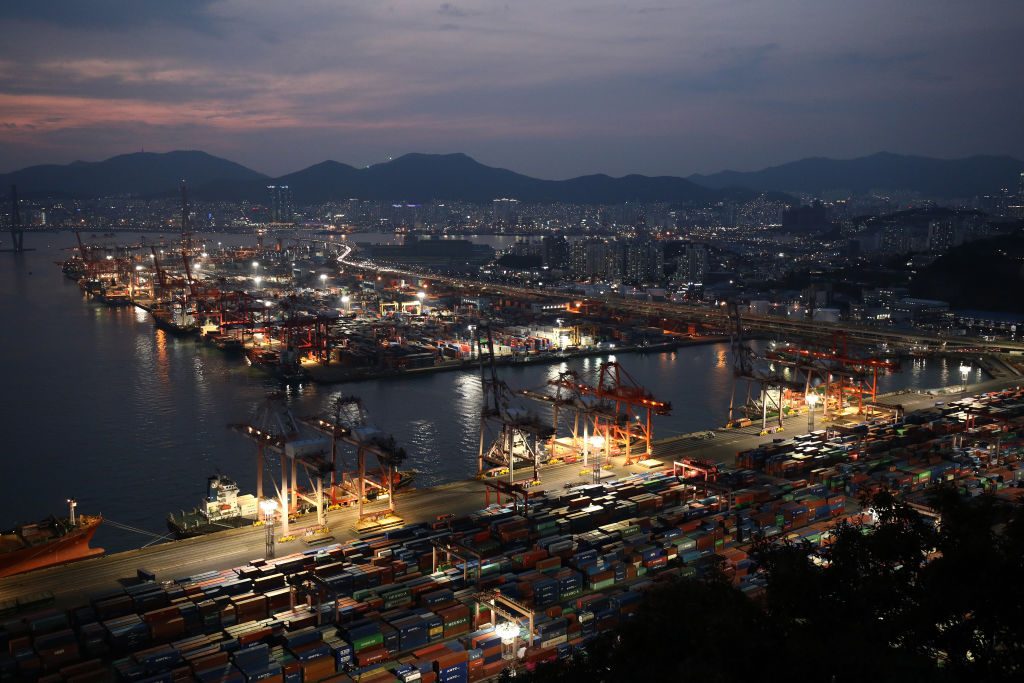
HD Hyundai Heavy Industries is looking to get more involved in the ice breaker and polar vessel business.

 
HD Hyundai Heavy Industries is looking to get more involved in the ice breaker and polar vessel business.


They have form.... For Russian service.

Ice-Class LNG Carriers & Tankers

    • Christophe de Margerie – An Arc7 ice-class LNG carrier built by Daewoo Shipbuilding & Marine Engineering (DSME) in South Korea for Russian Arctic projects, capable of navigating the Northern Sea Route independently. [1]
    • Arc4 LNG Tankers (Samsung Heavy Industries) – Four Arc4 ice-class LNG tankers built by Samsung Heavy Industries and delivered in 2023 for Arctic/Russian-linked routes. [1]
    • Hanwha Ocean / DSME Arc7 / Arc4 Fleet – Various commercial ice-class LNG carriers and tankers constructed over the past decade as part of major global Arctic energy projects. [1, 2]
 
A capability I would like to see, my choice is the LST120 with ice strengthening. Big enough to sail anywhere and able to land pretty much anywhere. Get two, run only 1 most of the time using a Marine Auxiliary crew.

 
The Point Class sea lift option


"The Defence Investment Plan has allocated £290 million for a future strategic sealift capability, with the current contract for the Point class running until the end of 2031 and decommissioning of the existing ships a matter for their private owner, according to an answer given in Parliament."​


The UK has contracted for 4 vessels to be available to its use. Questions on disposal or renewal of the fleet are matters for the private owners to address so long as they are providing 4 hulls on call.
 

2035 is a long way away. If a week is a long time in politics it is a technological eternity.
 
The Point Class sea lift option


"The Defence Investment Plan has allocated £290 million for a future strategic sealift capability, with the current contract for the Point class running until the end of 2031 and decommissioning of the existing ships a matter for their private owner, according to an answer given in Parliament."​


The UK has contracted for 4 vessels to be available to its use. Questions on disposal or renewal of the fleet are matters for the private owners to address so long as they are providing 4 hulls on call.


Further to...


2035 is a long way away. If a week is a long time in politics it is a technological eternity.

And yet, in terms of high end warship construction, it is like "just tomorrow". After all, the lead ship of a new class can take anywhere between five to seven years to build and bring to operational status. And regardless of the first Sea Lord's view on "bastion" Atlantic (or is it American ocean?), If the UK wants to remain in the aircraft carrier as force projection business, it needs AAW protection for them that can deploy worldwide - and that's an air defense destroyer (or a Trump class battleship?).
 
And yet, in terms of high end warship construction, it is like "just tomorrow". After all, the lead ship of a new class can take anywhere between five to seven years to build and bring to operational status. And regardless of the first Sea Lord's view on "bastion" Atlantic (or is it American ocean?), If the UK wants to remain in the aircraft carrier as force projection business, it needs AAW protection for them that can deploy worldwide - and that's an air defense destroyer (or a Trump class battleship?).
The Uk Treasury being short sighted and being the greatest enemy of the RN, is a time honoured tradition....
 
And yet, in terms of high end warship construction, it is like "just tomorrow". After all, the lead ship of a new class can take anywhere between five to seven years to build and bring to operational status. And regardless of the first Sea Lord's view on "bastion" Atlantic (or is it American ocean?), If the UK wants to remain in the aircraft carrier as force projection business, it needs AAW protection for them that can deploy worldwide - and that's an air defense destroyer (or a Trump class battleship?).

Agreed on the "just tomorrow" bit for high end warships.

And that is precisely the problem.

Small, cheap and rapid will reshape the combat environment faster than the high end can anticipate. It was true in 1939 and it is still true today.
 
Small, cheap and rapid will reshape the combat environment faster than the high end can anticipate. It was true in 1939 and it is still true today.

Except it wasn't true in 1939, and I personally doubt it would be true today. The corvettes did not win the battle of the Atlantic. They provided numbers so ships could be put around the convoys, but they did little in actual terms of protection and rather just made the Merchant mariners feel better ... a little bit. Most of the protection for the convoy came from the emptiness of the ocean created by the convoy system, the lack of numbers on the part of the submarine force , and convoy re-routing from intel.

The battle was won when (1) the frigates and destroyers started being produced in numbers - by 1942 - so that support groups (not linked to convoys and free to act as hunter-killer groups) could be created, (2) the arrival of sufficient number of long range ASW airplanes to close the air gap, and (3) the provision of air cover by way of escort carriers starting in 1943.

Corvettes became platforms for new technologies and tactics that led to the frigates and destroyers of 1942. Frigates and destroyers that were designed between 1939 and 1942 and built in yards where battleship construction was halted.

Smaller, cheaper and more rapidly produced.


United Kingdom: The Lion-class
The Royal Navy planned a class of six fast battleships to succeed the King George V class, upgrading from 14-inch to 16-inch guns. Only two ever made it to the building slips before the war ground their progress to a halt: [1, 2]
    • HMS Lion: Laid down on July 4, 1939, at Vickers Armstrongs (Newcastle). Construction was suspended in October 1939 with only a few hundred tons of steel erected. The hull was eventually broken up on the slipway. [1, 2, 3, 4, 5]
    • HMS Temeraire: Laid down on June 1, 1939, at Cammell Laird (Birkenhead). It suffered the same fate as Lion, with its minimal assembled structure cleared from the slipway. [1, 2, 3]
    • (Note: Two additional sister ships, Conqueror and Thunderer, were ordered in August 1939 but were never laid down). [1, 2]
 
I am not convinced the battleships production was halted because they wanted to build more frigates and destroyers, but more because they realized almost right away that battleships were not the top dog anymore and rather just big targets with no benefits. They did continue and increased the production of aircraft carriers, for instance.

BTW, the corvettes developed the tactics for convoy escort function (raspberry and half-raspberry), but none related to the work of hunter-killer groups. Those came mostly from the brilliant mind of Capt Johnny Walker, a RN long serving regular.
 
The Point Class sea lift option


"The Defence Investment Plan has allocated £290 million for a future strategic sealift capability, with the current contract for the Point class running until the end of 2031 and decommissioning of the existing ships a matter for their private owner, according to an answer given in Parliament."​


The UK has contracted for 4 vessels to be available to its use. Questions on disposal or renewal of the fleet are matters for the private owners to address so long as they are providing 4 hulls on call.
I've been fairly supportive of Canada duplicating something like the Point class for our own uses, I'm heavily skeptical of the RCN operating an LHD or similar vessel instead. It would likely be costly and difficult to get ice rated versions for Northern use however, owning our own transports for the Army to Europe and abroad instead of relying on allies/civilian ships is good.

Corvettes became platforms for new technologies and tactics that led to the frigates and destroyers of 1942. Frigates and destroyers that were designed between 1939 and 1942 and built in yards where battleship construction was halted.

Smaller, cheaper and more rapidly produced.


United Kingdom: The Lion-class
The Royal Navy planned a class of six fast battleships to succeed the King George V class, upgrading from 14-inch to 16-inch guns. Only two ever made it to the building slips before the war ground their progress to a halt: [1, 2]
    • HMS Lion: Laid down on July 4, 1939, at Vickers Armstrongs (Newcastle). Construction was suspended in October 1939 with only a few hundred tons of steel erected. The hull was eventually broken up on the slipway. [1, 2, 3, 4, 5]
    • HMS Temeraire: Laid down on June 1, 1939, at Cammell Laird (Birkenhead). It suffered the same fate as Lion, with its minimal assembled structure cleared from the slipway. [1, 2, 3]
    • (Note: Two additional sister ships, Conqueror and Thunderer, were ordered in August 1939 but were never laid down). [1, 2]
The vast majority of corvettes and frigates were built by civilian or smaller military shipyards, not the yards actively producing large surface units like cruisers, carriers and battleships. Britain specifically was under substantial threat from submarines and thus needed to pivot towards the production of escorts, the Axis did not have a ready supply of capital ships that required countering past the existing fleet. It was not small and cheap replacing large and capable, it was Britain facing supply constraints and different threats.

Battleships were also losing relevancy, although aircraft carriers did not make them immediately obsolete like many like to claim. They had notable advantages into the post-war years, although their cost and capability cut down on their relative utility.

Small, cheap and rapid will reshape the combat environment faster than the high end can anticipate. It was true in 1939 and it is still true today.
I have a hard time accepting this as development never happens in a vacuum. Many of these small, cheap and rapid platforms match threat envelopes that already exist or are actively being countered, limiting how much these will really upset the status quo.
 
Back
Top