
daftandbarmy
Army.ca Fossil
- Reaction score
- 48,166
- Points
- 1,160
unlimited ammo, in what reality?
Compared to what the light infantry can carry, tanks have unlimited coax



unlimited ammo, in what reality?

4000 in the Abrams. I thought the Leo2 had the same.Is it 880 in the can on a Leo 2? That’s what @KevinB is getting at. Obviously it’s not unlimited. It just represents substantially more sustained fire power than a section.
110%. It is an emergency evacuation shelter, and mainly as a rear egress route.Does that matter? Is it material to their understanding of how their Meekavs employed the small space they have? Because what it has is a small space meant primarily for ammunition storage that can - in extremis - be used to carry soldiers. It is not some tank / IFV hybrid. It’s a crawl space.

It’s 4000 in the Leo, but that’s for both and I believe the bin itself is only 4 belts but I could t find details and am probably wrong.4000 in the Abrams. I thought the Leo2 had the same.
110%. It is an emergency evacuation shelter, and mainly as a rear egress route.
It wasn’t intended as an IFV. Furthermore the space only really existed because when the IDF looked at crew losses, the majority where from engine fires - so they put the engine up front to also provide protection to the crew (rounds need to into it first) and the rear was designed to allow the crew to exit the vehicle. When they realized they had more room, it was then setup to accommodate being able to shelter a lost crew from another tank. The entire IFV aspect is a myth that has been popularized from folks not understanding the concept.
I’ve admittedly never dug into that deep.It’s 4000 in the Leo, but that’s for both and I believe the bin itself is only 4 belts but I could t find details and am probably wrong.


 nextgendefense.com
 pyrrhusaero.com

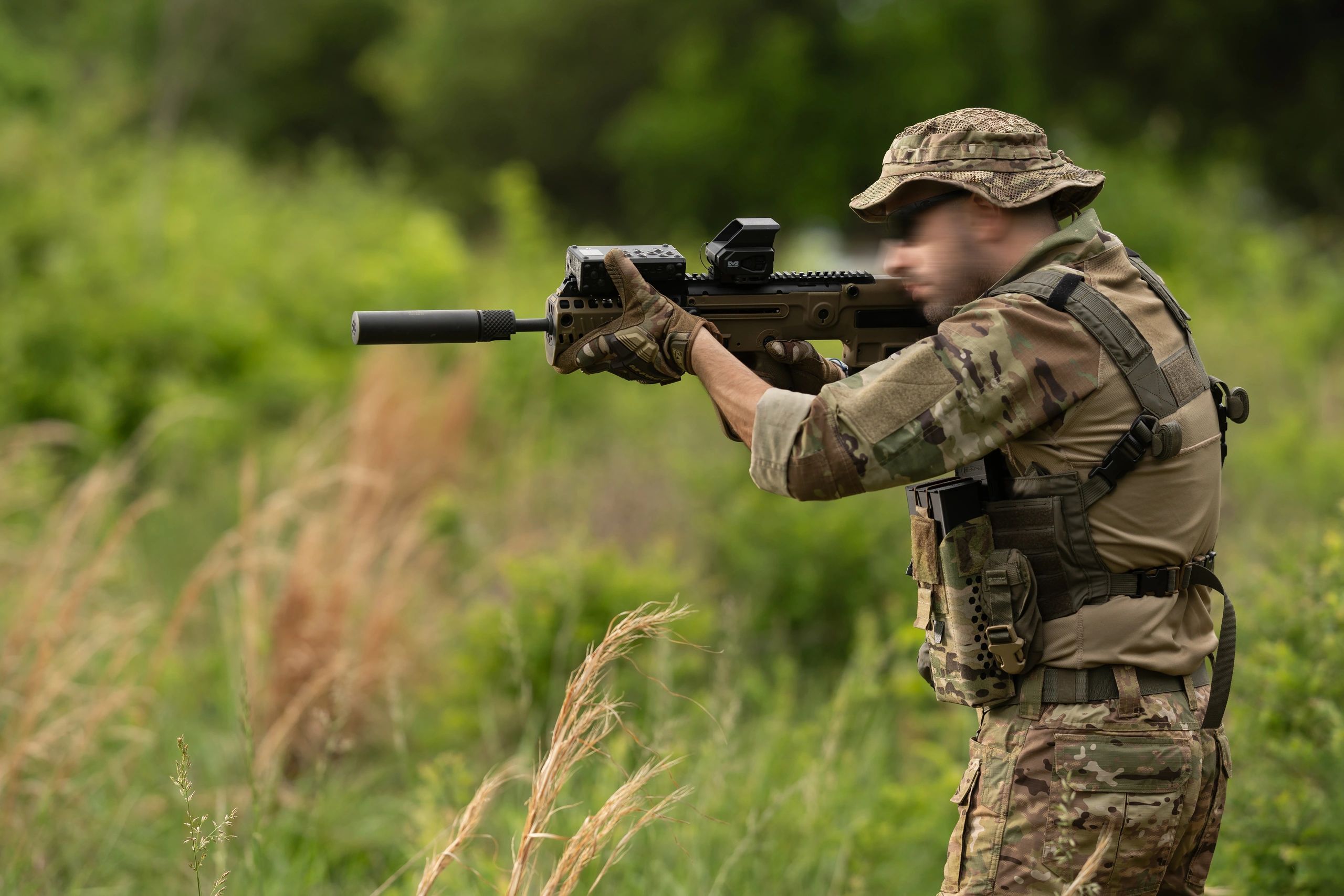
One Weapon, Two Roles: New System Adds Drone Control to the Rifle
LADRS uses a 250-gram rifle-mounted interface to control drones through weapon orientation, laser designation, and integrated buttons.
"LADRS uses a 250-gram rifle-mounted interface to control drones through weapon orientation, laser designation, and integrated buttons."
"Frontline troops may now be able to pilot drones without reaching for a handheld controller, thanks to a rifle-mounted system developed by US firm Pyrrhus Aeronautics.
"Called the Laser Aiming & Drone Remote System (LADRS), the 250-gram (0.55-pound) device replaces tablets and joysticks by turning a soldier’s rifle into the drone’s control interface.
"Instead of lowering the weapon to operate a separate controller, troops can aim the rifle toward a target or area of interest, using the weapon’s orientation, laser designator, and integrated button controls to point, designate, and execute drone missions."
Pyrrhus Aeronautics
PYRRHUS builds LADRS - a joystick-free drone control system that lets warfighters operate unmanned aerial systems without breaking weapon readiness.
This is not the CUAS system. This is a UAS control system.

 defence-blog.com
 business.michelin.ca
I’m utterly agnostic on track/wheel on the ‘micro’ vehicles.
The biggest issue with so many of these UGV ‘enablers’ is that they are primarily suited to fixed defensive positions.
The infrastructure requirements to keep them charged, maintained and in position makes them suited for large fixed defensive works.
Which for Korea the DMZ checks all that.
But I tend to think that most of the firepower or sensing envisioned roles in the fixed defensive could be done by actually fixed systems - and the logistical support by underground subway.
As for expeditionary operations, the logistic demand for power is far more significant that most consider. The footprint increases required from adding even a section/squad vehicle is exponentially higher to a Bn that one that was previously considered foot borne.
Adding UGV’s for most setups does not decrease personnel requirements, it just shuffles them into a support role. In some models it actually has increased requirements for manpower at the Bde level to support the systems.
 defence-blog.com
Think about how big Taiwan is -- one may actually wonder why they have Abrams - as if it ever becomes a ground offensive they are in trouble.I agree with you. Defence is the strong suit for UGVs. I particularly like them for domestic VP work.
I also like them for the Combat Support company because I have always seen it as a primarily defensive element. It provides a firm base from which a minority of the battalion can dominate ground by fire and supply a secure position from which the rest of the battalion can sally forth and to which it can recover. It is the "one foot on the ground" that permits bite and hold tactics.
I also agree with the point about manoeuvre being necessary but the scale of manoeuvre is debatable, And I debate the utility of the tank in long range offensives.
The Taiwanese are using their tanks to thicken their airfield security forces.
Taiwan’s Abrams tanks train to defend key airport
Taiwan's Army deployed M1A2T Abrams tanks to Taoyuan International Airport for the first time during the third day of the Han Kuang No. 42 exercise, Taiwan's annual live combat drill, joining Yunpao wheeled armored vehicles in a defense exercise built
Same reason why so many Arab states bought US MLRS - to buy favour with Washington. Taiwan supports good jobs, cant have that disappearing.Think about how big Taiwan is -- one may actually wonder why they have Abrams - as if it ever becomes a ground offensive they are in trouble.
While many countries have similar needs from their militaries - there are quite a lot of situations due to geography where one is pretty unique.
Buying stuff helps.Same reason why so many Arab states bought US MLRS - to buy favour with Washington. Taiwan supports good jobs, cant have that disappearing.

A thing about buying American is that the stuff often has been or will be used in battle; there's always a lot of field testing going on. Mostly proven products.
Politics, not warfighting.Too bad they lost so many wars with that stuff
Same difference. Clausewitz.Politics, not warfighting.
The point is that the weaknesses of the elected politicians are not a flaw of the professional armed services or their equipment and materiel.Same difference. Clausewitz.
The point is that the weaknesses of the elected politicians are not a flaw of the professional armed services or their equipment and materiel.
 kyivindependent.com
Foraging is a useful skill.Infantry of Tomorrow Today.
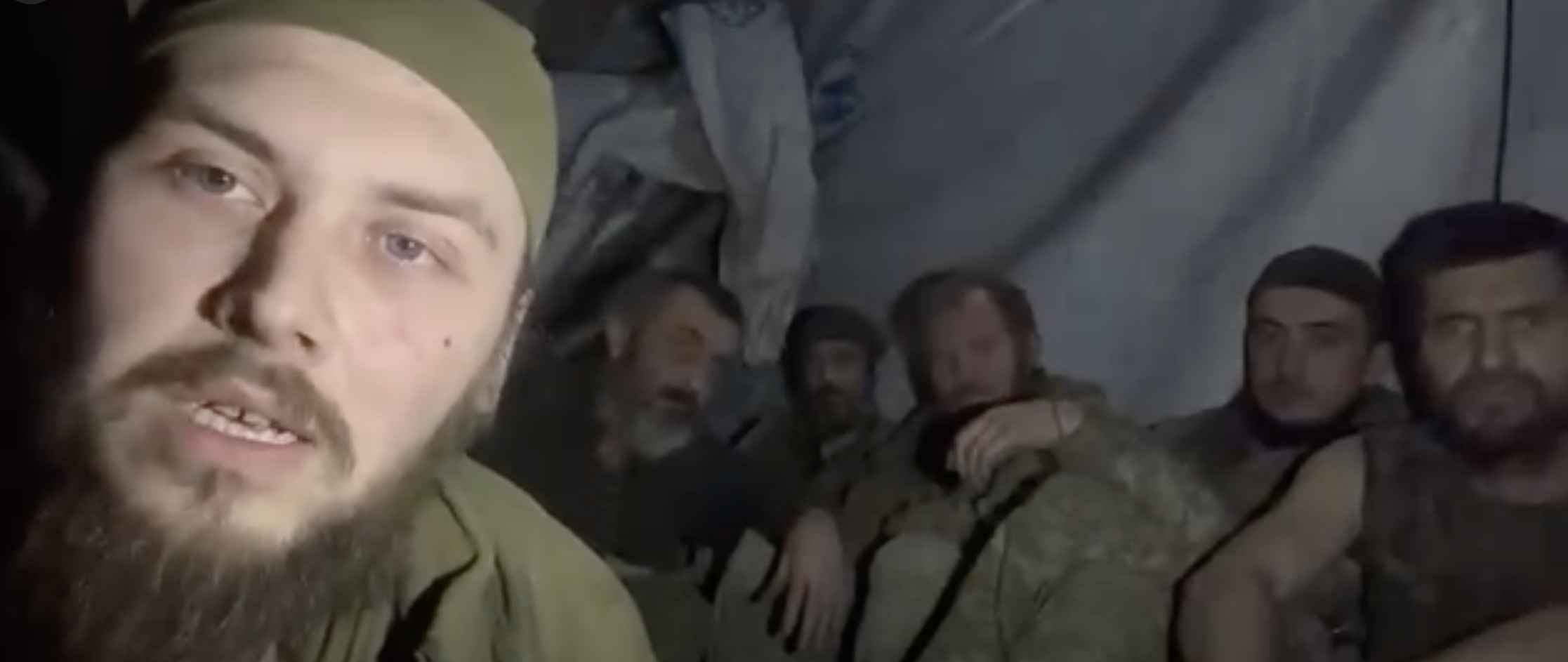
"Service members of Ukraine's 121st Territorial Defense Brigade in Zaporizhzhia Oblast said they had gone four months without rotation and faced persistent food and water shortages, while their command pledged to withdraw them when "the security situation allows."
"The heavy presence of drones, which constantly monitor the battlefield, has made movement to and from positions one of the most dangerous aspects of infantry service."
....
"The soldiers posted the appeal on Facebook on Aug. 9. Platoon Commander Anatolii Syshchuk said his unit arrived at the position in April to relieve troops who had been stationed there for eight months without rotation. Their deployment was initially expected to last one month, he said.
"Syshchuk said the soldiers were facing shortages of food, drinking water, and medical supplies. Food deliveries could be delayed by three days to a week, while on one occasion, no food was delivered for 12 days, he added."
....
"The 121st Brigade responded on Aug. 10, saying that packages containing essential supplies are being delivered to hard-to-reach positions according to schedule. The brigade claimed that 27 packages, each weighing nine kilograms, had been delivered to Syshchuk's unit over the course of the month."
Ukrainian unit reports shortages of food, water on front line, command promises evacuation when 'security situation allows'
Platoon Commander Anatolii Syshchuk said his unit arrived at the position in April to relieve troops who had been stationed there for eight months without rotation. Their deployment was initially expected to last one month, he said.
.....
I don't know how big a Ukrainian platoon is but 27 packages weighing 9 kg (20 lb) each in a month, or less than one package a day, doesn't seem like a lot. Especially if it includes water rations, food and medical supplies.
9 kg = 9 l of water
Minimum daily intake recommended is 3.7 l
So every day they could be getting enough water for 2 or 3 men.
How big was that platoon?
9 kg = 81,000 calories of lard
The highest energy density available
9 kg = 36,000 calories of sugar.
9 kg = 36,000 calories of cheese


