• Thanks for stopping by. Logging in to a registered account will remove all generic ads. Please reach out with any questions or concerns.

Canada seeks to buy Long Range Precision Rockets (probably US MLRS or HIMARS)

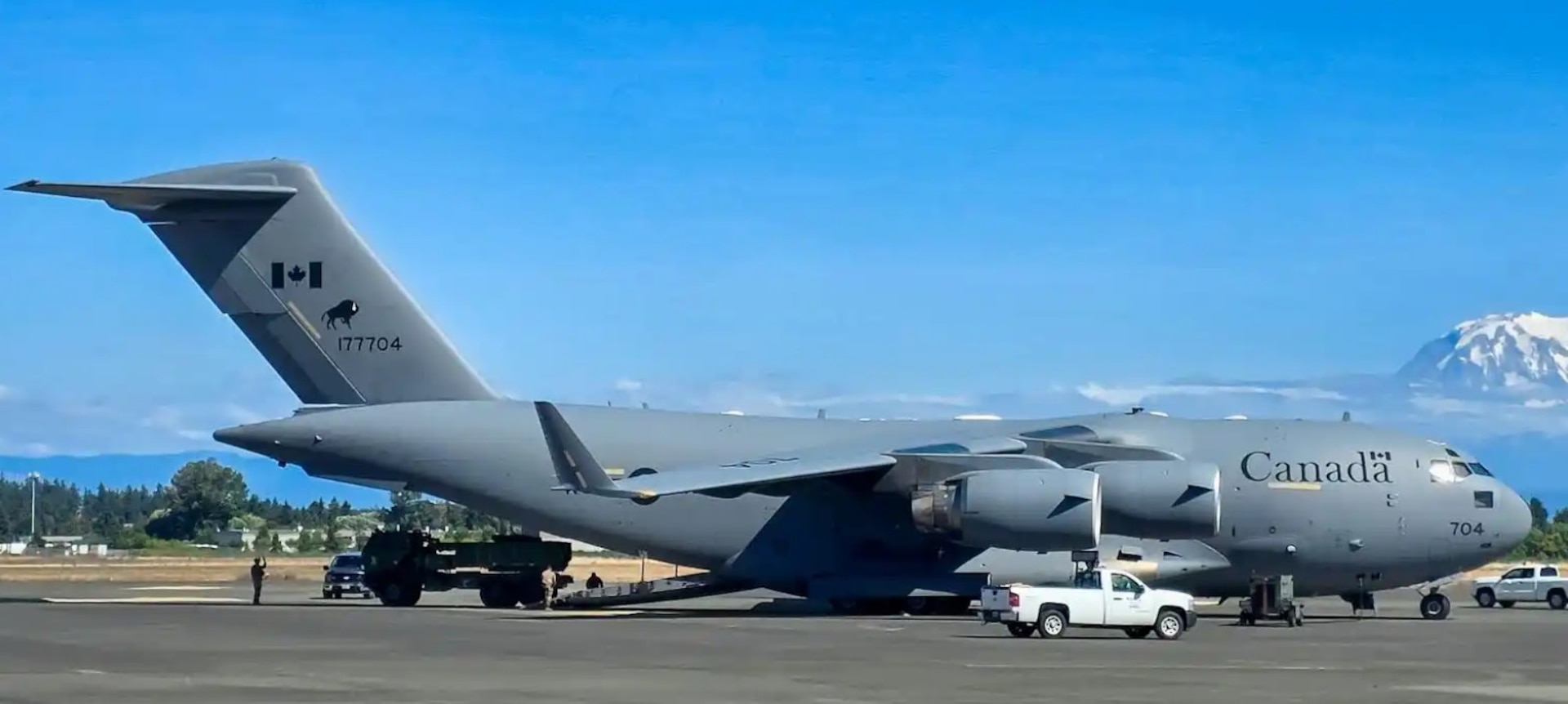
Here's an interesting one. Note the aircraft that the American HIMARS deployed on.

HIMARS Deploys to Arctic under Operation TUNDRA MERLIN​


260729-F-WM707-1002.JPG


🍻
 
USAF “RCHR” call-signs are probably very very busy at the moment.
 

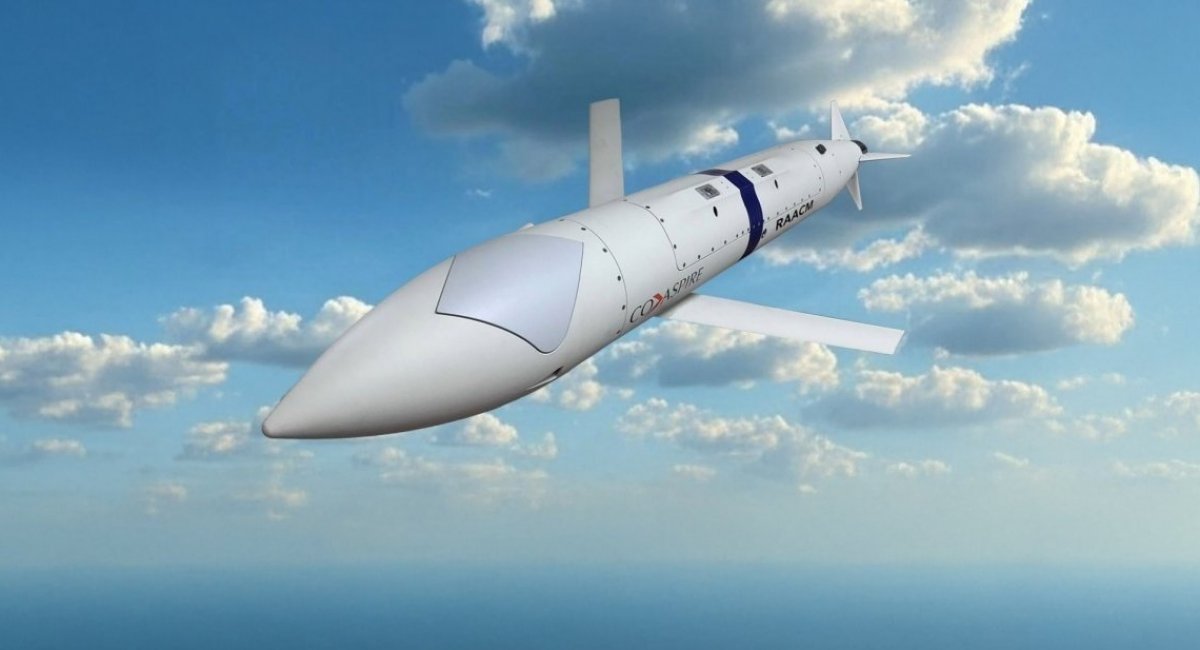
British low cost autonomous cruise missile (300 kg payload, 900 km at 750 kmh)

About 500,000 USD each vs a Storm Shadow or Tomahawk at 2 to 5 MUSD.


"TigerShark launches from a ground-based vehicle using rocket-assisted takeoff, a system that provides the initial thrust needed to get the drone airborne before its twin turbojet engines take over for sustained flight, allowing the weapon to be fired from mobile launchers rather than requiring a fixed launch site that would be vulnerable to enemy targeting."

"Inertial navigation tracks a vehicle’s position by continuously measuring its own acceleration and movement from a known starting point, a technique that works without any external signal but can drift off course over long distances if left uncorrected, while the terrain-mapping component compares what TigerShark’s sensors see below it against pre-loaded maps of the landscape to continuously verify and correct its position."
 
About 500,000 USD each vs a Storm Shadow or Tomahawk at 2 to 5 MUSD.
Still too expensive. Call me again when they get them under $100,000. If we can build 1 to 2 ton cars at under $50,000 we should be able to produce something like this, at scale, the same way.

🍻
 
Still too expensive. Call me again when they get them under $100,000. If we can build 1 to 2 ton cars at under $50,000 we should be able to produce something like this, at scale, the same way.

🍻

Agreed.

It can't be software or engineering that justifies the difference today. Everybody and his brother is punching out analogs.
 
Agreed.

It can't be software or engineering that justifies the difference today. Everybody and his brother is punching out analogs.
Ever visit Casa Loma in Toronto? It's amazing how much money there is in arms manufacturing that has little to do with the costs of R&D or the constituent parts or labour.

🍻
 
Not sure if this belongs here or another page. Please feel free to move accordingly.

Canada seeks to acquire long-range strike system widely used in Ukraine war​


  • Canada is moving to acquire a deep-precision strike system within the next 10 months by purchasing one from another country before developing a domestic version.

Now just stretch your vision a bit and imagine a home grown nuclear device inserted into this domestic version of a deep-precision strike system somewhere down the line. Possible? Not possible? Whom am I to say.
 
Due to the massive area that needs to be covered, ground-based AD systems are best suited to point defence of vital points. Fighters are the best choice for cruise missile defence of North America as they can much more rapidly redeploy to any axis of attack than anything ground-based.

And in the case of defence against an enemy cruise missile attack I'd argue that a Gripen (or other 4th Gen fighter) will work as well as the F-35. Range and payload would be the greatest benefits which is why I have always been a fan of the F-15EX for Canada's NORAD mission with F-35's to quarterback and for the NATO expeditionary role. Unfortunately, a certain someone has made that a non-starter.

If it comes to defending against ballistic missiles, well that means we're facing a full nuclear exchange with ICBM's and there simply isn't the capability at this point to defend against a mass attack. The US currently has 44 x Ground-Based Midcourse Defense missiles (40 in Alaska and 4 in California) which are designed to handle small-scale attacks by rogue nations like North Korea or Iran, not full-scale attacks by 100's or 1,000's of incoming warheads from Russia or China. Trump's fantasies of a Golden Dome to protect against ICBMs are too expensive to materialize (just as Reagan found with Star Wars) because additional ICBMs will always be cheaper to build than the interceptors.

I don't disagree with the utility of the fighter response. My problem is with the magazine capacity of the fighters. Individual fighters are limited in the number of interceptors they can carry. There are insufficient interceptors in inventory and production is slow and expensive. There are insufficient fighters availa le and there production is slow and expensive.

Israel has a sizeable airforce with fighters and interceptors and a compact defended
locality and yet it has seen fit to develop the Iron Dome system, the world's premiere GBAD system.

And even they are constantly looking to reduce the cost of interceptions.

Canada is a big place, agreed, but it has a small population, and a rich one, with a small number of vital points to defend.

.....

There is a current effort to make affotdable, small, interceptors.

These range downwards from 70mm APKWS II beam riders with prox fuses, through the 40 mm Nimbrix rhat seeks to emulate the M72 LAW by sticking a viable artillery warhead, in this case a 40 mm 3P, on top of a rocket, to quad copter interceptors like this one:


The current intention is to have them widely dispersed with significant concentrations at vital infrastructure sites.

But there is concurrent activity.

...

Matryoshkas are those nested dolls popular in Russia.
The USN seeks to emulate them in its missile program.

The program is built around one common, small, cheap, capable interceptor.

The interceptor can be launched from the ground, or any other platform.
The other platforms include flying platforms like UAVs, helicopters, fighters, cargo planes or rockets.

And some of those platforms, including rockets and UAVs can be transported by other rockets.


....

The interceptor, the TSI, is the heart of the system. Once delivered to a target rich environment it finds, fixes and fires on its own time, autonomously.

The TSI can lodge at the VP in a ground launcher.
Or it can be delivered rapidly to an uncovered VP by another vehicle.
Some of those vehicles can deliver quickly and precisely to the target zone but need to get their timing right and not arrive too soon or too late. Others can loiter for a while and extend the coverage period.

One option is a rocket powered first stage that lifts a heavy load a long distance in a hurry. At a point proximate to the projected target zone the rocket detaches from a ramjet powered USV that can stooge around the zone and manouevre rapidly to the threat. That USV carries a payload of TSIs as submunitions which can be released on command by a ground operator to take on the incoming targets autonomously.

....

The navy takes the lead on these types of systems because they can't rely on airfields. Their carriers are too few in number, too expensive and too slow to build. They are best served with runway independent solutions.

Those runway independent solutions then present attractive options for the army's artillery.

All of which ends up taking a load off the inhabited aerial fleet.

 
The navy takes the lead on these types of systems because they can't rely on airfields.
Whenever I look at the air defence problem for Canada I can't help returning to the SM-3. With a range of some 1,200 kms and its Mk 41 VLS I see it as a viable solution based out of ships on the coasts and a centrally AEGIS Ashore and a couple of GBAD batteries spread around Sask and NW Ontario. After that the problem simply turns to magazine depth and layered close-in defence of vital points.

🍻
 
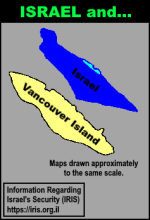
Comparing Israel to Canada is like comparing toasters to elephants.
1788021414807.png
Israel faces a wide range of aerial threats all the way from FPVs to IRBMs and everything in between, and none of those threats require the enemy to launch an expeditionary force in order to deploy them.

Any significant military threat to Canada requires crossing an ocean or deploying large numbers of covert troops on our territory to conduct attacks with small, concealable weapon systems.

A major ballistic missile attack would out of necessity have to be treated as a nuclear strike which would result in US retaliation, so the most probable type of conventional missile attack against Canada would be from air and submarine-launched cruise missiles.

Canada has a coastline of around 240,000km. NASAMS 3 (AMRAAM-ER) has an effective range of around 50-60km. How many do you plan to buy and where exactly will you place them? Fighters on the other hand can move rapidly to intercept missiles from whatever direction they are coming from...and on this we agree, we need more of them than 88 in my opinion (which is why I've long been a proponent of getting something like 72 x F-35's, 72 x Gripens, develop a domestic CCA and have the option of arming our fighter trainers).

This is why I say fighters (along with the RCN) are our primary air defence while GBAD should be reserved for vital point protection rather than in some futile attempt to create Iron Dome x 450 with mobile ground launchers.

Same with the hybrid drone threat. You can't cover every potential target in Canada with ground-based C-UAS systems. What country other than tiny Israel (which is in a very different military/political position than Canada) is even attempting to do that? The counter to these hybrid threats is intelligence to identify threats and deploying the appropriate defence assets as required.

Do you envision thousands of enemy 5th columnists infiltrating Canada and ranging across the country taking out targets with FPVs? Is that happening in Russia and Ukraine where they are literally beside each other? Is it happening in the Middle East right now? If the West including Canada were to be in a major conflict with Russia or China I think they may have a lot of more pressing concerns than thinking about how they can drop a hand grenade on a hydro transformer in Kelowna.

Should we seek cheaper AD solutions to counter the lower-end of the aerial threats? Absolutely! Do we require significantly more AD capacity (air, land and sea) than we have now? Absolutely!

Where I think you lose people is with the impression you give that the world of FPV's, bomber drones and Shaheeds that we're seeing in Ukraine automatically applies to every other place where conflict might occur. Geographies are different, politics are different, logistics are different.

Just my $0.02
 
Not sure if your comment riffs off my comments or @Kirkhill's. I assume @Kirkhill, but still there's an issue to discuss.
Geographies are different, politics are different, logistics are different.
The Geography is clearly vastly different. That's blindingly obvious. As is the complication that creates from pipelines to power transmission systems to key manufacturing and transportation hubs. All are vulnerable and all are widely distributed.

That leaves the issues of: are the various threats real? and how do you prepare for them in an adequate manner? The simple one is to hide your head in the sand and say it will never happen. Honestly, I sometimes think the more likely scenario is a strike by a Trumpian US seeking to secure oil, power and vital mineral resources rather than China or Russia . . . but I digress. We all debate and throw around technical solutions when we know that the two realities are that: 1) by the time we decide to purchase and deploy a certain technology, it will have changed (and therefore needs to be upgradeable; and 2) the decision to invest in a solution is a political one and not merely a practical or military one. Personally, I think that the best and cheapest air defence solution that we can get is an offensive nuclear and non nuclear one so that anyone who strikes us knows that it won't be a pain-free event for them. National bullies, like all bullies, seek to gather low hanging fruit - to use force on someone who can't strike back but has no option but to sit back and take it. Simply scattering some air defence solutions around the country won't deter anyone.

Fighters on the other hand can move rapidly to intercept missiles from whatever direction they are coming from
Fighters do not move as fast as hypersonic missiles. Similarly a fighter on the ground has little value. It needs to be airborne before the attack is launched - even with OTH radars and satellite systems. We also have so few that they can be easily spoofed by faints and missiles flying erratic patterns so that their actual target is hard to discern. Anyone who wants to put all of their air defence eggs in the fighter basket will quickly learn they invested in the most expensive and least dependable solution. For a country like Canada you need a series of surface based defences - picket ships and GBAD batteries that are always in place and always ready to engage. At the very least they will create protected zones which will have gaps. It is in these gaps where fighters will have some value as they require less manoeuvre and, if bases or CAPs are positioned in these gaps then the chance of a successful intercept (barring magazine depth issues) will be greatly enhanced.

I'll just leave it with this - joint IAMD is exactly that - it's "joint." It needs an intelligent analysis of the threats and the positioning of the best air, sea and land based defence systems that can be obtained and sustained on an affordable basis.

🍻
 
More on the rocket launcher front -


....

M270 with two pods
HIMARS with one pod
CAML-M with two pods

1x ATACMS per pod
2x PrSMs per pod
6x GMLRS-ER, GMRLS and M31 per pod
24x 127mm JR3 per pod

Weight for distance.

Other podded payloads

AIM9X
Patriots
SM6s
Tomahawks.

.....

Building on the multistage analogy above

Stage 1 - C17
Stage 2 - CAML launcher
Stage 3 - Rocket
Stage 4 - Payload
Stage 5 - Submunition(s)
Stage 6? - Sub-submunitions?
 
Personally, I think that the best and cheapest air defence solution that we can get is an offensive nuclear and non nuclear one so that anyone who strikes us knows that it won't be a pain-free event for them. National bullies, like all bullies, seek to gather low hanging fruit - to use force on someone who can't strike back but has no option but to sit back and take it. Simply scattering some air defence solutions around the country won't deter anyone.
The differences in responses to North Korea and Iran prove that point.
Fighters do not move as fast as hypersonic missiles. Similarly a fighter on the ground has little value. It needs to be airborne before the attack is launched - even with OTH radars and satellite systems. We also have so few that they can be easily spoofed by faints and missiles flying erratic patterns so that their actual target is hard to discern. Anyone who wants to put all of their air defence eggs in the fighter basket will quickly learn they invested in the most expensive and least dependable solution.
There were people on this website tracking the US military build-up and asset re-deployments for both Venezuela and Iran. The preparations for a major conventional attack by Russia or China would likely be signaled by a variety of open source and classified methods allowing us to put all of our integrated AD systems (land, sea and air) on heightened readiness. Also, our fighters do not have to intercept incoming missiles in the high Arctic...they can do so as they get closer to their targets as those become clearer.

Also, where did I suggest that we "put all our air defence eggs in the fighter basket"? I said that fast moving fighters are better for responding to cruise missile threats that may come from a variety of directions than trying to have a bunch of ground-based systems that you try to position in a massive Iron Dome-type system. I explicitly stated that we definitely need more GBAD but their better use is as vital point protection.

Fighters with long-range missiles (along with ships, subs and ground-based launchers) also help provide that offensive punch that you noted above as being required to deter attack in the first place.
For a country like Canada you need a series of surface based defences - picket ships and GBAD batteries that are always in place and always ready to engage. At the very least they will create protected zones which will have gaps. It is in these gaps where fighters will have some value as they require less manoeuvre and, if bases or CAPs are positioned in these gaps then the chance of a successful intercept (barring magazine depth issues) will be greatly enhanced.

I'll just leave it with this - joint IAMD is exactly that - it's "joint." It needs an intelligent analysis of the threats and the positioning of the best air, sea and land based defence systems that can be obtained and sustained on an affordable basis.

🍻
Agreed.
 
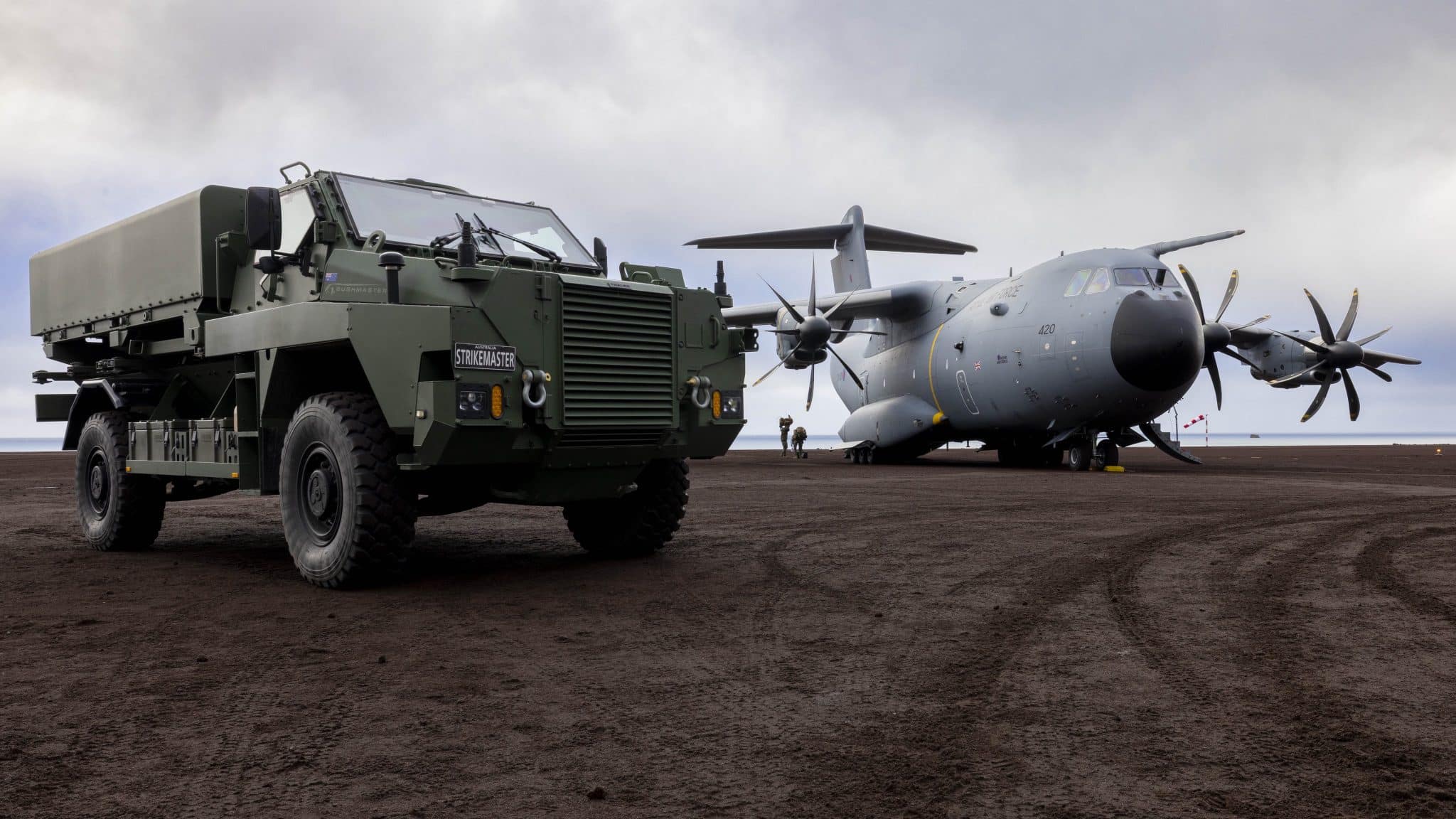
The alternate proposition. The Kongsberg NSM on an Aussie Bushmaster. Deployed on Jan Mayen by A400M with the Norwegian Homeguard, the Royal Marines and the USMC.


The PrSM anti ship missile reaches out beyond 350 km with a target range of 1000 km. The NSM has a range of 200 to 300 km.
 
I am a believer in having multiple defense layers, some passive other active.

Space, coastal, undersea and Inland sensors nets

Combined ops and exercises with our NATO and Non-NATO partners

Fighters with anti-ship missile capability and stocks of such.

Ships and subs

Mobile shore Anti-ship and AD systems

Potential fixed Anti-ship and AD systems guarding important harbour entrances (Halifax, Esquimalt) (Maybe the 57mm from the Halifax's when they retire?) Perhaps the time has come to look at fixed torpedo launching sites again given the capabilities of modern torpedos?

Coastal route survey and MCM capability (Done by either/both RCN and/or Contractors)

Harbour security and local MCM done by Naval Reservists

Network of electronic sensors and EW equipment to guard Naval bases and airfields

Anti-sub and Surface drone booms

More inspection of commercial ships by ROV and divers (This can actually be contracted out) supporting both military concerns and law enforcements concerns. Doing both intelligence driven and random searches.

Dedicated well armed security forces to guard bases

Continue to build, improve and test intelligence gathering of threats, both launched internally and externally

All major ports required to provide an armed police force trained and focused mainly on organized crime in ports, but able to help Federal policing and assisting in preventing hostile states from using organized crime networks for attacks.

Having every large CCG ship equipped with .50cal MG's with some training and ROE to support boarding parties supplied by other agencies (military, RCMP)
 
I am a believer in having multiple defense layers, some passive other active.

Space, coastal, undersea and Inland sensors nets

Combined ops and exercises with our NATO and Non-NATO partners

Fighters with anti-ship missile capability and stocks of such.

Ships and subs

Mobile shore Anti-ship and AD systems

Potential fixed Anti-ship and AD systems guarding important harbour entrances (Halifax, Esquimalt) (Maybe the 57mm from the Halifax's when they retire?) Perhaps the time has come to look at fixed torpedo launching sites again given the capabilities of modern torpedos?

Coastal route survey and MCM capability (Done by either/both RCN and/or Contractors)

Harbour security and local MCM done by Naval Reservists

Network of electronic sensors and EW equipment to guard Naval bases and airfields

Anti-sub and Surface drone booms

More inspection of commercial ships by ROV and divers (This can actually be contracted out) supporting both military concerns and law enforcements concerns. Doing both intelligence driven and random searches.

Dedicated well armed security forces to guard bases

Continue to build, improve and test intelligence gathering of threats, both launched internally and externally

All major ports required to provide an armed police force trained and focused mainly on organized crime in ports, but able to help Federal policing and assisting in preventing hostile states from using organized crime networks for attacks.

Having every large CCG ship equipped with .50cal MG's with some training and ROE to support boarding parties supplied by other agencies (military, RCMP)

As I just noted on the Who Needs Sailors thread, that coastal, or littoral domain, now easily extends 350 km from the shore (the range of the current PrSM anti ship missile).

That missile puts any target within the EEZ 4 minutes from an in-range launcher.

Range is being increased to more than 1000 km.

"Increment 2 changes the target set that PrSM can prosecute. Increment 1 provides long-range precision fires against targets whose coordinates can be established before launch, while Increment 2 adds a multi-mode seeker intended to acquire moving maritime targets and relocatable targets during the engagement. This is particularly important against warships because a vessel moving at 25 knots covers more than 46 km in one hour, making pre-launch coordinates progressively less useful as missile range and target movement increase. Lockheed Martin conducted the first Increment 2 flight test from HIMARS on March 12, 2026, with the missile flying 350 km while exercising the new seeker and associated guidance functions. The Army can therefore treat Increment 2 less as a completely new missile than as the integration of moving-target guidance into a PrSM design whose launcher interface, airframe-related components, software base and substantial test evidence already exist."

"The resulting capability is particularly relevant to the Indo-Pacific because Army rocket artillery deployed on islands, coastlines or other dispersed positions could contribute directly to maritime denial without placing aircraft or surface combatants inside the same threat envelope. A HIMARS unit could receive a maritime target track from another service, launch against the projected target location and rely on Increment 2's terminal seeker to compensate for subsequent ship movement. The Army is already working with Army, Navy and Marine Corps users, including recurring engagement with U.S. Army Pacific, to refine pre-launch information requirements, operational scenarios and cross-service interoperability. This would increase the number and geographic distribution of U.S. firing positions an opposing navy must consider, while HIMARS and M270A2 units could relocate after launch rather than remaining tied to fixed coastal missile sites.

"The missile's seeker, however, solves only the terminal portion of the maritime targeting problem. At several hundred kilometers, Army artillery crews cannot independently detect, classify and continuously track most naval targets from their firing positions, so Increment 2 depends on a joint sensor-to-shooter chain capable of supplying sufficiently current target information before launch. Aircraft, unmanned systems, ships, satellites and other surveillance assets may generate those tracks, but the operational requirement is to move identification, position, course and speed data through command networks quickly enough for the missile to reach the target's predicted area. A ship traveling at 30 knots moves 926 meters per minute, or 27.8 km in 30 minutes, illustrating why delays between detection, targeting approval and launch can rapidly expand the area the terminal seeker must search. Increment 2 therefore makes network resilience, targeting latency and cross-service data exchange as important to practical anti-ship performance as missile range."


In 4 minutes the target ship will have moved 4 km at 30 knots.

......

Question

What is the search area of the prism multi mode seeker?


AI opinion


The exact, numerical "search area" or field of view (FOV) dimensions of the Precision Strike Missile (PrSM) Increment 2 multi-mode seeker (often referred to as the Land-Based Anti-Ship Missile or LBASM seeker) are classified military specifications and have not been publicly released by Lockheed Martin or the U.S. Army. [1, 2, 3]
However, defense documentation provides details on how the seeker searches and targets an area: [1]

Seeker Targeting Phases & Search Mechanism
Instead of a single "search area," the multi-mode seeker uses two distinct sensors that operate sequentially to expand and then narrow down its target acquisition zone: [1]
    • Long-Range / Wide-Area Search (Passive RF): When the missile arrives at its general target area via GPS/INS guidance, the Passive Radio Frequency (RF) seeker initiates a broad-area search by "listening" for radio and radar emissions from enemy warships or air-defense radar nodes. This allows the missile to scan a massive geographical footprint to account for any target movement or drift during the missile's flight time. [1, 2]
    • Terminal Narrow Search (Imaging Infrared / IIR): As the missile homes in on the electronic emissions, it sheds its protective seeker covers and activates its Imaging Infrared (IIR) sensor. This sensor focuses on a much narrower, high-resolution field of view to pinpoint the physical shape of the target, counter electronic jamming, and select the precise point of impact. [1, 2, 3, 4]
 
Back
Top