
- Reaction score
- 25,106
- Points
- 1,010
They are going to get absolutely killed in a general election.



If media sound bites are anything to go by, they sure think a lot about the interests and welfare of the very small indigenous minority of the province. As for the rest of the population, I have no idea.They are going to get absolutely killed in a general election.
Is BC really a Representative Parliamentary Democracy if every decision of the Legislature can be over turned because a First Nation Elder somewhere objects?If media sound bites are anything to go by, they sure think a lot about the interests and welfare of the very small indigenous minority of the province. As for the rest of the population, I have no idea.
I am not sure what to make of the predicament the people who climbed on the UNDRIP bandwagon have placed us in. UNDRIP is a declaration, not a treaty, and the enabling legislation (federal and provincial) is entirely self-inflicted.Is BC really a Representative Parliamentary Democracy if every decision of the Legislature can be over turned because a First Nation Elder somewhere objects?

Is BC really a Representative Parliamentary Democracy if every decision of the Legislature can be over turned because a First Nation Elder somewhere objects?


Squeaky wheel meets grease.If media sound bites are anything to go by, they sure think a lot about the interests and welfare of the very small indigenous minority of the province. As for the rest of the population, I have no idea.

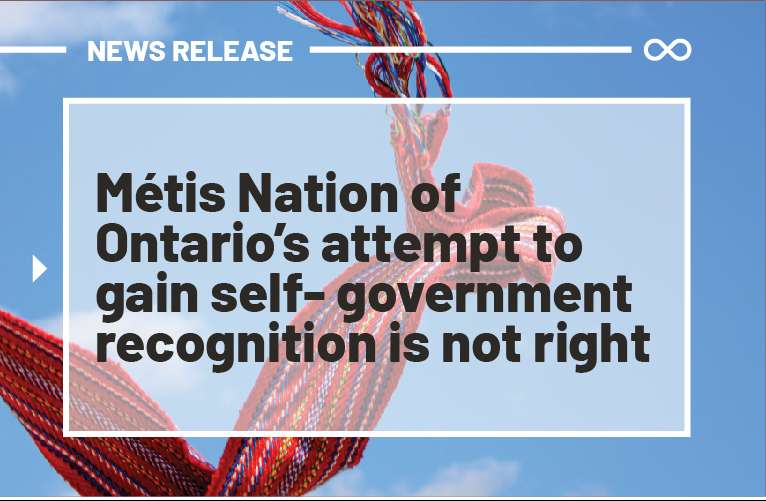

 halifax.citynews.ca
 www.firstpeopleslaw.com
I am an Anglo-Scot metis born in Scotland, with a Scottish mother and an English father. I married a girl from Saskatchewan with a 400 year history in Canada speaking French with some members of the family believing they can trace one line of their ancestry to a man believed to be French-Indian metis four generations ago.
What are my kids' rights?

Status card? No?
Stand in line with the rest of us schmucks

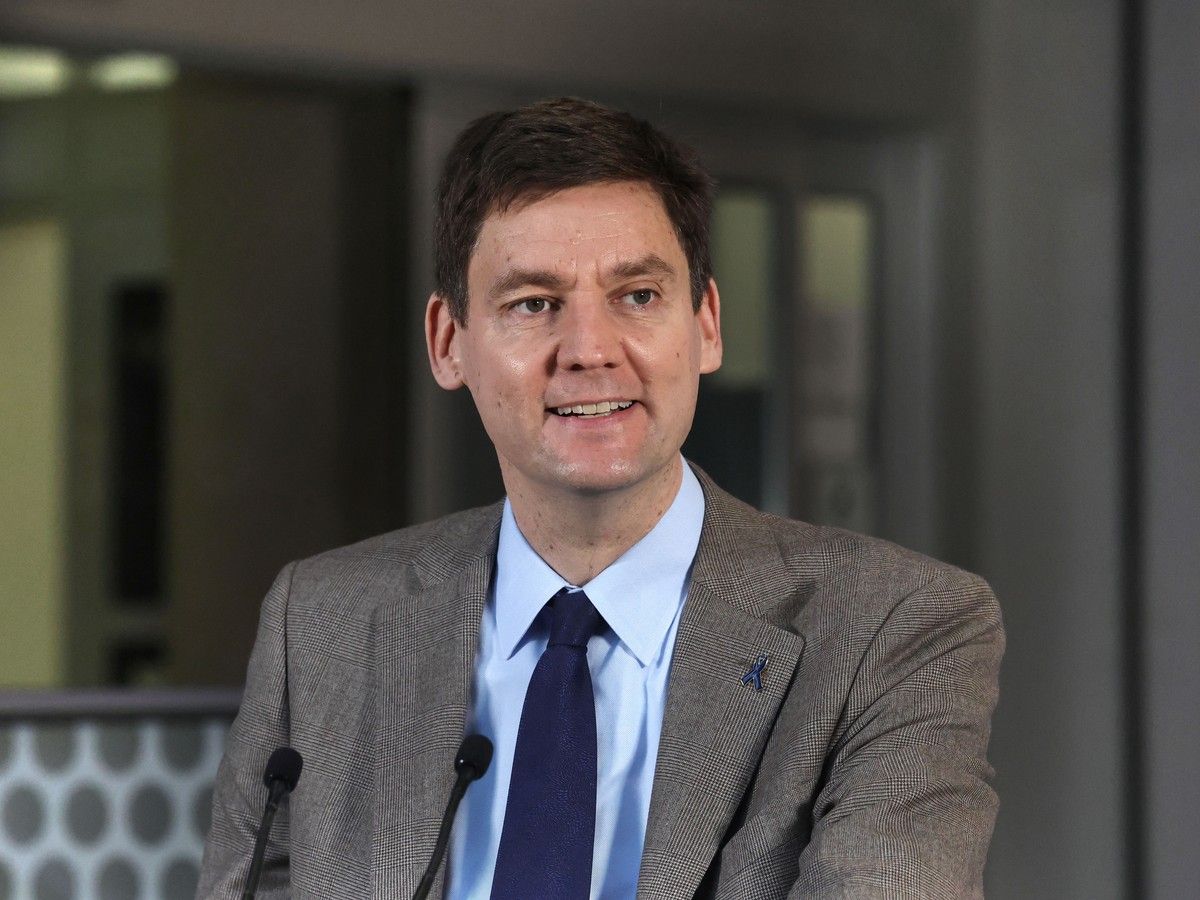
 vancouversun.com

Are they saying they transitioned or mutilated 1 in 5 children in foster care? I’m having trouble accepting that as fact.

I am not really sure I understand the link between “non-US made fertilizer” and the cow incident.This story about BC government mandated fertilizer killing livestock is absolutely wild.
B.C. firm penalized after government-mandated forest fertilizer kills 13 cows
A B.C. government decision to source a forest fertilizer outside the U.S. for “political reasons” ended in disaster in an incident that killed 13 cattle and triggered a major environmental penalty.www.castanet.net
That is on the company, not the BC govt.There’s definitely a “fact gap”. My guess is the company purchased and mis-applied (accidentally dropped) a non-compliant product mixture and brand purchased at the direction of the BC government rather than the usual, safer product made in the USA. They did not seem to be aware of its greater than normal toxicity. Clearly not equal substitute.


Former MP Kerry-Lynne Findlay is watching her bid to become BC Conservative leader face harsh criticism after she suggested rival Peter Milobar would be in a conflict of interest as leader of the party because his wife is Indigenous.
Findlay made the remarks Saturday on Global BC’s televised leadership debate.
“On a conflict of interest issue, the property rights issue is overlying all of this, and Mr. Milobar, I do not see how on the major issue of our time you will be able to get around the conflict of interest rules,” she said.
Milobar: “Just say it: My wife is Indigenous so you think I’m in conflict of interest?”
He added: “I’ve never heard of anything so ridiculous in my life.”
Findlay: “She also works for the Kamloops Indian Band.”
Milobar: “The last shift I think she had was about nine months ago and worked one day as the part-time, on-call receptionist where she answers the phone and apparently this is a big gotcha moment.”
But Findlay was not done.
“I’m not worried about your family, I’m worried about your conflict of interest,” she persisted.
Milobar: “How is that a conflict of interest? I’ve been voting against lots of Indigenous issues.”
It was the ugliest, most personal exchange of what was otherwise a mostly blasé debate.
The suggestion that Milobar is somehow unfit for public office comes a bit late in the game. With 24 years as an elected official, he’s spent more time in politics than Findlay did as an MP.
But the remark clearly offended Milobar. He later in the debate sarcastically suggested to Findlay that he perhaps has a conflict of interest on environmental issues because he owns a car, and that he may also be in conflict on health care because his father was a doctor.
Within 12 hours, Findlay was facing widespread criticism, including from four Conservative MPs.
“This is atrocious,” Conservative MP Frank Caputo posted on social media. “Like Peter, I (proudly) have Indigenous family through marriage. This is morally indefensible; Conservatives must deal [with] the fallout from such words (and resulting stereotypes).”
Caputo was a colleague of Findlay’s in Ottawa. But he did not pull his punches.
Neither did Todd Doherty, the Conservative MP for Cariboo-Prince George, who also served with Findlay in the federal Conservative caucus. He called the comments “abhorrent.”
“You of all people should know words matter,” he posted to Findlay. “By the same token, are British Columbians to expect that you too are compromised or in a conflict of interest because of your husband’s hateful comments in the past?”
Findlay’s husband, Brent Chapman, is currently the MLA for Surrey South. Nobody has questioned if this puts her in a conflict as leader. Nor has she been asked about Chapman’s highly controversial past comments, in which he once called Palestinians "little inbred walking talking breathing time bombs” and suggested some mass shootings were fake.
Most of the Conservative leadership candidates were silent on the issue until Sunday night, when Iain Black posted a response, eviscerating Findlay.
“This is now a clear pattern of behaviour,” said Black. “We lost the election in 2024 in part due to the racist comments made by our candidate in Surrey South, who happens to be the husband of Kerry-Lynne Findlay. She did not then, and has not since, denounced those comments as reprehensible.”
Black also pointed out Findlay also has not withdrawn the endorsement of Kelowna MLA Tara Armstrong, despite Armstrong making a Nazi reference in the house recently.
“Just last night, at our final debate on Global TV, we watched Kerry-Lynne go after the family of an honourable man on the basis of race and suggest he’s not suitable for public office because of his choice of life partner,” said Black.
Another Conservative MP, Tamara Kronis, took to social media to question whether, according to Findlay’s logic, Skeena MP Ellis Ross would be ineligible to discuss Indigenous property rights issues because he’s Indigenous and a former chief of the Haisla Nation.
She also questioned whether Findlay would have a problem with BC Conservative house leader A'aliya Warbus, a member of the Stólō Nation, who has argued DRIPA should be repealed and is a star member of the party’s caucus.
Ross criticized Findlay as well, telling Milobar’s wife, Lianne, to hang in there because his wife Tracey knows how it feels.
“I get smeared as an apple/sellout on one end and that I favor natives on the other,” Ross posted online. “It’s a no-win situation for natives in politics.”


