


- Reaction score
- 13,646
- Points
- 1,160
I hesitate to open yet another Drone thread but I agree with the premise of this article. Although it focuses on the intersection of the Drone with the Maritime Domain ultimately Drones are a cross-domain platform that deserves consideration as a stand-alone domain in the same fashion that Cyber and EW are considered as separate domains.
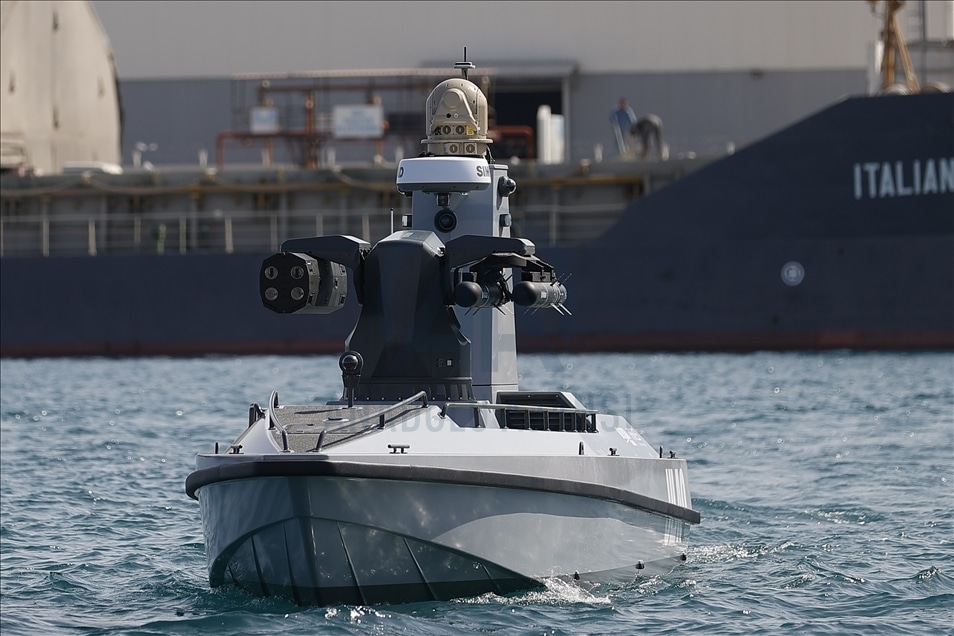
 www.navalnews.com
"Hardware without doctrine produces platforms that are individually capable but collectively inefficient. In a saturation attack of 40–80 drones along a 30 km frontage, a USV screen must allocate targets and coordinate handoffs within cycles measured in seconds — coordination that has to be automated at the force level, not improvised in contact. US Navy commanders returning from Red Sea operations have named deep magazine depth and integrated C2 (command and control) as the defining lessons of sustained counter-drone defence at sea, and the Navy’s adoption of low-cost interceptors such as the Coyote reflects exactly this cost-exchange logic.
"Three conclusions follow. ADW must be resourced as a distinct operational domain, not folded into existing AAW or C-UAS programmes. Maritime capability must prioritise forward-deployed unmanned platforms with AESA detection and cost-matched effectors — shore-based C-UAS is the inner layer; the outer layer barely exists at the scale the threat demands. And hardware investment must be matched by investment in doctrine and C2: a screen of capable USVs without coordination infrastructure is a collection of point-defence units, not an area defence capability. The adversaries driving this threat made their investment decisions years ago, and their production lines are running. Defenders who recognise ADW as a distinct domain, and build the platforms and doctrine to match, will sustain a viable maritime posture. Those who treat it as an annex to existing air defence will find themselves fighting the wrong threat with the wrong systems, at exactly the wrong cost."
....
Yesterday @GR66 posted this list
Of that list, by my reckoning, 8 are directly applicable to drone warfare.
The technical limitations the author of the Drone Domain article describes are equally applicable, in my view, to the land battle. He talks about sea-clutter shortening horizons and reaction times. I suggest that terrain masking does the same on-shore.
The solution on-shore is the same. Layers. Layers of both cheap, forward positioned sensors and short range, low cost effectors.
Where the author argues for screens of launches with radars, guns and low cost effectors the land environment requires similar solutions. The USMC is already proceeding down that route.
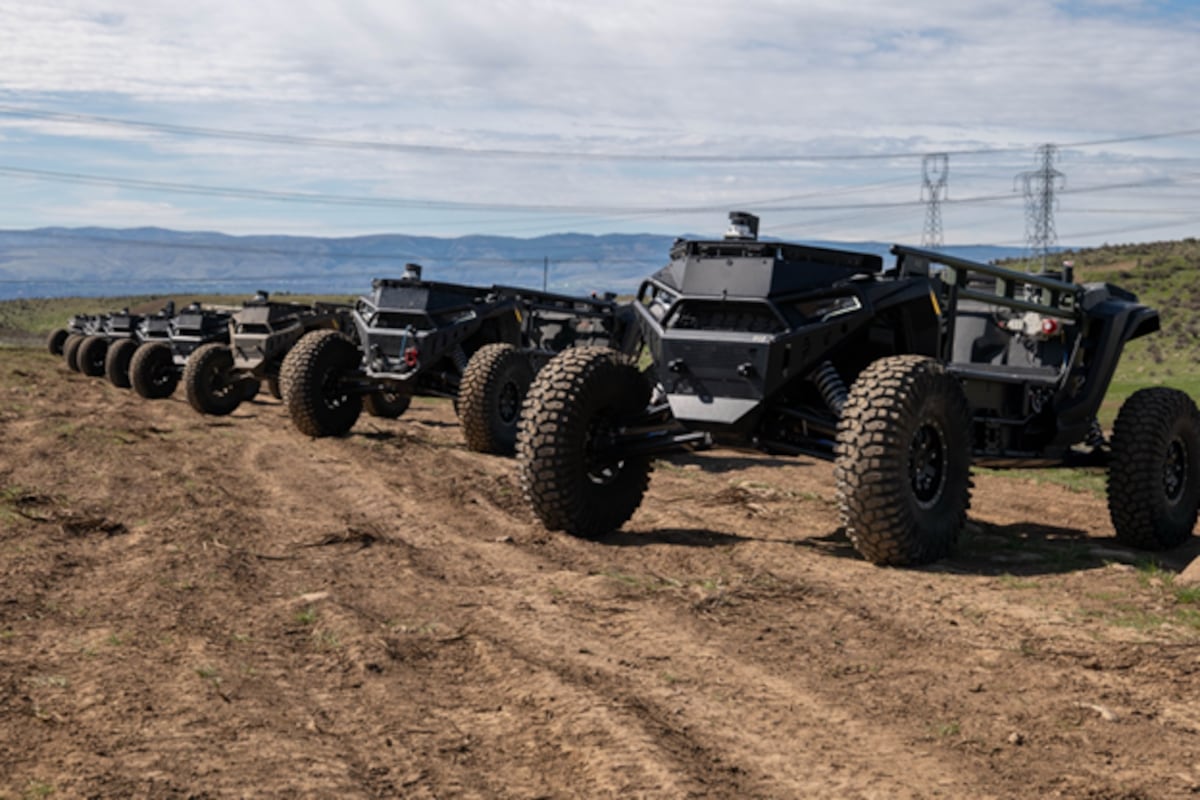
 www.militarytimes.com
"a first-of-its-kind $20 million production contract for fully autonomous ground vehicles that can transport air defense systems deeper into the fight, with less human oversight."
....
The author also alludes to the challenge of the immobile shore-installation. That applies to all terrestrial infra-structure and is reflected in this point from @GR66 's list:
"City-level drone defence architecture (including improved early warning and coordinated counter-measures"
That applies to all fixed infra-structure - cities and all other vital points and critical infrastructure.
This presents the clear and present danger that crosses over into the world of the Integrated Air and Missile Defence - but with more varied launch points, greater mass and shorter reaction times.
.....
On the maritime front
I note the author's comments about putting radars on launches to create a picket.
There has been some discussion about the merits of putting radar on small boats because the small size results in an unstable platform that can only support a low mast and therefore a short detection horizon against low flying targets.
The author's point is that the solution to that problem is to put out more pickets with upwards looking radars. If the market can supply AESA radars at the scale and price that permits four AESA panels on a tank or a MADIS ATV then it can afford to supply them for 11m USVs with or without effectors.
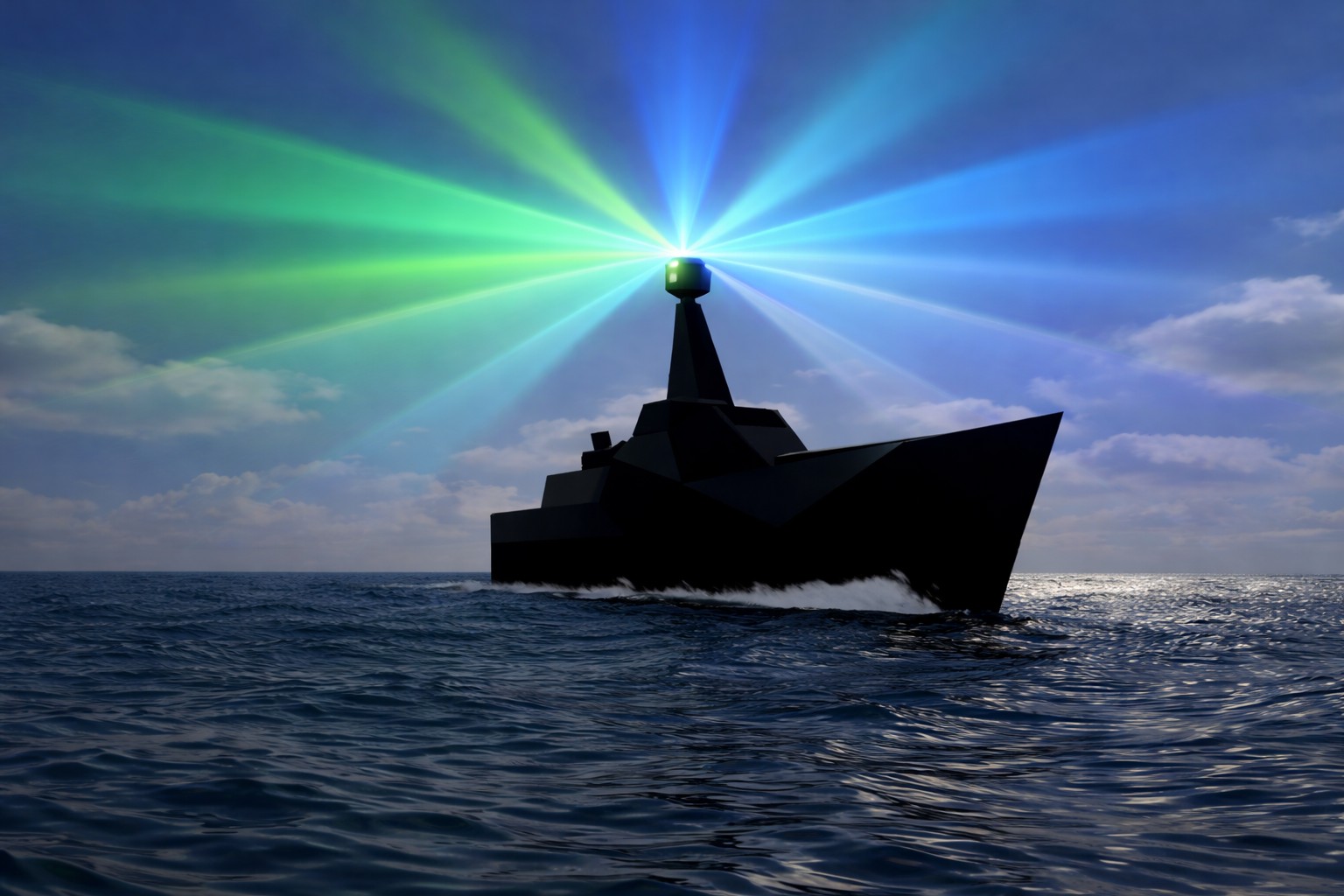
 ukdefencejournal.org.uk

 www.janes.com
...
And over-arching this entire discussion, is the need for both Command and Control technology to manage these manifold dispersed subsystems, but also, and some of you may find this strange coming from me, the need for a well-defined doctrine.
Anti-Drone Warfare: The Missing Tier in Maritime Defence Architecture - Naval News
The proliferation of autonomous one-way attack (OWA) drones has exposed a critical gap in defence architecture: Anti-Drone Warfare (ADW) is neither conventional air defence nor C-UAS. It is a distinct operational domain — with unique threat physics, unique engagement economics, and unique...
www.navalnews.com
"Hardware without doctrine produces platforms that are individually capable but collectively inefficient. In a saturation attack of 40–80 drones along a 30 km frontage, a USV screen must allocate targets and coordinate handoffs within cycles measured in seconds — coordination that has to be automated at the force level, not improvised in contact. US Navy commanders returning from Red Sea operations have named deep magazine depth and integrated C2 (command and control) as the defining lessons of sustained counter-drone defence at sea, and the Navy’s adoption of low-cost interceptors such as the Coyote reflects exactly this cost-exchange logic.
"Three conclusions follow. ADW must be resourced as a distinct operational domain, not folded into existing AAW or C-UAS programmes. Maritime capability must prioritise forward-deployed unmanned platforms with AESA detection and cost-matched effectors — shore-based C-UAS is the inner layer; the outer layer barely exists at the scale the threat demands. And hardware investment must be matched by investment in doctrine and C2: a screen of capable USVs without coordination infrastructure is a collection of point-defence units, not an area defence capability. The adversaries driving this threat made their investment decisions years ago, and their production lines are running. Defenders who recognise ADW as a distinct domain, and build the platforms and doctrine to match, will sustain a viable maritime posture. Those who treat it as an annex to existing air defence will find themselves fighting the wrong threat with the wrong systems, at exactly the wrong cost."
....
Yesterday @GR66 posted this list
Nine key capabilities that Ukraine needs...
Ukraine’s top defense adviser lists nine critical gaps in the country’s military tech
Serhii Beskrestnov, known by his call sign "Flash" and serving as an adviser to Ukraine's Ministry of Defense, published a public assessment that catalogs nine specific technological deficiencies he says are creating serious problems across the front, ranging from thedefence-blog.com
TLDR:
- A serial, mass-produced solution against Russian glide bombs
- EW systems that can counter Russian MESH modems
- City-level drone defence architecture (including improved early warning and coordinated counter-measures
- Higher tactical radar density
- Indigenous ballistic missiles
- Improved optical jamming/video disruption EW capabilities
- Solutions to protect Ukrainian strike drones from Russian C-UAS drones
- A way to systemically find and destroy Russian tactical radars
- Reliable non-GPS navigation systems for Ukrainian deep-strike drones
Of that list, by my reckoning, 8 are directly applicable to drone warfare.
The technical limitations the author of the Drone Domain article describes are equally applicable, in my view, to the land battle. He talks about sea-clutter shortening horizons and reaction times. I suggest that terrain masking does the same on-shore.
The solution on-shore is the same. Layers. Layers of both cheap, forward positioned sensors and short range, low cost effectors.
Where the author argues for screens of launches with radars, guns and low cost effectors the land environment requires similar solutions. The USMC is already proceeding down that route.
USMC awards $20 million contract for first autonomous ground vehicles
The Marine Corps is pursuing a first-of-its-kind $20 million production contract for fully autonomous ground vehicles.
www.militarytimes.com
"a first-of-its-kind $20 million production contract for fully autonomous ground vehicles that can transport air defense systems deeper into the fight, with less human oversight."
....
The author also alludes to the challenge of the immobile shore-installation. That applies to all terrestrial infra-structure and is reflected in this point from @GR66 's list:
"City-level drone defence architecture (including improved early warning and coordinated counter-measures"
That applies to all fixed infra-structure - cities and all other vital points and critical infrastructure.
This presents the clear and present danger that crosses over into the world of the Integrated Air and Missile Defence - but with more varied launch points, greater mass and shorter reaction times.
.....
On the maritime front
I note the author's comments about putting radars on launches to create a picket.
There has been some discussion about the merits of putting radar on small boats because the small size results in an unstable platform that can only support a low mast and therefore a short detection horizon against low flying targets.
The author's point is that the solution to that problem is to put out more pickets with upwards looking radars. If the market can supply AESA radars at the scale and price that permits four AESA panels on a tank or a MADIS ATV then it can afford to supply them for 11m USVs with or without effectors.
Royal Navy seeks rapidly deployable drone picket ships
Project HORUS seeks rapidly deployable uncrewed sensors to detect drones, missiles and aircraft at sea.
ukdefencejournal.org.uk
UK MoD orders Giraffe 1X radars
The UK Ministry of Defence (MoD) has ordered an undisclosed number of Giraffe 1X radar systems from Saab UK valued at nearly GBP24 million (USD31.84 million), according...
www.janes.com
...
And over-arching this entire discussion, is the need for both Command and Control technology to manage these manifold dispersed subsystems, but also, and some of you may find this strange coming from me, the need for a well-defined doctrine.


