• Thanks for stopping by. Logging in to a registered account will remove all generic ads. Please reach out with any questions or concerns.

Indirect Fires Modernization Project - C3/M777 Replacement

If the whispers I've heard about new energetic storage and processing infra are true then Canada will be well served.
Oh please god yes. Apply that same thinking to Naval Ordinance onboard ships.
The expansion to support units is also long overdue.
I will stand by my belief there are tooany ammo techs and what we need are better trained supply techs that can make a career track out of ammo.
From the officer side they finally recognized that Naval Combat Systems Engineers don't need to take half the ammo courses the Log O's do for their Ammo Officer qualifications. It will reduce their training time by half or something like that. Mainly because they get that training elsewhere already (ammo safety quals for example).
 
If the whispers I've heard about new energetic storage and processing infra are true then Canada will be well served.
The expansion to support units is also long overdue.
I will stand by my belief there are tooany ammo techs and what we need are better trained supply techs that can make a career track out of ammo.

I did write a memo/service paper suggesting this shortly after I got back.
The senior ATO at the time, understandably, pointed at Supply Tech levels which were in the shitter and said it was a non starter.

Interesting.
 
Oh please god yes. Apply that same thinking to Naval Ordinance onboard ships.

From the officer side they finally recognized that Naval Combat Systems Engineers don't need to take half the ammo courses the Log O's do for their Ammo Officer qualifications. It will reduce their training time by half or something like that. Mainly because they get that training elsewhere already (ammo safety quals for example).

The RCN does ammo so silly on ships.

Ammo accountability has been abysmal in every ship I have inspected. I have another ship and a sub this week to inspect.
 
The RCN does ammo so silly on ships.

Ammo accountability has been abysmal in every ship I have inspected. I have another ship and a sub this week to inspect.
The RCN also blew up Halifax a couple of times...(ok, only once was actually our fault.) So, Vol 3 ships is based on not letting that happen again.

Let's put heavy mats at the foot of the ladders as we move small arms ammo onboard....then in case someone drops a can, they won't damage the deck nor the ammo can.

The rules I was given to consider were....overboard....so I twitted with them at one point. I was asked for my plan to re-ammo the ship with 680 rounds of SAA once as a part of our FP ammo loadout. Moving it from D-40 to the jetty.

The 'safe' method was to have the ship's truck swapped with a properly placarded vehicle borrowed from CFAD, escorted by a fire truck to ensure the ammo didn't spontaneously combust.

The 'backup' plan was to walk through the yard with the ammo can in hand, followed by a sailor carrying a water based fire extinguisher.

Those were COA 1 and COA 2. COA 3 was that I'd walk over, pick up the can, and bring it back to the ship.

All 3 COAs went to Formation Ammo, and they 'let' me do COA 3.

Realistically, you can stub out a cigarette with a 5.56 round and it won't go off.
 
The RCN also blew up Halifax a couple of times...(ok, only once was actually our fault.) So, Vol 3 ships is based on not letting that happen again.

Let's put heavy mats at the foot of the ladders as we move small arms ammo onboard....then in case someone drops a can, they won't damage the deck nor the ammo can.

The rules I was given to consider were....overboard....so I twitted with them at one point. I was asked for my plan to re-ammo the ship with 680 rounds of SAA once as a part of our FP ammo loadout. Moving it from D-40 to the jetty.

The 'safe' method was to have the ship's truck swapped with a properly placarded vehicle borrowed from CFAD, escorted by a fire truck to ensure the ammo didn't spontaneously combust.

The 'backup' plan was to walk through the yard with the ammo can in hand, followed by a sailor carrying a water based fire extinguisher.

Those were COA 1 and COA 2. COA 3 was that I'd walk over, pick up the can, and bring it back to the ship.

All 3 COAs went to Formation Ammo, and they 'let' me do COA 3.

Realistically, you can stub out a cigarette with a 5.56 round and it won't go off.

Not really what I was getting at.

My intent is more about the material accounting practices and processes.
 
The RCN also blew up Halifax a couple of times...(ok, only once was actually our fault.) So, Vol 3 ships is based on not letting that happen again.

Let's put heavy mats at the foot of the ladders as we move small arms ammo onboard....then in case someone drops a can, they won't damage the deck nor the ammo can.

The rules I was given to consider were....overboard....so I twitted with them at one point. I was asked for my plan to re-ammo the ship with 680 rounds of SAA once as a part of our FP ammo loadout. Moving it from D-40 to the jetty.

The 'safe' method was to have the ship's truck swapped with a properly placarded vehicle borrowed from CFAD, escorted by a fire truck to ensure the ammo didn't spontaneously combust.

The 'backup' plan was to walk through the yard with the ammo can in hand, followed by a sailor carrying a water based fire extinguisher.

Those were COA 1 and COA 2. COA 3 was that I'd walk over, pick up the can, and bring it back to the ship.

All 3 COAs went to Formation Ammo, and they 'let' me do COA 3.

Realistically, you can stub out a cigarette with a 5.56 round and it won't go off.
The biggest problem with ammo movement on ships comes from the fact that for a long time there was little understanding of the difference between safe handling alongside an ammunition jetty at an ammo facility, and safe handling onboard ship.

Understandably ammo facilities are much more stringent with the rules. As an Ammo Safety Officer it was my job to point out that those same rules don't actually apply to ships not alongside an ammo jetty. Sea Training came out with an msg that pointed out the same. Much of the overcautiousness was removed. It was done to break the previous assumptions and educate CO's who've through their whole career saw it done a certain way. also force lazy Ammo Safety onboard ship to actually read their own damn documents. Examples of changes:

You can smoke on ship, just not within 3m of the transfer route.
You can wear a hat if you like.
Just have to be HERP safe for the particular ammunition and only if the ammo is exposed outside its packing, not fully shut down electronically.
No phones while transferring but that's not for HERP safety its because that's a general safety policy when moving heavy things.

The new one is no cannabis 24hrs before handling ammo. I always make an announcement the day before to remind folks.

And you can transfer ammo in harbour, its not a big deal for 20mm and below sizes, and certainly not a big deal for pyro though people act like its the end of the world when you propose it. I've just had a truck pull up instead of going all the way to the ammo jetty sometimes (for small orders).

Right now for ammo the biggest concern is JSS. The NEQ for that ship is quite large at full load. Though with the energetic/ignition changes of modern explosives I have questions on the validity of NEQ as it currently exists as a proxy for risk. @AmmoTech90 probably can speak better on this.
 
The biggest problem with ammo movement on ships comes from the fact that for a long time there was little understanding of the difference between safe handling alongside an ammunition jetty at an ammo facility, and safe handling onboard ship.

Understandably ammo facilities are much more stringent with the rules. As an Ammo Safety Officer it was my job to point out that those same rules don't actually apply to ships not alongside an ammo jetty. Sea Training came out with an msg that pointed out the same. Much of the overcautiousness was removed. It was done to break the previous assumptions and educate CO's who've through their whole career saw it done a certain way. also force lazy Ammo Safety onboard ship to actually read their own damn documents. Examples of changes:

You can smoke on ship, just not within 3m of the transfer route.
You can wear a hat if you like.
Just have to be HERP safe for the particular ammunition and only if the ammo is exposed outside its packing, not fully shut down electronically.
No phones while transferring but that's not for HERP safety its because that's a general safety policy when moving heavy things.

The new one is no cannabis 24hrs before handling ammo. I always make an announcement the day before to remind folks.

And you can transfer ammo in harbour, its not a big deal for 20mm and below sizes, and certainly not a big deal for pyro though people act like its the end of the world when you propose it. I've just had a truck pull up instead of going all the way to the ammo jetty sometimes (for small orders).

Right now for ammo the biggest concern is JSS. The NEQ for that ship is quite large at full load. Though with the energetic/ignition changes of modern explosives I have questions on the validity of NEQ as it currently exists as a proxy for risk. @AmmoTech90 probably can speak better on this.
Is there a no alcohol 24hrs before handling ammo in place as well?
 
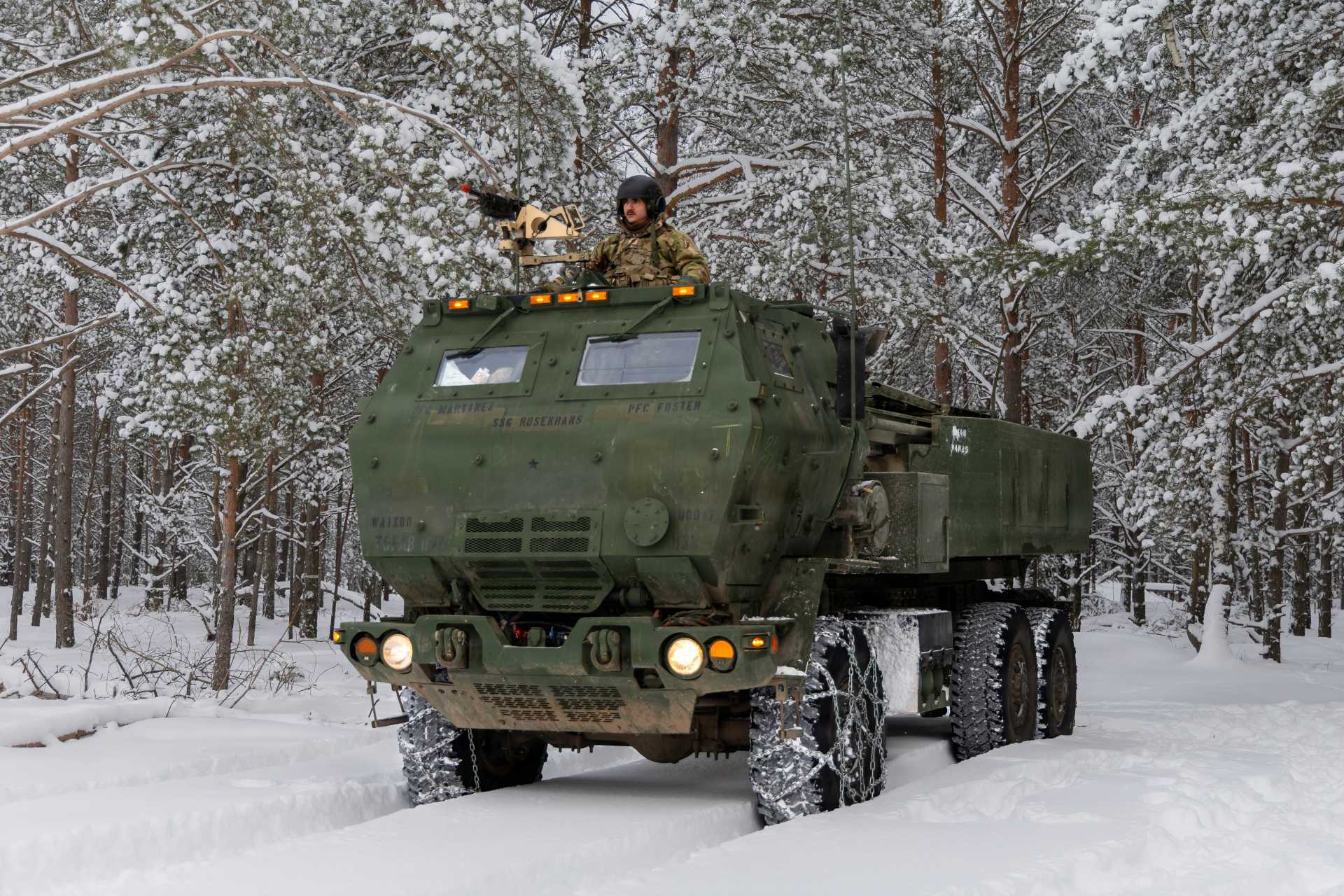
"On April 29, 2026, the U.S. Department of Defense confirmed the production of the first M142 HIMARS launchers for Canada through a $1,132,447,811 HIMARS contract awarded to Lockheed Martin. Covering 17 M142 HIMARS launchers,"

...


"The Canadian FMS acquisition framework, defined in October 2025, includes a maximum request of 26 M142 launchers with an inventory of guided munitions totaling 328 rocket pods and 64 ballistic missile pods.

"The request includes 132 M31A2 GMLRS unitary pods and 132 M30A2 GMLRS alternative warhead pods, each pod containing six rockets, resulting in 792 rockets per type and 1,584 standard GMLRS rockets combined. The package also includes 32 M403 and 32 M404 ER-GMLRS pods, adding 384 extended-range rockets with a maximum reach of 150 km. In addition, 64 M57 ATACMS pods are included, each carrying a single missile with a maximum range of 300 km. The total initial stock, therefore, reaches 1,968 guided rockets and 64 ballistic missiles at the upper bound of the request.

"If distributed across 26 launchers, this equates to a baseline allocation of roughly 75 rockets per launcher, excluding extended-range and ballistic missile distribution. The package also includes communications systems such as AN/PRC-160 and AN/PRC-167 radios, training equipment, spare parts, and contractor logistics support, indicating a full capability acquisition. The M142 HIMARS is a 6x6 rocket launcher system with a combat weight of 16.25 tons and a three-person crew, built on a truck chassis that allows road mobility and rapid repositioning. It carries a single interchangeable pod that can be configured for six 227 mm rockets or one 610 mm ATACMS missile, with compatibility across the MLRS family of munitions (MFOM)."


....

1 Launcher
75 Rockets with warheads in pods
AN/PRC-160 and -167 radios
Spare parts
Contractor logistics support

Training equipment.

Launcher unit cost 3.5 to 5 MUSD

Rocket unit costs

GMRLS
M31 Unitary 120-168 KUSD
M30A1/A2 Alternate ~143 KUSD
30 of each per launcher based on FMS ratios or 4-5 MUSD per launcher

GMRLS ER ~434 KUSD
12 of each per launcher or 4-5 MUSD per launcher

ATACMS 1000-1700 KUSD (Out of production)
2 of each per launcher or 2-4 MUSD per launcher

Launcher plus ready rounds 13.5-19 MUSD each. Range Bracket 30 to 300 km.


PrSM 1500-2000 KUSD (Started at 3500 and has dropped to 1600 with 1500 being a near term target)
Future option (500-1000 km)

PrSM Maritime 1500-3500 KUSD (Speculative as still in development)
Future option (500-1000 km)

GLSDB ~50 KUSD (The cost is for the GBU-39 SDB with wings and guidance. The rocket was surplus stock priced at Zero)
Future option (150 km)


....

Aussies taking delivery of 42 HIMARS purchased in 2022 and 2023 for 1,010,000,000 USD
Second Aussie batch of 48 HIMARS with PrSM purchased in 2026 for 1,600,000,000 USD.

They are making their own missiles.
Including the Block 2 LBASM PrSM for maritime strike.

 
"On April 29, 2026, the U.S. Department of Defense confirmed the production of the first M142 HIMARS launchers for Canada through a $1,132,447,811 HIMARS contract awarded to Lockheed Martin. Covering 17 M142 HIMARS launchers,"
Finally
....

Aussies taking delivery of 42 HIMARS purchased in 2022 and 2023 for 1,010,000,000 USD
Second Aussie batch of 48 HIMARS with PrSM purchased in 2026 for 1,600,000,000 USD.

They are making their own missiles.
Including the Block 2 LBASM PrSM for maritime strike.

Quibbling point LocMart Aus is making the missiles.
LMC could setup a plant if there was demand...
 
I hope there is demand and I would hope they would.
Honestly if I was LocMart I would simply to have another "Non-American" production capability -- some allies want to buy stuff - but not from America directly -- so Canada is a nice third party for that.

Generally Canada's demand itself wouldn't be enough to justify the infrastructure investment - but the world being what it is, well I would build not just a rocket and missile factory, but also a HIMARS vehicle production center in Canada too.

It is unfortunate that the Logistics vehicle program wasn't based of the FMTV 5ton as the MLVW replacement.
 
Honestly if I was LocMart I would simply to have another "Non-American" production capability -- some allies want to buy stuff - but not from America directly -- so Canada is a nice third party for that.

Generally Canada's demand itself wouldn't be enough to justify the infrastructure investment - but the world being what it is, well I would build not just a rocket and missile factory, but also a HIMARS vehicle production center in Canada too.

It is unfortunate that the Logistics vehicle program wasn't based of the FMTV 5ton as the MLVW replacement.

Does it really matter what the drive train is?

Surely the key is the Traverse and Elevation bit that goes on the back?

We already know the technology is transferrable from a Bradley to an FMTV and to the interior of a 40ft container. The entire CAML program is based on one launch system for multiple rocket types from multiple trucks.


I suppose you could bolt a launcher in place but for the price of a truck (250 to 500 KUSD on a 5 MUSD purchase) you can dodge incoming.
 
Back
Top