• Thanks for stopping by. Logging in to a registered account will remove all generic ads. Please reach out with any questions or concerns.

17 Oct 2026: Major fire at CFB Wainwright

The NoK notification system isn't set up for this sort of situation. Not enough people. It was set up for Afghanistan. And this has already surpassed Afghanistan single incident numbers.

We exercised a ship being hit once at the Ottawa PA and notification coordination level. The processes were immediately out of their depth. It's complicated, fluid with scanty information. And you sure as hell don't want to notify the wrong family.
This is the type of thing they should work on to improve, what with all the war and invasion talk of late.
Losing a ship, yikes.
 
I just saw a video on Facebook showing the winds just south of the base which a farmer took just before evacuating. I'm not sure I've ever seen winds this severe. No wonder the fire spread quickly. Poor souls. I will be praying hard tonight.
The wind event yesterday was rare...but not unheard of.

That being said high winds and cured grass...that's the sort of situations that scare me as a trained professional wildland guy.

Been to Wainwright several times visiting CAF members. It's a very unreal, and dynamic aspect going on.

My condolences to the families affected and the CAF as a whole.
 
Edmonton and Calgary each have eight bed burn units. I would assume they can probably surge to a few more beds in an emergency, but I would also assume neither was vacant. I expect that ICU likely took some.

I saw a post on Twitter this morning where a mother identified her son at 1 Fd Amb as being one of the seriously injured.

Carney to speak any minute now.

Worst come to worst, trauma surgery and surgical ICU beds would be used - burns is trauma and trauma is a surgical isssue.

You can’t plan for everything no matter how hard you try.
Mr. Murphy will find a way around it.
I can say from experience that I don't think we've ever exercised a large scale casualty event in many years as far as tracking goes. Myself and a few other colleagues were supposed to be involved in a large scale NATO ex in the late 90's that was simply tracking casualty movement from role 1/2 rearwards - unfortunately we never got to go for whatever reason. From what I heard on a debrief of this, our European allies were decades ahead of us in tracking - barcoding patients to track in real time on computer tracking, etc. I was involved with a casualty evacuation exercise with both the RAF Auxiliary and a couple Air Guard Squadrons from the USAF, and those movements were confusing at best, especially if message traffic over secure radio means was disrupted - had to be by radio, they wouldn't use dispatch riders or other means of message traffic, which caused a lot of issues with bottlenecking of people in forward Combat Support Hospitals.

I'd hate to be patient tracking team responsible for something of the scale this seems to be...
 
RIP

Archive


Last edited:
CPAC link to DefMin briefing:
 
Worst come to worst, trauma surgery and surgical ICU beds would be used - burns is trauma and trauma is a surgical isssue.


I can say from experience that I don't think we've ever exercised a large scale casualty event in many years as far as tracking goes. Myself and a few other colleagues were supposed to be involved in a large scale NATO ex in the late 90's that was simply tracking casualty movement from role 1/2 rearwards - unfortunately we never got to go for whatever reason. From what I heard on a debrief of this, our European allies were decades ahead of us in tracking - barcoding patients to track in real time on computer tracking, etc. I was involved with a casualty evacuation exercise with both the RAF Auxiliary and a couple Air Guard Squadrons from the USAF, and those movements were confusing at best, especially if message traffic over secure radio means was disrupted - had to be by radio, they wouldn't use dispatch riders or other means of message traffic, which caused a lot of issues with bottlenecking of people in forward Combat Support Hospitals.

I'd hate to be patient tracking team responsible for something of the scale this seems to be...
It must be remembered that unless a full Field Ambulance is deployed on a Ex, there are only limited resources available - a few dismounted Medics, a couple of Ambs, maybe a small UMS with a Doc or PA. A standard UMS under mod tentage had two trauma bays, and the Weatherhaven shelter UMS has only one. Three or more critical casualties and you start to get overwhelmed immediately. The next issue is comms (which suck in the best of situations), and the C2 in general. The Amb dets on the Ex would not be able to talk directly to the Base clinic or to civilian Ambs, or a base hospital. If you're lucky, you relay over personal cell phones. Plus, our Base/Wing clinics are not 24/7 facilities. With a fast moving fire, where do you collect the casualties? Where are you staging from? Where is the nearest exchange point with civilian Ambs? Can rotary wing safely get close? Did the exercise C2 suffer loss of comms or control if they had to evacuate?

My heart breaks for the medics out there. I am guessing that some of them had to make decisions far past what their experience level had prepared them for. I hope they get the support they may need as they move forward.

So, while the Fd Ambs do train for MASCAL scenarios, I don't believe there was a full Fd Amb out there. Just personnel and a handful of Ambs supporting the Ex.

I may be wrong, but that's my guess with the info on hand.
 
MND is speaking now. He repeats the figure of four killed. Thanking everyone who helped etc.

Premiere Smith speaking, and has a bunch of her senior officials on hand.

MGen Rutland, Cond 1 Div: 39 injured, 19 of them critical. The fallen members include three Privates from 3 PPCLI and a Sergeant from the Loyal Edmonton Regiment.

Grass fire sparked during training. C Coy 3VP, simultaneous grenade range and live section attacks in that area. Workup training for high readiness task force and eventually Latvia.

EDIT TO ADD: So, sounds like a known fire was already burning a km away, range control was monitoring. The fire very suddenly brewed up and moved rapidly, into the admin area of the section attack range. So it may not have been sparked by these particular training evolutions at all. In a clarifying question, MGen Rutland said “Thirty seconds to a minute, they saw no fire, and then the fire was right on top of them”.

No indication of an explosion or gas infrastructure involvement. How exactly this started is under investigation. MP NIS, 1 MP Regt, and assistance from RCMP (RCMP are the local civilian police for the area, so I don’t interpret that as being a federal policing mandate situation).

Just want to add: MGen Rutland has done an absolutely phenomenal job in this presser.
 
Last edited:
Worst come to worst, trauma surgery and surgical ICU beds would be used - burns is trauma and trauma is a surgical isssue.


I can say from experience that I don't think we've ever exercised a large scale casualty event in many years as far as tracking goes. Myself and a few other colleagues were supposed to be involved in a large scale NATO ex in the late 90's that was simply tracking casualty movement from role 1/2 rearwards - unfortunately we never got to go for whatever reason. From what I heard on a debrief of this, our European allies were decades ahead of us in tracking - barcoding patients to track in real time on computer tracking, etc. I was involved with a casualty evacuation exercise with both the RAF Auxiliary and a couple Air Guard Squadrons from the USAF, and those movements were confusing at best, especially if message traffic over secure radio means was disrupted - had to be by radio, they wouldn't use dispatch riders or other means of message traffic, which caused a lot of issues with bottlenecking of people in forward Combat Support Hospitals.

I'd hate to be patient tracking team responsible for something of the scale this seems to be...

The closest involvement that I had with patient regulating was during Desert Storm (4 Fd Amb's minor contribution was OP UNARMED WARRIOR). Though we weren't directly involved in tracking the patients that we moved (other than who was in our vehs and where we moved them to), one of the American patient regulators (a USN HM1, along with her computer) temporarily co-located with us. At that time, Canada had two positions at EUCOM in Integrated Lines of Communication (ILOC), a Maj HCA and a MWO Med A PA. The MWO was (according to the MWO who moved down to Lahr clinic for our final year who had filled the pos'n) tasked to regulating duties.

When we pulled out of Germany in the 90s, those positions, supposedly, were transferred to TRANSCOM at Scott AFB in Illonois to provide the same functions. The handle the Americans had on tracking patients was impressive in the early 1990s. The Germans, who were at a desk steps away from us, didn't have a regulating terminal with them, but they did move a comms van for that use near to the hanger at Ramstein. It might not have been used during the Gulf War, but the demonstration that they gave me would have left the Americans in the dust. It not only tracked every military hospital bed (and potential patients) but also could access every civilian public (though not private) hospital.

(edited to add)

 
Last edited:
Horrific. And an unfortunate reminder that what our brothers and sisters in arms do can be dangerous even on a what may seem like regular training.

We should be proud about how the rest of the CAF responded. Particularly seeing how quickly the SAR Techs moved in.
 
RIP

Archive


The list of fallen, per Major General Wade Rutland:

Private Aiden Goulding, 3 PPCLI, North Vancouver, BC
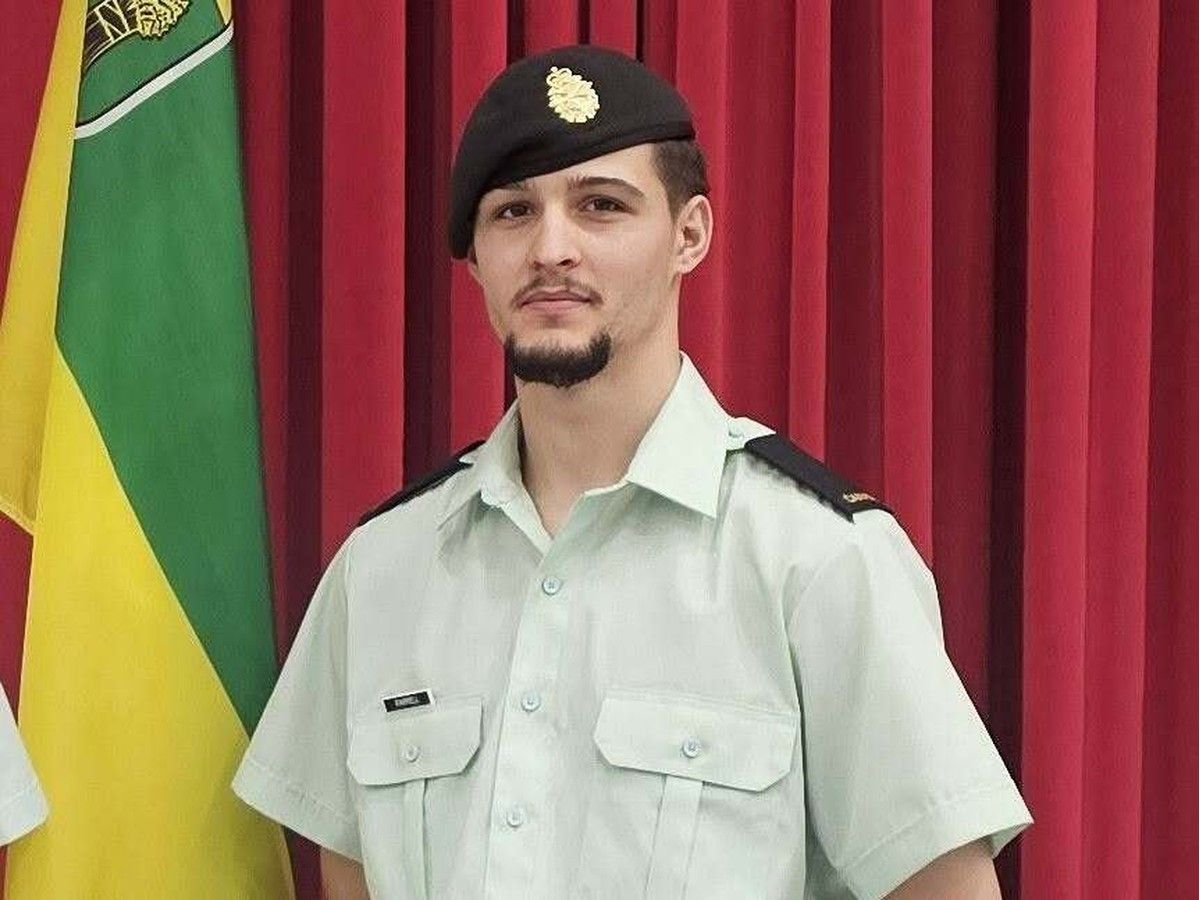
Private Shaun Farrell, 3 PPCLI, Prince Albert, SK
Private Hayden Leichmark, 3 PPCLI, Langley, BC
Sergeant Morgan Wong, Loyal Edmonton Regiment, Edmonton, AB
 
Back
Top