• Thanks for stopping by. Logging in to a registered account will remove all generic ads. Please reach out with any questions or concerns.

Future Armour


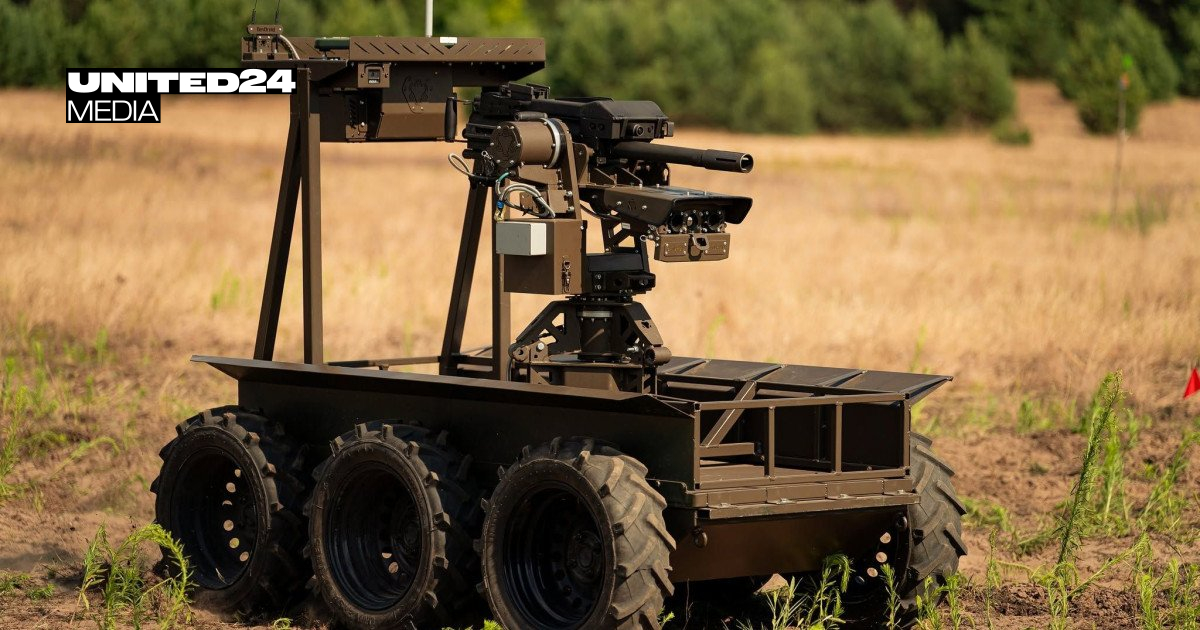
At a recent exercise at Fort Polk, Louisiana, a US Army company commander used attack drones and ground robots to destroy enemy positions, clearing the way for soldiers.

...

The uncrewed systems assault occurred during a 3rd Mobile Brigade Combat Team exercise at the Joint Readiness Training Center in April. Col. Ryan Bell, the brigade commander, told reporters he assigned the task to one of his company commanders.

"I want you to make this breach uncontested for your riflemen when they enter," Bell recalled telling the commander.

....

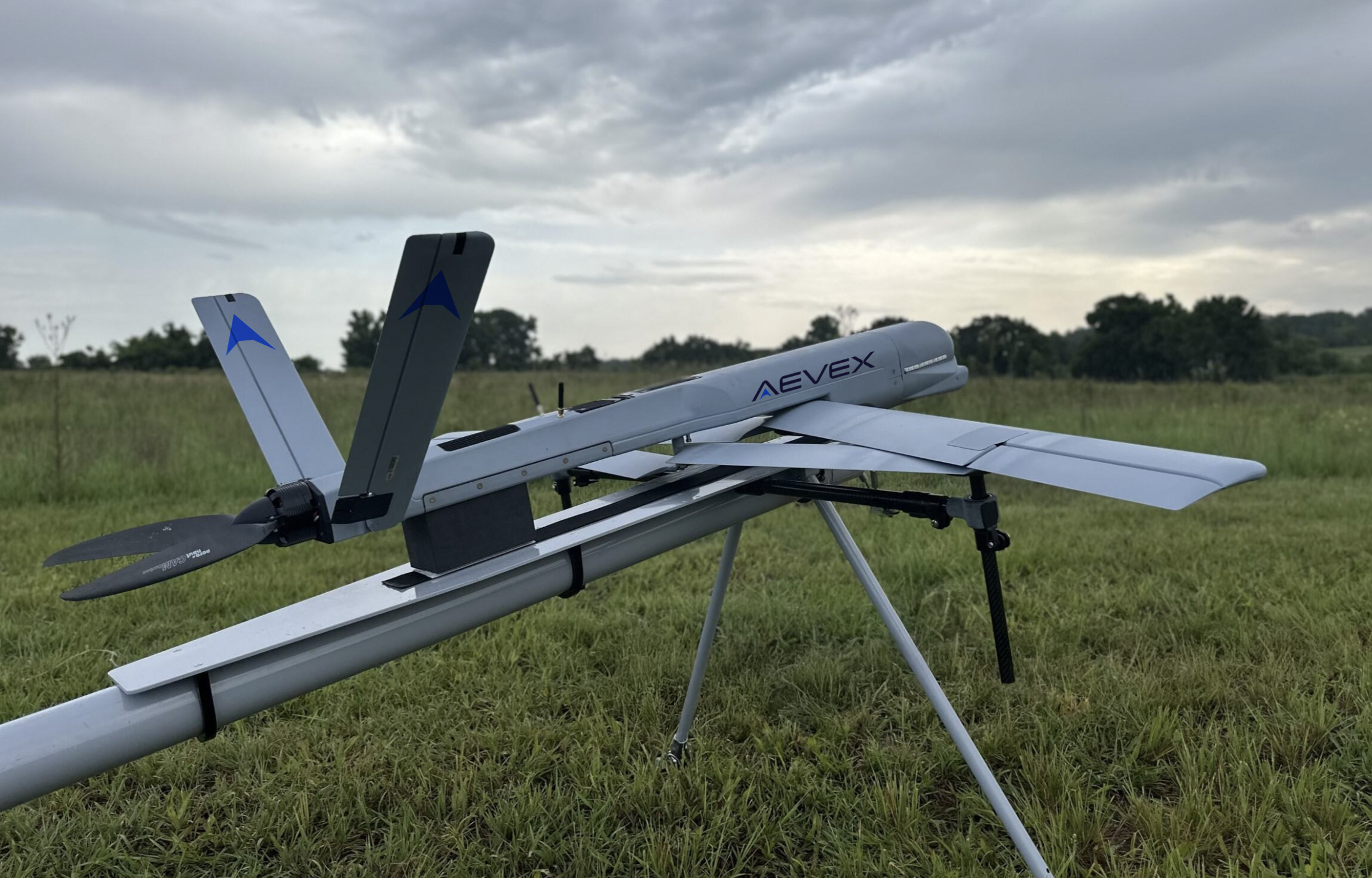
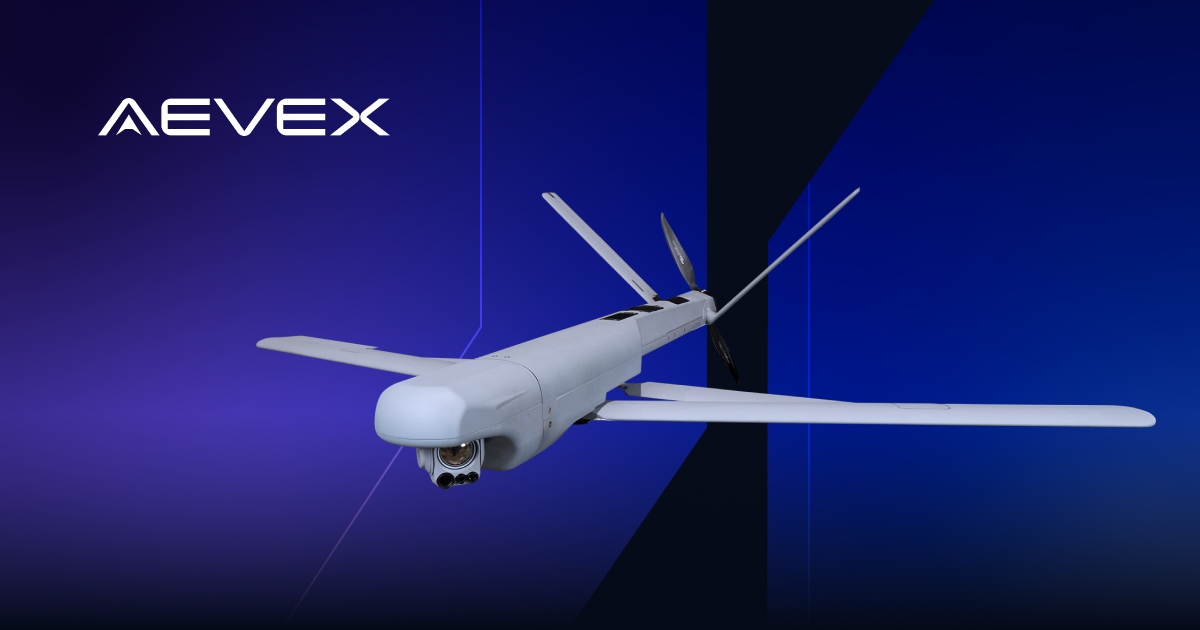
The company commander turned to drones and robotics to clear the breach. Bell, who shared the experience during a media roundtable on Thursday, said that the unit responsible for executing the breach mission launched 25 attack drones that soldiers had assembled themselves, targeting bunkers, machine gun nests, and triple-strand concertina wire.

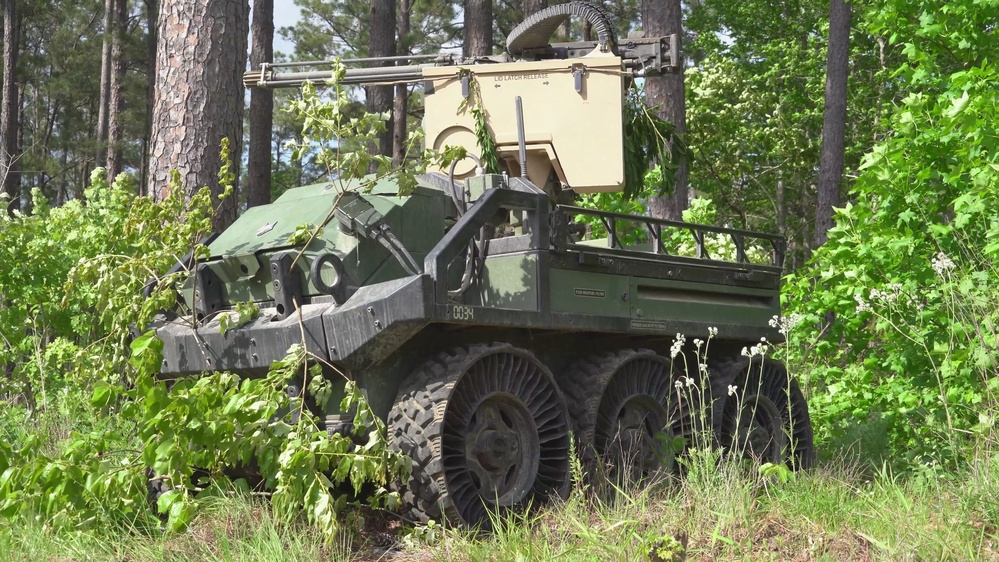
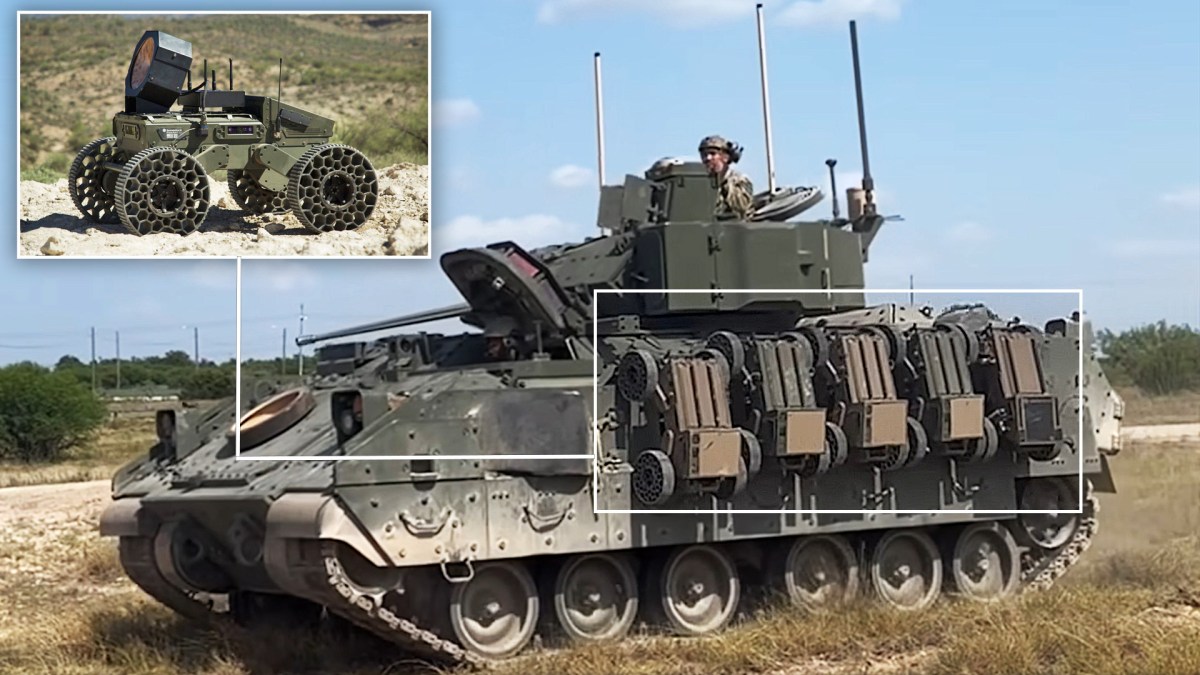
Other drones targeted electronic warfare sensors and jammers. And even more uncrewed aerial systems dropped smoke canisters, obscuring the battlefield. Then, remaining obstacles like land mines and wire obstacles were destroyed by two uncrewed ground vehicles packed with C4 explosives.

"When the riflemen got there, the breach was uncontested," Bell said. "Every target had been struck."

...

"It took us 35 drones and a little over 100 pounds of C4, but under the cost of three 155mm artillery barrages."
I'd be very interested to know what active counters were used against this robotic attacking force. There is no mention of C-UAS systems being used, of the ground robots taking fire, of enemy forces covering the breach, of pre-registered artillery fire covering the breach, etc. It actually sounds like there were simply a set of obstacles set up (not necessarily active or connected to kinetic effectors in the case of the EW jammers and sensors) for the automated systems to target.
 
The round table article references the Multi-Function Reconnaissance Company and its elements:

TUAS Platoon
EW Platoon
Effects Platoon
Recon Platoon

The Effects Platoon is currently fielding legacy TOW 2Bs on Humvees but moving towards the Mobile Long Range Precision Strike Missile


Reference is also made to the Atlas launched effects munition


Recon Platoon

"The recon platoon is your traditional ground-based reconnaissance and security element—your scouts. At JRTC, we exercised them in a brigade-deep role. I infiltrated the MFRC using MV-22 Ospreys from the Marine Corps, flying them directly into the box from Fort Campbell. It helped the division test, as a proof of concept, how we will use future vertical lift as it starts to get fielded to the division in the coming years. They were out 7, 10, or 15 kilometers in front of my FLOT for my rifle companies, drawing the enemy away as they came into the box, helping us prepare our defense and target at depth. They served as a handshake between me and the SOF (Special Operations Forces) elements that were in front of them—there was an AOB (Advanced Operational Base) from 5th Special Forces Group in front of us in the division deep area, and they helped bridge that gap."
 
Last edited:
I'd be very interested to know what active counters were used against this robotic attacking force. There is no mention of C-UAS systems being used, of the ground robots taking fire, of enemy forces covering the breach, of pre-registered artillery fire covering the breach, etc. It actually sounds like there were simply a set of obstacles set up (not necessarily active or connected to kinetic effectors in the case of the EW jammers and sensors) for the automated systems to target.

Reading the transcript of the Roundtable it doesn't sound as is JRTC OpFor Geronimo was taking it easy on the Rakkasans. They were applying EW an CUAS as they were able.

....

Drew Lawrence (Defense Scoop): Got it. I do. I talked to some of the folks from Geronimo a few weeks ago, specifically about their EW and cyber capabilities that they were throwing at rotating forces. How did you fare against that? Did anything surprise you, and how did you have to adapt to it?

Colonel Richard Ryan Bell: Knowing we were going into an operating environment that is highly contested in the communications spectrum, we did a few things. First, for our mission command nodes, we separated them. My main command post, which was predominantly focused on planning, stayed at Alexandria Airfield for the first four days before they jumped in. We got it small enough that it functionally fit on three LMTVs with a tarp. My forward command post was made up of five Humvees and a tarp. Inside both of those, we hardwired everything. We had no Wi-Fi, and we had the EW teams do signals audits to get rid of all Bluetooth signals. We focused primarily on our beyond-line-of-sight capabilities using Starshield. As a result, in the box, the electronic emission signature for my command posts was less than a rifle platoon with ITN radios.

The result was that Geronimo was never able to locate either one of my CPs during the entire rotation, and they were able to operate and plan continuously. Added to that was excellent tactical discipline: the CPs were in miserable locations buried in gulches, hidden by terrain, covered by trees and camouflage, and we jumped locations every 18 to 30 hours. That enabled us to effectively fight the brigade while remaining hidden in the spectrum.

For the battalions, companies, and below, we adopted an operating concept of "silent, violent, silent." How do you go black in the comms spectrum, maneuver silently to a position of advantage, and then, when you're there and ready to attack, come up on the communications network, leverage joint and combined arms fires, destroy the enemy, and then get off the objective and go silent again? We trained on this, going back to our platoon lanes through Operation Lethal Eagle in January and through JRTC, teaching elements to use specific communication windows and otherwise remain silent to avoid detection.

That is what enabled that 17-kilometer infiltration by Iron (3-187 IN), and it enabled Kurhe (1-506 IN) to infiltrate two companies 22 kilometers behind Geronimo, because they were able to operate off the spectrum. Part of that was training myself and the leaders to get used to not talking to the formation—knowing that I may have a company that is going to be off comms for four, five, six, or eight hours, and being okay with that. There is a significant cultural component to it.

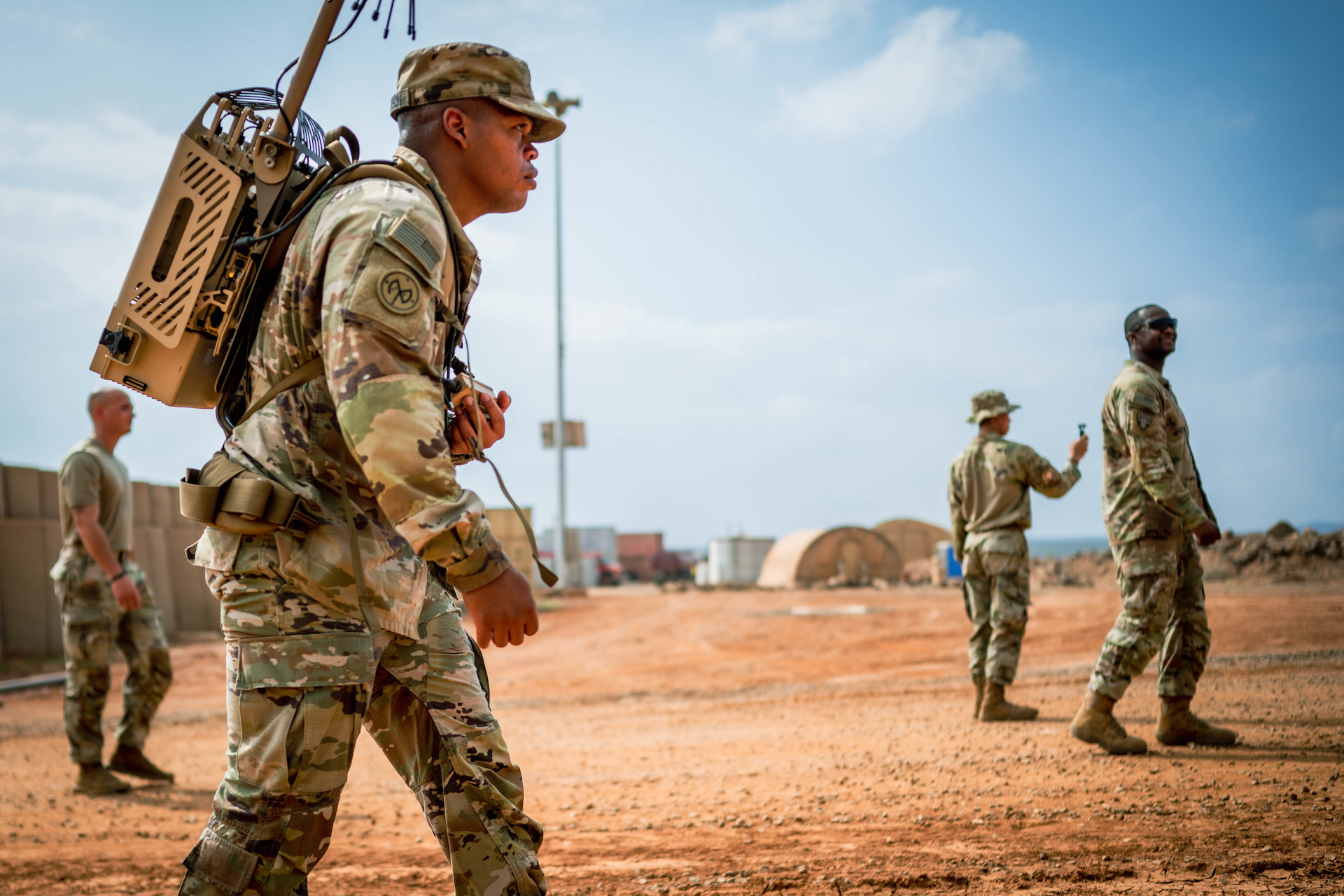
We also took our own EW systems there. I had Kraken and TEWS-I (Tactical Electronic Warfare System - Infantry), so we were doing the same thing to Geronimo that they were doing to us—tracking them, identifying their locations, and calling for fire or sending drones anytime they transmitted. We changed how we organized and took those same capabilities to cause him some stress as well.

...

For the record the LMTV is the Stewart and Stevenson 2.5 ton cab-over 4x4.

....

Starshield - Military Starlink


...

Kraken


TEWS-1

 
"Colonel Richard Ryan Bell: May I, please, just going back to your question on drones. One of the things we focused on is how do we reduce the cognitive load on our soldiers with these systems. At JRTC, we implemented a technology—you might have heard of something similar called Pixel Lock—but essentially, it's a terminal guidance capability. When that drone operator selects the person or the target and the drone locks on, they don't have to fly the FPV all the way to impact; it is able to fly itself. That significantly reduces the training requirement for the operator.

"The other thing we've been working on—it did not work at JRTC, but we have since executed it at an operation in Montana in May called Battlelab—is "one-to-many" swarm control. We've successfully done one-to-five control, which allows a single operator to control five drones. That will be how we scale this capability. I hope that helps."
 
Reading the transcript of the Roundtable it doesn't sound as is JRTC OpFor Geronimo was taking it easy on the Rakkasans. They were applying EW an CUAS as they were able.

....

Drew Lawrence (Defense Scoop): Got it. I do. I talked to some of the folks from Geronimo a few weeks ago, specifically about their EW and cyber capabilities that they were throwing at rotating forces. How did you fare against that? Did anything surprise you, and how did you have to adapt to it?

Colonel Richard Ryan Bell: Knowing we were going into an operating environment that is highly contested in the communications spectrum, we did a few things. First, for our mission command nodes, we separated them. My main command post, which was predominantly focused on planning, stayed at Alexandria Airfield for the first four days before they jumped in. We got it small enough that it functionally fit on three LMTVs with a tarp. My forward command post was made up of five Humvees and a tarp. Inside both of those, we hardwired everything. We had no Wi-Fi, and we had the EW teams do signals audits to get rid of all Bluetooth signals. We focused primarily on our beyond-line-of-sight capabilities using Starshield. As a result, in the box, the electronic emission signature for my command posts was less than a rifle platoon with ITN radios.

The result was that Geronimo was never able to locate either one of my CPs during the entire rotation, and they were able to operate and plan continuously. Added to that was excellent tactical discipline: the CPs were in miserable locations buried in gulches, hidden by terrain, covered by trees and camouflage, and we jumped locations every 18 to 30 hours. That enabled us to effectively fight the brigade while remaining hidden in the spectrum.

For the battalions, companies, and below, we adopted an operating concept of "silent, violent, silent." How do you go black in the comms spectrum, maneuver silently to a position of advantage, and then, when you're there and ready to attack, come up on the communications network, leverage joint and combined arms fires, destroy the enemy, and then get off the objective and go silent again? We trained on this, going back to our platoon lanes through Operation Lethal Eagle in January and through JRTC, teaching elements to use specific communication windows and otherwise remain silent to avoid detection.

That is what enabled that 17-kilometer infiltration by Iron (3-187 IN), and it enabled Kurhe (1-506 IN) to infiltrate two companies 22 kilometers behind Geronimo, because they were able to operate off the spectrum. Part of that was training myself and the leaders to get used to not talking to the formation—knowing that I may have a company that is going to be off comms for four, five, six, or eight hours, and being okay with that. There is a significant cultural component to it.

We also took our own EW systems there. I had Kraken and TEWS-I (Tactical Electronic Warfare System - Infantry), so we were doing the same thing to Geronimo that they were doing to us—tracking them, identifying their locations, and calling for fire or sending drones anytime they transmitted. We changed how we organized and took those same capabilities to cause him some stress as well.

...

For the record the LMTV is the Stewart and Stevenson 2.5 ton cab-over 4x4.

....

Starshield - Military Starlink


...

Kraken


TEWS-1

The round table discussions appear to be talking about the JRTC rotation as a whole. It's still not clear to me that there were active counters against this particular Company-level breaching exercise. There is no mention of any counters of any type at all in the article that describes the breaching exercise. Not saying there definitely wasn't but from the reporting it doesn't sound like it...which is why I stated I was curious.
 
MV22 stands in for the FVRL

Hope Seck (Military Times): I do. Thank you so much. I was hoping to go back to the proof of concept with the insertion of the MFRC via the MV-22. Could you get a little bit more granular about what that involved, and also if there are any kind of action items or concrete lessons learned about working with that platform that you're taking forward?

Colonel Richard Ryan Bell: Great question. The future vertical lift platforms coming in the future are going to be game-changers, particularly for the 101st, because they extend our operational reach out beyond 500 miles. You could functionally deploy a battalion or the brigade from Fort Campbell to Europe with the capabilities that platform brings.

The challenge for us was: how do we synchronize the flight of that aircraft at distance with our Chinooks, our Blackhawks, and our ground infiltration so we mass in the box at the same time? We brought elements in from 500 kilometers away using MV-22s—59 aircraft total for the Combat Aviation Brigade (CAB) operating off Alexandria Airfield, executing 14 simultaneous landing zone insertions across the box so we could seize the key terrain we wanted. This included one company fast-roping into Smithville so they could secure the area a couple of hours after the initial infiltration. The bigger challenge wasn't the MFRC on the MV-22; it was the staff understanding the capabilities of the platform and us learning how to plan and integrate that type of large-scale, long-range air assault.
 
Here is some interesting Spotify podcasts from JRTC Drone and Multi-Domain Effects

 
Back
Top