
For any meaningful status with tangible impact I’d have to think there would be.Does becoming an associate member of something like the EU count as a treaty?

You are using an out of date browser. It may not display this or other websites correctly.
You should upgrade or use an alternative browser.
You should upgrade or use an alternative browser.
Liberal (Minority/Majority) Government 2025 - ???
- Thread starter Altair
- Start date

- Reaction score
- 4,330
- Points
- 1,160
Does becoming an associate member of something like the EU count as a treaty?
Some definitions and explanations of what are legally binding and non-binding arrangements
Policy on Tabling of Treaties in Parliament - Canada.ca
5. Definitions
5.1 Definition of “Treaty”
Canada adheres to the Vienna Convention on the Law of Treaties of 1969, which can be described as a codification of public international law on treaties. The Convention defines treaty in Article 2 as follows:- "Treaty means an international agreement concluded between States in written form and governed by international law, whether embodied in a single instrument, or in two or more related instruments and whatever its particular designation."
Treaties can be bilateral, multilateral or plurilateral.
- Bilateral treaties are those between Canada and one other country.
- Multilateral treaties are those between three or more countries, generally developed under the auspices of international organizations.
- Plurilateral treaties are generally entered into between one State and a group of States.
- Agreements between Canada and International Organizations are often treaties governed by public international law.
8. Non-binding International Instruments
Under international law, a treaty creates international legal obligations for Canada.Other international instruments (often referred to, in Canada as "Memorandum of Understanding" (MOU) or "arrangements") can be considered as creating only moral or political commitments.
In order to avoid situations where instruments that,
could reasonably be viewed to be treaties, and therefore covered by the Government's policy, are not mistakenly classified as non-binding instruments and thus not brought to the attention of the House of Commons,
each Department is responsible for ensuring that the proper distinction is made between treaties and non-binding instruments, in consultation with the Treaty Section of the Department of Foreign Affairs, Trade and Development.
For an explanation of the steps leading to the conclusion of a non-legally binding instrument, see Annex C.
Edited to add
Canada is even party to a "treaty" about what a "treaty" is all about.
View Treaty - Canada.ca
Last edited:

HavokFour
Army.ca Veteran
- Reaction score
- 4,440
- Points
- 1,040
The Spaceport in Canso, NS already has an agreement with the German Isar Aerospace, with launches starting in 2028.
Coincidentally Saint-Pierre-et Miquelon is also right next to the Atlantic Spaceport Complex in St. Lawrence, NL.

 www.ctvnews.ca
Coincidentally Saint-Pierre-et Miquelon is also right next to the Atlantic Spaceport Complex in St. Lawrence, NL.
“The President and I will task our space agencies and defence ministries to develop and share common infrastructure, including space launch systems and ground-based facilities.”
In a joint statement the leaders also said that the Regional Joint Cooperation Commission between Atlantic Canada and Saint-Pierre-et Miquelon will expand its work in the priority areas of economic growth, energy transition and climate resilience.
A strategic partnership would also be struck between the chambers of commerce of both Canada and France to bring the business communities closer together.
‘Lasting friendships’: Carney, Macron discuss cooperation in priority areas
On the French archipelago of Saint-Pierre-et-Miquelon, just 20 kilometres from the southern tip of Newfoundland, Prime Minister Mark Carney and French President Emmanuel Macron said that the two countries would strengthen their cooperation in the key areas.
www.ctvnews.ca
Last edited:

daftandbarmy
Army.ca Fossil
- Reaction score
- 48,576
- Points
- 1,160
Does becoming an associate member of something like the EU count as a treaty?
Forget the Treaties, 10 EU countries have yet to ratify our trade deal that has been in the works since 2017:

Carney presses 10 EU countries to ratify Canada trade deal
The Canadian prime minister is seeking to deepen ties with Europe amid a trade war with the U.S.
 www.politico.eu

- Reaction score
- 13,597
- Points
- 1,160
I'm a broken record here but something of this political magnitude (anything relat3d to membership) should be held to a vote by citizens and not MPs that get told how to vote by the party leader.For any meaningful status with tangible impact I’d have to think there would be.
Ok, I’m just saying how it is, not how it ought to be.I'm a broken record here but something of this political magnitude (anything relat3d to membership) should be held to a vote by citizens and not MPs that get told how to vote by the party leader.
I’d meet you in the middle and say that any intention to make any major changes through any sort of major association with the EU might be something that should be put to Canadians along with other proposed mandate items via an election.
HavokFour
Army.ca Veteran
- Reaction score
- 4,440
- Points
- 1,040
Met with the PM of Norway today.
 www.pm.gc.ca
Joint statement by Prime Minister Carney and Prime Minister of Norway, Jonas Gahr Støre
As Arctic nations and NATO Allies, Canada and Norway continue to work together to strengthen collective security, support sustainable economic growth, and advance prosperity for northern and Indigenous communities.

- Reaction score
- 8,077
- Points
- 1,260
That is an apples to pork roast comparison, and you know it. Neither of those two countries were ever part of the European Union. Not joining is a dramatically different choice than unjoining.I suppose Norway snd Iceland have also then made critical errors not fulky becoming members of the EU, what could possibly convince whole countries to not want to join this premier union of states?
- Reaction score
- 3,199
- Points
- 1,090
what constitutes major? The EEA? Does this hold if Carney and the Liberals still poll well?Ok, I’m just saying how it is, not how it ought to be.
I’d meet you in the middle and say that any intention to make any major changes through any sort of major association with the EU might be something that should be put to Canadians along with other proposed mandate items via an election.
Dunno, I’ve not thought it through much.what constitutes major? The EEA? Does this hold if Carney and the Liberals still poll well?
- Reaction score
- 3,199
- Points
- 1,090
the EEA category would count for me but I question the need for the government to poll the people especially if they enjoy broad popularityDunno, I’ve not thought it through much.
daftandbarmy
Army.ca Fossil
- Reaction score
- 48,576
- Points
- 1,160
Let's hope this will be sorted out now that the enviro-extremistshave been ousted...
When Norway’s prime minister, Jonas Gahr Støre, meets with Prime Minister Mark Carney in Ottawa next week, the subject of farmed salmon will be high on the agenda.
The reason is that Norwegian companies have significant investments in Canada that are at risk because of federal government policies that Carney inherited from Justin Trudeau.
In 2024, the Liberal government said that it would extend existing operating licences on the West Coast for five years before forcing producers to take all open net salmon farms out of the water by the end of June 2029.
The decision was a death sentence for an industry that employs thousands of people, sustains impoverished First Nations communities up and down the coast, and acts as B.C.’s largest agricultural export earner.
The ban was imposed in response to the demands of environmental activists who said farmed salmon were hurting wild sockeye salmon numbers, even though the evidence from the Canadian Scientific Advisory Secretariat, which provides advice to the Department of Fisheries and Oceans, was that the risk of pathogen transmission from salmon farms was “minimal.”
Regardless, the government said that producers had to bring their operations on land, a fallacious option, given the water, power and capital requirements to build contained tanks.
For communities including the Ehattesaht First Nation on Vancouver Island’s west coast, the news was devastating. It had just signed a benefit agreement with Grieg Seafood of Norway that saw it take a 30 per cent equity position in a proposed $300 million post-smolt contained facility that would have grown the salmon on land for a year before putting them in the water.
Grieg’s operations in Canada and northern Norway were bought for around $1 billion late last year by another Norwegian company, Cermaq, which is now lobbying for Ottawa to reverse the ban that has frozen its investment plans. If the government fails to reconsider, it faces compensation claims from Cermaq and another Norwegian firm, Mowi, as well as from impacted First Nations.
Canada is now in the ridiculous position of having the same ocean capacity as Norway but production of just 50,000 tonnes of salmon a year, compared to Norway’s 1.7 million tonnes.
What’s worse is that B.C. production has declined 45 per cent because of the ban and we are now importing $765 million of farmed salmon a year from abroad, including from China.
“We are simply sending jobs and economic value to other countries while we diminish our own food independence and security,” said Tim Kennedy, president of the Canadian Aquaculture Industry Alliance.
The upside for a prime minister looking for investment is that reversing the ban and granting extended licences would unleash a flood of new capital into the industry.
Cermaq officials have recently said that around $1 billion of capital investment planned for Canada has gone elsewhere because of political uncertainty.
The good news is that the industry has plans in place to rebuild capacity to around 90,000 tonnes a year within 10 years, at a capital cost of around $1 billion, and then to grow capacity to 180,000 tonnes, with a projected capital requirement of a further $3 billion.
Facebook
 www.facebook.com
When Norway’s prime minister, Jonas Gahr Støre, meets with Prime Minister Mark Carney in Ottawa next week, the subject of farmed salmon will be high on the agenda.
The reason is that Norwegian companies have significant investments in Canada that are at risk because of federal government policies that Carney inherited from Justin Trudeau.
In 2024, the Liberal government said that it would extend existing operating licences on the West Coast for five years before forcing producers to take all open net salmon farms out of the water by the end of June 2029.
The decision was a death sentence for an industry that employs thousands of people, sustains impoverished First Nations communities up and down the coast, and acts as B.C.’s largest agricultural export earner.
The ban was imposed in response to the demands of environmental activists who said farmed salmon were hurting wild sockeye salmon numbers, even though the evidence from the Canadian Scientific Advisory Secretariat, which provides advice to the Department of Fisheries and Oceans, was that the risk of pathogen transmission from salmon farms was “minimal.”
Regardless, the government said that producers had to bring their operations on land, a fallacious option, given the water, power and capital requirements to build contained tanks.
For communities including the Ehattesaht First Nation on Vancouver Island’s west coast, the news was devastating. It had just signed a benefit agreement with Grieg Seafood of Norway that saw it take a 30 per cent equity position in a proposed $300 million post-smolt contained facility that would have grown the salmon on land for a year before putting them in the water.
Grieg’s operations in Canada and northern Norway were bought for around $1 billion late last year by another Norwegian company, Cermaq, which is now lobbying for Ottawa to reverse the ban that has frozen its investment plans. If the government fails to reconsider, it faces compensation claims from Cermaq and another Norwegian firm, Mowi, as well as from impacted First Nations.
Canada is now in the ridiculous position of having the same ocean capacity as Norway but production of just 50,000 tonnes of salmon a year, compared to Norway’s 1.7 million tonnes.
What’s worse is that B.C. production has declined 45 per cent because of the ban and we are now importing $765 million of farmed salmon a year from abroad, including from China.
“We are simply sending jobs and economic value to other countries while we diminish our own food independence and security,” said Tim Kennedy, president of the Canadian Aquaculture Industry Alliance.
The upside for a prime minister looking for investment is that reversing the ban and granting extended licences would unleash a flood of new capital into the industry.
Cermaq officials have recently said that around $1 billion of capital investment planned for Canada has gone elsewhere because of political uncertainty.
The good news is that the industry has plans in place to rebuild capacity to around 90,000 tonnes a year within 10 years, at a capital cost of around $1 billion, and then to grow capacity to 180,000 tonnes, with a projected capital requirement of a further $3 billion.
www.facebook.com

MilEME09
Army.ca Fixture
- Reaction score
- 8,554
- Points
- 1,210
If anything Carney seems to show he looks at evidence and cost vs reward a lot for policies. I could see this being reversed. Given his approval rating, he probably has the political capital to reverse firearms bans tooLet's hope this will be sorted out now that the enviro-extremistshave been ousted...
View attachment 102343
When Norway’s prime minister, Jonas Gahr Støre, meets with Prime Minister Mark Carney in Ottawa next week, the subject of farmed salmon will be high on the agenda.
The reason is that Norwegian companies have significant investments in Canada that are at risk because of federal government policies that Carney inherited from Justin Trudeau.
In 2024, the Liberal government said that it would extend existing operating licences on the West Coast for five years before forcing producers to take all open net salmon farms out of the water by the end of June 2029.
The decision was a death sentence for an industry that employs thousands of people, sustains impoverished First Nations communities up and down the coast, and acts as B.C.’s largest agricultural export earner.
The ban was imposed in response to the demands of environmental activists who said farmed salmon were hurting wild sockeye salmon numbers, even though the evidence from the Canadian Scientific Advisory Secretariat, which provides advice to the Department of Fisheries and Oceans, was that the risk of pathogen transmission from salmon farms was “minimal.”
Regardless, the government said that producers had to bring their operations on land, a fallacious option, given the water, power and capital requirements to build contained tanks.
For communities including the Ehattesaht First Nation on Vancouver Island’s west coast, the news was devastating. It had just signed a benefit agreement with Grieg Seafood of Norway that saw it take a 30 per cent equity position in a proposed $300 million post-smolt contained facility that would have grown the salmon on land for a year before putting them in the water.
Grieg’s operations in Canada and northern Norway were bought for around $1 billion late last year by another Norwegian company, Cermaq, which is now lobbying for Ottawa to reverse the ban that has frozen its investment plans. If the government fails to reconsider, it faces compensation claims from Cermaq and another Norwegian firm, Mowi, as well as from impacted First Nations.
Canada is now in the ridiculous position of having the same ocean capacity as Norway but production of just 50,000 tonnes of salmon a year, compared to Norway’s 1.7 million tonnes.
What’s worse is that B.C. production has declined 45 per cent because of the ban and we are now importing $765 million of farmed salmon a year from abroad, including from China.
“We are simply sending jobs and economic value to other countries while we diminish our own food independence and security,” said Tim Kennedy, president of the Canadian Aquaculture Industry Alliance.
The upside for a prime minister looking for investment is that reversing the ban and granting extended licences would unleash a flood of new capital into the industry.
Cermaq officials have recently said that around $1 billion of capital investment planned for Canada has gone elsewhere because of political uncertainty.
The good news is that the industry has plans in place to rebuild capacity to around 90,000 tonnes a year within 10 years, at a capital cost of around $1 billion, and then to grow capacity to 180,000 tonnes, with a projected capital requirement of a further $3 billion.

Halifax Tar
Army.ca Legend
- Reaction score
- 20,780
- Points
- 1,260
Given his approval rating, he probably has the political capital to reverse firearms bans too
I agree, but I think it depends on how far he'd reverse them. Pre Trudeau and I think whatever remains of the opposition on the right would collapse completely. Vanish perhaps.
I don't think I'll ever vote for his party again. That said, I suspect I'd be in a very small minority.
HavokFour
Army.ca Veteran
- Reaction score
- 4,440
- Points
- 1,040
Real stuck between a rock and a hard place with this one.
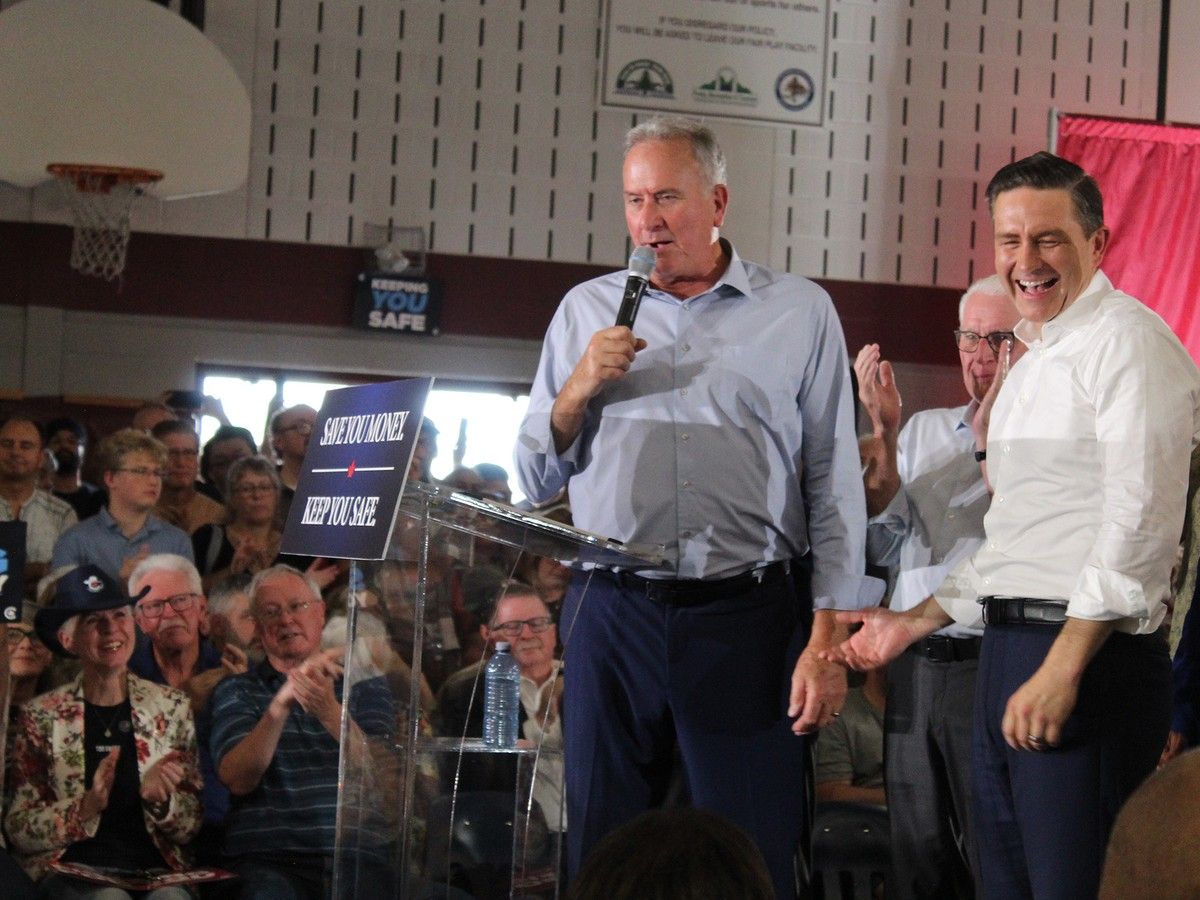
Brock and McColeman had endorsed Dave Carroll, who holds certain "views" that don't mesh very well in 2026.
So it's understandable why Poilievre stepped in, but it's also going to be seen poorly by some that the nomination wasn't via a competitive race.
 www.brantfordexpositor.ca
Brock and McColeman had endorsed Dave Carroll, who holds certain "views" that don't mesh very well in 2026.
So it's understandable why Poilievre stepped in, but it's also going to be seen poorly by some that the nomination wasn't via a competitive race.
Poilievre appoints Brantford Mayor Kevin Davis as Conservative candidate for federal byelection
Conservative Leader Pierre Poilievre appoints Mayor Kevin Davis as party's candidate for federal byelection
www.brantfordexpositor.ca
Last edited:
HavokFour
Army.ca Veteran
- Reaction score
- 4,440
- Points
- 1,040
Real stuck between a rock and a hard place with this one.
Brock and McColeman had endorsed Dave Carroll, who holds certain "views" that don't mesh very well in 2026.
So it's understandable why Poilievre stepped in, but it's also going to be seen poorly by some that the nomination wasn't via a competitive race.
Poilievre appoints Brantford Mayor Kevin Davis as Conservative candidate for federal byelection
Conservative Leader Pierre Poilievre appoints Mayor Kevin Davis as party's candidate for federal byelection
Very sour reaction.
Last edited:

- Reaction score
- 8,938
- Points
- 1,260
The hair on the dude on the far left - love it! Keeping 1977 alive and well!
MilEME09
Army.ca Fixture
- Reaction score
- 8,554
- Points
- 1,210
waiting for the bill text to be posted online but C-39 has been introduced, a lot of changes IAA is changed, SARA, CNWA, etc
 www.canada.ca
Bill C-39 Introduction - Canada.ca
Bill C-39 is the Government of Canada’s bold plan to build a stronger, more resilient economy by streamlining federal approval processes, protecting workers, modernizing labour relations, and advancing environmental sustainability and Indigenous reconciliation.
Thanks for that. Lots to chew on.waiting for the bill text to be posted online but C-39 has been introduced, a lot of changes IAA is changed, SARA, CNWA, etc
Bill C-39 Introduction - Canada.ca
Bill C-39 is the Government of Canada’s bold plan to build a stronger, more resilient economy by streamlining federal approval processes, protecting workers, modernizing labour relations, and advancing environmental sustainability and Indigenous reconciliation.
The transportation corridors and prioritization of transportation projects for rapid assessment and approval is an interesting move that parallels the MPO,
MilEME09
Army.ca Fixture
- Reaction score
- 8,554
- Points
- 1,210
The labour changes i feel are balanced as well, by increasing the time before contract end that negotiations can begin. Its allowing more time for a settlement before a strike is an optionThanks for that. Lots to chew on.
The transportation corridors and prioritization of transportation projects for rapid assessment and approval is an interesting move that parallels the MPO,
Similar threads
- Replies
- 395
- Views
- 54K


- Replies
- 6
- Views
- 2K


- Replies
- 262
- Views
- 36K
- Replies
- 505
- Views
- 29K

- Replies
- 1K
- Views
- 121K
