

You are using an out of date browser. It may not display this or other websites correctly.
You should upgrade or use an alternative browser.
You should upgrade or use an alternative browser.
TKMS Type 212CD (Victoria class replacement megathread)
- Thread starter Spencer100
- Start date

- Reaction score
- 8,985
- Points
- 1,260
The same can be said about the Type 26 - unproven ship vs the FREMM.I can't post the article here given the source but the media are already, if not jumping then hinting broadly at, the "we chose an unproven design over a boat that's already operational" angle. There will be more. I would expect much more at least until we ink the deal with TKMS.

Halifax Tar
Army.ca Legend
- Reaction score
- 20,834
- Points
- 1,260
Not very positive with this stuff, are you, lol
Is it that obvious ?


- Reaction score
- 2,038
- Points
- 1,160
Wait, explain that to me. How could we have 12 subs before we have fifteen Rivers-ships are a lot more complicated that a surface boat, so should we not have all the Rivers sooner?
Irving is producing one ship at a time with nine ships being completed by 2040. So that works out to one ship every three years. While TKMS will be able produce 4+ boats at the same time with 5-6 years per boat.
- Reaction score
- 8,985
- Points
- 1,260
As well TKMS will have 2 production facilities- able to work on 8+ boats at a time. How many Rivers concurrently will Irving have the ability to work on?Irving is producing one ship at a time with nine ships being completed by 2040. So that works out to one ship every three years. While TKMS will be able produce 4+ boats at the same time with 5-6 years per boat.

Maxman1
Army.ca Veteran
- Reaction score
- 3,272
- Points
- 1,190
Interesting article from a German source, in which can be found confirmation that Canada will receive 4 boats by 2024


- Reaction score
- 25,256
- Points
- 1,010
From what I have seen of the AOPS build, there will likely be 2-3 in various stages of build at all times.As well TKMS will have 2 production facilities- able to work on 8+ boats at a time. How many Rivers concurrently will Irving have the ability to work on?
isn't that what they were told to do? There was no urgency expressed by the Trudeau group. I am certain that they would have been spending more money and adding more capability if they had been asked/paid to do soIrving is producing one ship at a time with nine ships being completed by 2040. So that works out to one ship every three years. While TKMS will be able produce 4+ boats at the same time with 5-6 years per boat.
Ya, while I no fan of Irving and they have been bad players in many respects, if the government was not telling them they needed to produce boats on a certain time frame, they're not going to usually speed it up out of kindness of their hearts.
Now can the current government somehow force them to speed up? I'm unsure.
Now can the current government somehow force them to speed up? I'm unsure.
Swampbuggy
Sr. Member
- Reaction score
- 444
- Points
- 730
How about a pivot towards the fun stuff here. I think it’s been a while since we got into the naming of the class. I’m kind of hoping for “PREDATORY FISH” class, if that doesn’t cause too much clutching of pearls.
First boat: HMCS MUSKELLUNGE
First boat: HMCS MUSKELLUNGE
Or Whales since they have to come up for air. HMCS OrcaHow about a pivot towards the fun stuff here. I think it’s been a while since we got into the naming of the class. I’m kind of hoping for “PREDATORY FISH” class, if that doesn’t cause too much clutching of pearls.
First boat: HMCS MUSKELLUNGE
- Reaction score
- 8,985
- Points
- 1,260
I’m partial to a HMCS NarwhalOr Whales since they have to come up for air. HMCS Orca


oldcpu
Member
- Reaction score
- 165
- Points
- 580
How about:
- HMCS Ojibwa: Revives the lead ship name of Canada's original Oberon class, preserving the legacy of the RCN's post-war submarine service while honoring the vast Anishinaabe nation of the Great Lakes.
- HMCS Onondaga: Reclaims a highly distinguished Canadian submarine name from the O-boat era, maintaining continuity with historical underwater warfare traditions and the Haudenosaunee Confederacy.
- HMCS Okanagan: Completes the trio of legacy Canadian submarine names, anchoring the class's heritage in the interior waterways of British Columbia.
- HMCS Mi'kmaq: Honors the ancestral maritime nation of the Atlantic coast and Maritimes, providing a locally rooted identity for submarines home-ported at CFB Halifax.
- HMCS Nuu-chah-nulth: Recognizes the legendary ocean-going whalers and master canoe builders of western Vancouver Island, making it a fitting name for a Pacific-based vessel.
- HMCS Gitxsan: reflecting the river ecosystems and mountains of northern British Columbia, extending Pacific fleet representation upward toward the Alaskan flank.
- HMCS Blackfoot: Extends naval representation across the western prairies by honoring the historic Siksikaitsitapi Confederacy, ensuring inland Canada is tied to the nation's defense at sea.
- HMCS Salish: Directly connects the Pacific fleet to its primary operating environment by honoring the peoples of the Salish Sea, providing a distinct geographic identity without touching old destroyer names.
- HMCS Cree: Recognizes one of Canada’s largest and most widespread linguistic groups, whose traditional territory spans from the rocky Canadian Shield to the subarctic waterways feeding Hudson Bay.
- HMCS Mohawk: Honors the easternmost nation of the Iroquois Confederacy, anchoring a hull identity in the strategic St. Lawrence River gateway and eastern Great Lakes region.
- HMCS Inuit: Formally acknowledges the traditional custodians of the Arctic, providing a profoundly symbolic name for a submarine class heavily designed for under-ice operations and northern sovereignty.
- HMCS Dene: Completes the northern strategic tier by honoring the vast Athabaskan-speaking peoples of the western Arctic and Northwest Territories, matching the geographical scope of Canada's modern security mandates.
Swampbuggy
Sr. Member
- Reaction score
- 444
- Points
- 730
I could get on board with that, absolutely. I still think I’m partial to an actual water dweller but I can see the argument for either.How about:
- HMCS Ojibwa: Revives the lead ship name of Canada's original Oberon class, preserving the legacy of the RCN's post-war submarine service while honoring the vast Anishinaabe nation of the Great Lakes.
- HMCS Onondaga: Reclaims a highly distinguished Canadian submarine name from the O-boat era, maintaining continuity with historical underwater warfare traditions and the Haudenosaunee Confederacy.
- HMCS Okanagan: Completes the trio of legacy Canadian submarine names, anchoring the class's heritage in the interior waterways of British Columbia.
- HMCS Mi'kmaq: Honors the ancestral maritime nation of the Atlantic coast and Maritimes, providing a locally rooted identity for submarines home-ported at CFB Halifax.
- HMCS Nuu-chah-nulth: Recognizes the legendary ocean-going whalers and master canoe builders of western Vancouver Island, making it a fitting name for a Pacific-based vessel.
- HMCS Gitxsan: reflecting the river ecosystems and mountains of northern British Columbia, extending Pacific fleet representation upward toward the Alaskan flank.
- HMCS Blackfoot: Extends naval representation across the western prairies by honoring the historic Siksikaitsitapi Confederacy, ensuring inland Canada is tied to the nation's defense at sea.
- HMCS Salish: Directly connects the Pacific fleet to its primary operating environment by honoring the peoples of the Salish Sea, providing a distinct geographic identity without touching old destroyer names.
- HMCS Cree: Recognizes one of Canada’s largest and most widespread linguistic groups, whose traditional territory spans from the rocky Canadian Shield to the subarctic waterways feeding Hudson Bay.
- HMCS Mohawk: Honors the easternmost nation of the Iroquois Confederacy, anchoring a hull identity in the strategic St. Lawrence River gateway and eastern Great Lakes region.
- HMCS Inuit: Formally acknowledges the traditional custodians of the Arctic, providing a profoundly symbolic name for a submarine class heavily designed for under-ice operations and northern sovereignty.
- HMCS Dene: Completes the northern strategic tier by honoring the vast Athabaskan-speaking peoples of the western Arctic and Northwest Territories, matching the geographical scope of Canada's modern security mandates.
Oh Grasshopper...come, let's chat...Now can the current government somehow force them to speed up? I'm unsure.
Maybe the current government doesn't want that production schedule sped up? Nor will future governments?
One of the primary purposes of the NSS is to build a stable & experienced shipbuilding industry in Canada, starting with ships used by the federal government. One of it's other goals is to act as an employment stabilizer in different various sectors, as well as the areas where they are built.
If the production schedule is sped up, that long term employment strategy isn't as long term as the very entity that is funding it wants it to be.
So while warships for the navy are important, the government may not see them to be as important as it's long term employment stabilizer for the area, or with various industries across the private sector.
(Which, I mean, fair enough. Having a stable & healthy job market in an area that definitely has had it's booms and busts is a fair trade for that timeline. But like everything, things can change as events happen.)
Okay I have no idea who decides on the final names of warships, or the how/what/who/why/whatever formula that is used to come up with everything you just wrote there...How about:
- HMCS Ojibwa: Revives the lead ship name of Canada's original Oberon class, preserving the legacy of the RCN's post-war submarine service while honoring the vast Anishinaabe nation of the Great Lakes.
- HMCS Onondaga: Reclaims a highly distinguished Canadian submarine name from the O-boat era, maintaining continuity with historical underwater warfare traditions and the Haudenosaunee Confederacy.
- HMCS Okanagan: Completes the trio of legacy Canadian submarine names, anchoring the class's heritage in the interior waterways of British Columbia.
- HMCS Mi'kmaq: Honors the ancestral maritime nation of the Atlantic coast and Maritimes, providing a locally rooted identity for submarines home-ported at CFB Halifax.
- HMCS Nuu-chah-nulth: Recognizes the legendary ocean-going whalers and master canoe builders of western Vancouver Island, making it a fitting name for a Pacific-based vessel.
- HMCS Gitxsan: reflecting the river ecosystems and mountains of northern British Columbia, extending Pacific fleet representation upward toward the Alaskan flank.
- HMCS Blackfoot: Extends naval representation across the western prairies by honoring the historic Siksikaitsitapi Confederacy, ensuring inland Canada is tied to the nation's defense at sea.
- HMCS Salish: Directly connects the Pacific fleet to its primary operating environment by honoring the peoples of the Salish Sea, providing a distinct geographic identity without touching old destroyer names.
- HMCS Cree: Recognizes one of Canada’s largest and most widespread linguistic groups, whose traditional territory spans from the rocky Canadian Shield to the subarctic waterways feeding Hudson Bay.
- HMCS Mohawk: Honors the easternmost nation of the Iroquois Confederacy, anchoring a hull identity in the strategic St. Lawrence River gateway and eastern Great Lakes region.
- HMCS Inuit: Formally acknowledges the traditional custodians of the Arctic, providing a profoundly symbolic name for a submarine class heavily designed for under-ice operations and northern sovereignty.
- HMCS Dene: Completes the northern strategic tier by honoring the vast Athabaskan-speaking peoples of the western Arctic and Northwest Territories, matching the geographical scope of Canada's modern security mandates.
But listen to me...YOU NEED TO SERIOUSLY LOOK INTO HOW TO BECOME THE GUY WHO DECIDES ON FINAL WARSHIP NAMES.
(OR AT LEAST WHO'S SUBMISSIONS ARE SERIOUSLY CONSIDERED)
Because WOW

- Reaction score
- 8,985
- Points
- 1,260
I understand that argument.Oh Grasshopper...come, let's chat...
Maybe the current government doesn't want that production schedule sped up? Nor will future governments?
One of the primary purposes of the NSS is to build a stable & experienced shipbuilding industry in Canada, starting with ships used by the federal government. One of it's other goals is to act as an employment stabilizer in different various sectors, as well as the areas where they are built.
If the production schedule is sped up, that long term employment strategy isn't as long term as the very entity that is funding it wants it to be.
So while warships for the navy are important, the government may not see them to be as important as it's long term employment stabilizer for the area, or with various industries across the private sector.
(Which, I mean, fair enough. Having a stable & healthy job market in an area that definitely has had it's booms and busts is a fair trade for that timeline. But like everything, things can change as events happen.)
Now apply that to the age of the 6 AOPS by the time the last 2 Rivers come off the production line? What will the ange of HDW be? Are we not right back where we started from in continuing to run ships past the natural lifespan?
oldcpu
Member
- Reaction score
- 165
- Points
- 580
I wonder if we may see a change in the command structure of the RCN, with an new overall submarine commander (for both fleets) who has more administrative and doctrine roles, but not direct operational command? ie ... the following HIGHLY SPECULATIVE (and it could be RCN has in place today already something like this):
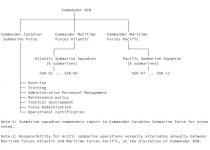
again - MASSIVE SPECULATION with the above.
.
again - MASSIVE SPECULATION with the above.
.

daftandbarmy
Army.ca Fossil
- Reaction score
- 48,834
- Points
- 1,160
How about:
- HMCS Ojibwa: Revives the lead ship name of Canada's original Oberon class, preserving the legacy of the RCN's post-war submarine service while honoring the vast Anishinaabe nation of the Great Lakes.
- HMCS Onondaga: Reclaims a highly distinguished Canadian submarine name from the O-boat era, maintaining continuity with historical underwater warfare traditions and the Haudenosaunee Confederacy.
- HMCS Okanagan: Completes the trio of legacy Canadian submarine names, anchoring the class's heritage in the interior waterways of British Columbia.
- HMCS Mi'kmaq: Honors the ancestral maritime nation of the Atlantic coast and Maritimes, providing a locally rooted identity for submarines home-ported at CFB Halifax.
- HMCS Nuu-chah-nulth: Recognizes the legendary ocean-going whalers and master canoe builders of western Vancouver Island, making it a fitting name for a Pacific-based vessel.
- HMCS Gitxsan: reflecting the river ecosystems and mountains of northern British Columbia, extending Pacific fleet representation upward toward the Alaskan flank.
- HMCS Blackfoot: Extends naval representation across the western prairies by honoring the historic Siksikaitsitapi Confederacy, ensuring inland Canada is tied to the nation's defense at sea.
- HMCS Salish: Directly connects the Pacific fleet to its primary operating environment by honoring the peoples of the Salish Sea, providing a distinct geographic identity without touching old destroyer names.
- HMCS Cree: Recognizes one of Canada’s largest and most widespread linguistic groups, whose traditional territory spans from the rocky Canadian Shield to the subarctic waterways feeding Hudson Bay.
- HMCS Mohawk: Honors the easternmost nation of the Iroquois Confederacy, anchoring a hull identity in the strategic St. Lawrence River gateway and eastern Great Lakes region.
- HMCS Inuit: Formally acknowledges the traditional custodians of the Arctic, providing a profoundly symbolic name for a submarine class heavily designed for under-ice operations and northern sovereignty.
- HMCS Dene: Completes the northern strategic tier by honoring the vast Athabaskan-speaking peoples of the western Arctic and Northwest Territories, matching the geographical scope of Canada's modern security mandates.
How 'colonial' of you.
The GBA+ police should be along before 'soup' this morning

'Geronimo' Codename In Bin Laden Raid Offends Native American Groups
Native American groups are furious that the term, "Geronimo," was used during the raid against Osama bin Laden. They say linking the legendary Apache warrior with the world's most vilified terrorist is disrespectful.
 www.wbur.org
Similar threads


- Replies
- 0
- Views
- 13K

- Replies
- 1
- Views
- 7K