Looking at the roads leading to the front in Ukraine, I see the need for a autonomous tracked, heavily armoured/protected road clearance vehicle with a dozer blade, to keep logistic routes clear of wrecks and debris.
"how close to the line of contact can ukrainian wheeled cargo trucks approach +3
"Ukrainian wheeled cargo trucks typically approach within \(10\) to \(15\) kilometers of the line of contact. Approaching closer than this is extremely dangerous due to the heavy saturation of explosive FPV (first-person view) drones and artillery on front-line approach roads.
"For the final \(10\) to \(15\) kilometers, troops generally transition to marching on foot or using smaller, less conspicuous all-terrain vehicles (ATVs) to avoid detection and targeting.
"This distance limit is dictated by several factors:
"The Drone Threat Zone: The immediate \(10\text{–}25\text{ km}\) buffer behind the front line serves as a highly active intelligence, surveillance, and reconnaissance (ISR) and FPV drone "kill zone".
"Logistical Phasing: Supply operations rely on "last-mile" drop points. Cargo trucks offload their supplies in slightly more secure rear areas (usually \(20\text{ km}\) or more out). From there, the cargo is often transferred to lighter transport, uncrewed ground vehicles (UGVs), or moved by infantry."
....
"The vast majority (over \(85\%\)) of Ukraine's pre-war road network remains passable to wheeled vehicles. While hostilities have damaged or destroyed over \(26,000\) kilometers of roads and hundreds of bridges, intense repair efforts by the Ministry of Communities, Territories and Infrastructure and temporary pontoon crossings mean that major commercial and military routes stay operational.
"Specific realities of the current road network include:
"Network Status BreakdownTotal Network: Ukraine has approximately \(170,000\) km of paved and public-use automobile roads.
"Damaged Infrastructure: About \(13\%\) to \(20\%\) of the network sustained physical damage, particularly in de-occupied or heavily contested territories like Donetsk, Kharkiv, and Kherson.
"Bridgeworks: Over \(300\) bridges were initially damaged. While many remain destroyed, traffic flow for cars and heavy trucks has been restored over hundreds of these structures via detours and rapid temporary repairs.
"Navigational and Operational Hazards
"Even where the asphalt is technically passable, wheeled transit faces severe logistical and physical threats:
"Frontline Danger Zones: Primary and secondary roads near active combat lines (such as the Donbas region) frequently become "kill zones" due to intense drone swarms and artillery.
"Road Safety: Debris, shrapnel, unexploded ordnance, and damaged surfaces significantly increase tire blowouts and vehicular damage.
"Protective Measures: In heavily threatened frontline sectors, Ukrainian forces have covered key stretches of road with anti-drone netting to shield transiting vehicles from aerial attacks."
....
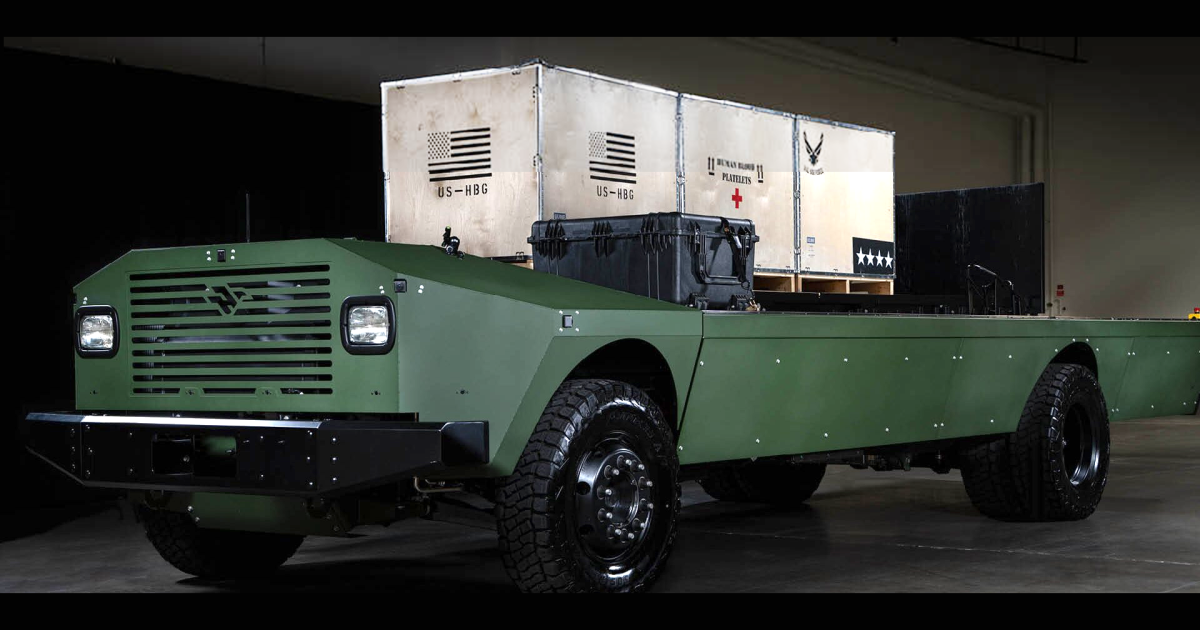
Not every vehicle needs to be an armoured behemoth on tracks. And if there is no crew, how much armour do you need to waste on a cargo truck?




www.militarytimes.com